BPCL chief: No plan to replace E20 petrol with E10 blend
Synopsis
BPCL's top executive has moved to correct a widespread misconception: India is not rolling back its E20 petrol programme. The real question on the table is narrower — whether older vehicles should get access to a separate E10 grade. With supply logistics still unresolved and the government actively defending E20's safety record, a dual-grade petrol system remains a possibility, not a policy decision.
Key Takeaways
BPCL CMD Sanjay Khanna confirmed on 27 August that there is no proposal to replace E20 petrol with E10 .
The active debate is limited to whether older vehicles should have access to a separate E10 fuel grade .
Khanna acknowledged supply and logistics challenges in running two petrol grades simultaneously.
The Ministry of Petroleum and Natural Gas issued a factsheet stating no verified engine failures linked to ethanol blending have been reported.
E15-plus fuel has been in use for over 3.5 years ; E19–E20 for over 2.5 years , with no large-scale warranty claims recorded.
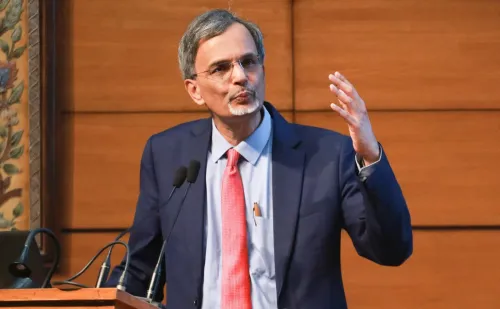
Bharat Petroleum Corporation Ltd (BPCL) Chairman and Managing Director Sanjay Khanna on Thursday, 27 August categorically stated that there is no proposal to replace E20 petrol with E10, clarifying that the ongoing debate concerns only whether older vehicles should have access to a lower-ethanol fuel option. His remarks came during a media interaction following the company's annual shareholder meeting in New Delhi.
What Khanna Actually Said
'I never said that E20 will be changed to E10. What is being debated in some circles is whether older vehicles should have an option of lower-ethanol blend fuel,' Khanna said, pushing back against what he described as a mischaracterisation of his earlier comments.
He clarified that the discussion is not about rolling back India's ethanol-blending programme but about whether E10 fuel — containing 10 per cent ethanol and 90 per cent petrol — could be offered as an additional grade specifically for older vehicles, alongside the existing E20 blend of 20 per cent ethanol and 80 per cent petrol.
Supply Challenges Being Examined
'One of the options being explored is whether we have E10 fuel for the older vehicle, which is what is being pursued right now. There are challenges related to supply, whether we can handle another grade of petrol simultaneously. Yes, those challenges are there, and they are being debated,' Khanna said.
Notably, the BPCL chief added that he sees no operational or logistical barrier to switching from E20 to E10 if the government were to revise its ethanol-blending policy — a scenario he emphasised is not currently on the table.
Government Pushes Back on Misinformation
The Ministry of Petroleum and Natural Gas recently issued a factsheet to counter claims circulating in media and on social media that vehicles manufactured before 2023 cannot safely run on E20 petrol, and that automakers have privately flagged the blended fuel as undesirable.
According to the ministry's factsheet, E15-plus fuel has been in widespread use for over three and a half years, while E19–E20 fuel has been in circulation for more than two and a half years. During this entire period, no verified instance of widespread engine failure or vehicle breakdown attributable to ethanol blending has been recorded.
The ministry further noted that systemic engine damage from ethanol blending would have triggered large-scale warranty claims, service campaigns, and consumer complaints — none of which have materialised, according to the factsheet.
Context: India's Ethanol Blending Push
India has aggressively pursued ethanol blending in petrol as part of a broader strategy to reduce crude import dependence and cut carbon emissions. The government had set a target of achieving 20 per cent ethanol blending nationwide by 2025, a deadline that was subsequently advanced. The current debate over an E10 option for older vehicles reflects the tension between that policy ambition and the practical reality of India's large fleet of ageing vehicles.
As the government and industry continue deliberations, the outcome of the supply-feasibility assessment will likely determine whether a dual-grade petrol system becomes viable at scale.
Point of View
But the fact that it was necessary at all points to a communication gap in India's ethanol-blending rollout. A policy of this scale — affecting every petrol-powered vehicle in the country — has been allowed to generate enough confusion that the petroleum ministry felt compelled to issue a factsheet. The real policy question buried under the noise is legitimate: India has millions of pre-2023 vehicles whose long-term compatibility with E20 remains a live concern for many owners. Whether a dual-grade petrol system is operationally and economically viable is a question that deserves a transparent, data-backed answer — not just reassurances that no warranty claims have been filed.
NationPress
27 Aug 2026
Frequently Asked Questions
Is India replacing E20 petrol with E10?
No. BPCL Chairman Sanjay Khanna has confirmed there is no proposal to replace E20 petrol with E10. The discussion underway is specifically about whether a separate E10 option could be made available for older vehicles, not about reversing the national E20 blending programme.
What is the difference between E10 and E20 petrol?
E10 petrol contains 10 per cent ethanol and 90 per cent petrol, while E20 contains 20 per cent ethanol and 80 per cent petrol. India's current national standard is E20, which the government has been rolling out to reduce crude oil imports and lower emissions.
Can older vehicles run on E20 petrol?
According to a factsheet issued by the Ministry of Petroleum and Natural Gas, E15-plus fuel has been in widespread use for over three and a half years and E19–E20 for over two and a half years, with no verified reports of widespread engine failure or breakdown attributable to ethanol blending during this period.
Why is an E10 option being discussed for older vehicles?
Concerns have circulated — in media and on social media — that vehicles manufactured before 2023 may not be fully compatible with E20 petrol. The government and BPCL are examining whether a separate E10 grade could be offered for such vehicles, though supply logistics of running two petrol grades simultaneously remain a challenge.
What are the supply challenges in offering both E10 and E20 petrol?
BPCL's Sanjay Khanna noted that handling two grades of petrol simultaneously raises logistical and supply-chain questions. These challenges are currently being assessed and debated, and no final decision has been taken on introducing E10 alongside E20.