NTA reforms: Centre tells SC on CBT shift for NEET-UG, 14 officers posted

Synopsis
India's biggest medical entrance exam could soon go digital — the Centre has told the Supreme Court that NEET-UG's shift from pen-and-paper to Computer-Based Testing is under active consideration, even as 14 senior government officers join a restructured NTA, CISF guards secure its new Minto Road headquarters, and a Nandan Nilekani-led task force races to implement 101 reform recommendations.
Key Takeaways
The Centre filed an additional affidavit in the Supreme Court on 22 September 2026 detailing NTA reform progress.
14 senior officers — including a Joint Secretary and four Directors — were posted to the NTA in August 2026 .
Migration of NEET-UG from pen-and-paper to Computer-Based Testing (CBT) is under active consideration by the Nandan Nilekani-led HPTF .
The NTA has been allotted 55,524.53 sq ft of office space at the Government of India Press building, Minto Road, New Delhi ; 39 CISF personnel are deployed there.
The Radhakrishnan-led HLCE made 101 recommendations on NTA reform; the HPTF is overseeing their implementation.
The Supreme Court matter is next listed for 9 October .
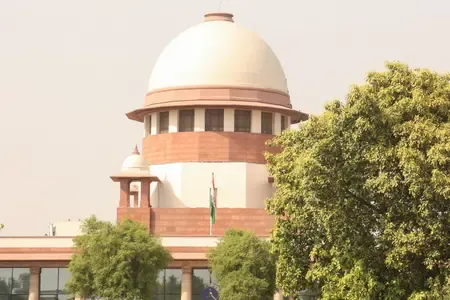
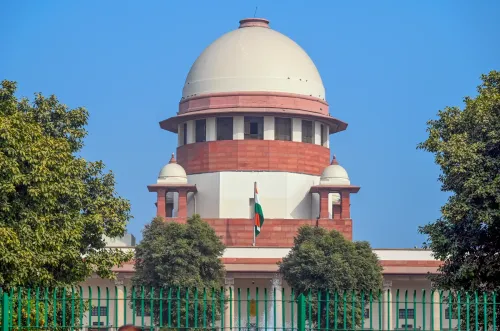
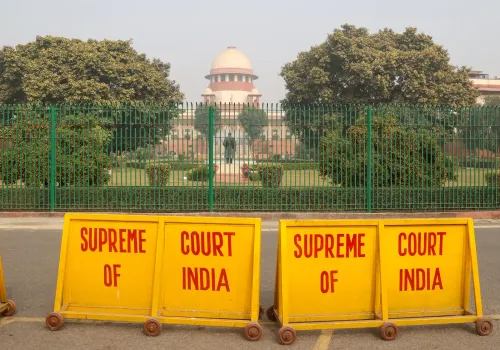
The Union Ministry of Education has told the Supreme Court that the National Testing Agency (NTA) is undergoing sweeping structural reforms, including a transition to a functional-vertical structure, the induction of 14 senior government officers in August 2026, and active consideration of migrating NEET-UG from pen-and-paper mode to Computer-Based Testing (CBT). The disclosures were made in an additional affidavit filed before the apex court in a batch of petitions demanding reforms in the NTA's examination-conducting system.
Structural Overhaul Under Way
The Centre informed the court that the NTA is being restructured into a 'functional-vertical structure' to enable domain-specific capability-building, replacing an earlier arrangement where personnel were assigned to exam-wise verticals. The new setup, the affidavit stated, allows each core area of competence to develop specialised expertise independently.
The 14 officers posted to the NTA in August 2026 include a Joint Secretary, four Directors, a Joint Director, two Deputy Secretaries, two Under Secretaries, two Section Officers, and two Assistant Section Officers. The agency's apex leadership is now headed by an officer of the rank of Secretary to the Government of India serving as Director General. Proposals to upgrade the DG post from Joint Secretary level to Additional Secretary level and create five senior Joint Secretary-level positions are under active consideration.
Senior leadership now draws officers from the Indian Administrative Service (IAS), Indian Police Service (IPS), Indian Revenue Service (IRS), and Indian Statistical Service (ISS), among others. Domain specialists are also being recruited from the open market in technology, human resources, assessment research and development, information security, test security, and vigilance.
NEET-UG CBT Migration Under Active Consideration
One of the most consequential disclosures in the affidavit concerns the possible shift of NEET-UG to Computer-Based Testing. The High-Powered Task Force (HPTF) — constituted on 27 July under former UIDAI Chairman Nandan Nilekani — is examining the design of the transition, sequencing, infrastructure prerequisites, and, critically, the equity implications for rural, women, and low-connectivity-district candidates.
The Centre said a national examination-grade CBT infrastructure strategy is being formulated to close geographic gaps in test-centre availability. Any migration would require structured consultation and the concurrence of the Ministry of Health and Family Welfare and the National Medical Commission.
Physical Infrastructure and Security Upgrades
On infrastructure, the Centre disclosed that dedicated office space measuring 55,524.53 square feet — spanning the fifth floor and parts of the fourth and sixth floors — has been allotted to the NTA at the Government of India Press building, Minto Road, New Delhi. Confidential operations have already been shifted to this secured government premises.
Security at the facility has been significantly tightened, with 39 personnel of the Central Industrial Security Force (CISF) deployed for security, access control, and screening. Measures include frisking, X-ray baggage screening machines, and Door Frame Metal Detectors (DFMDs) at all entry and exit points.
Additional security protocols already placed before the court include QR-code tracking and Aadhaar authentication of question papers, Aadhaar-based biometric and face authentication at examination centres, multi-layer frisking, mobile jammers, CCTV monitoring, AI-assisted tools, and a five-tier oversight structure.
Radhakrishnan Committee's 101 Recommendations
The affidavit was filed in compliance with a Supreme Court direction asking the Ministry of Education to detail progress on the recommendations of the High-Level Committee of Experts (HLCE) headed by former ISRO Chairman K. Radhakrishnan. The HLCE made 101 recommendations covering reforms in national common entrance testing, long-term institutional reform, digital education testing, and periodic monitoring by the Ministry.
The HPTF has held discussions with the NTA Director General, the Department of Higher Education, and Radhakrishnan himself, who also chairs the High-Powered Steering Committee overseeing implementation of the HLCE recommendations.
What the Supreme Court Has Said
A bench of Justices P.S. Narasimha and Alok Aradhe had earlier stressed that reform recommendations must be implemented and not remain confined to reports. The court had also floated the possibility of visiting the NTA office to assess ground-level functioning, including manpower and examination-conducting arrangements.
The court had directed the Joint Secretary coordinating with the HPTF to file the affidavit and ordered it uploaded on the NTA's official website for students and other stakeholders. The matter is next listed for hearing on 9 October.
Point of View
Square footage allocated, CISF guards deployed — but the Supreme Court's pointed remark about recommendations 'not remaining confined to reports' signals that the bench is watching for outcomes, not activity. The NEET-UG CBT question is where the real stakes lie: a botched pen-and-paper exam triggered a national crisis, yet moving online without closing the rural and low-connectivity access gap risks trading one equity problem for another. The Nilekani task force's credibility will hinge on how it resolves that tension, not on how many SOPs it drafts. With 24 lakh-plus students appearing for NEET-UG annually, the cost of getting this transition wrong is higher than the cost of delay.
NationPress
22 Sept 2026
Frequently Asked Questions
What structural changes is the NTA undergoing?
The NTA is being reorganised into a functional-vertical structure that allows domain-specific capability-building, replacing an older exam-wise deployment model. Fourteen senior government officers — including a Joint Secretary and four Directors — were posted to the agency in August 2026, and domain specialists are being recruited from the open market in areas such as technology, information security, and assessment research.
Is NEET-UG shifting to Computer-Based Testing?
The Centre has told the Supreme Court that a shift from pen-and-paper to Computer-Based Testing for NEET-UG is under active consideration by the Nandan Nilekani-led High-Powered Task Force (HPTF). No final decision has been announced; the transition design, sequencing, infrastructure needs, and equity implications for rural and low-connectivity candidates are all being examined.
Who is overseeing the NTA reform process?
Two bodies are overseeing reforms. The High-Level Committee of Experts (HLCE), headed by former ISRO Chairman K. Radhakrishnan, made 101 recommendations and a High-Powered Steering Committee chaired by Radhakrishnan is overseeing their implementation. The High-Powered Task Force (HPTF), constituted on 27 July under former UIDAI Chairman Nandan Nilekani, is concurrently examining issues including the CBT transition and national test-centre infrastructure.
What security upgrades have been made at the NTA's new office?
The NTA has moved into 55,524.53 sq ft of space at the Government of India Press building on Minto Road, New Delhi, with 39 CISF personnel deployed for security, access control, and screening. Entry and exit points are equipped with frisking stations, X-ray baggage machines, and Door Frame Metal Detectors. Additional examination-level safeguards include QR-code tracking of question papers, Aadhaar-based biometric authentication, mobile jammers, CCTV monitoring, and AI tools.
When is the next Supreme Court hearing on NTA reforms?
The Supreme Court has listed the NTA reform matter for further hearing on 9 October. The bench of Justices P.S. Narasimha and Alok Aradhe had earlier directed that the reform affidavit be uploaded on the NTA's official website so students and other stakeholders could access it.