Odisha CM Majhi Pitches Security-First Maritime Vision
Synopsis
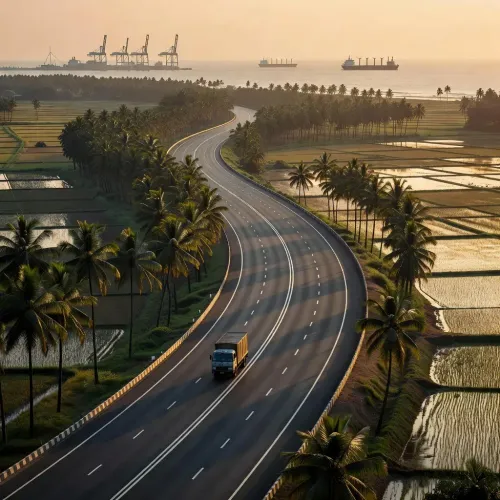
Chief Minister Mohan Majhi's office has articulated a security-first maritime vision for Odisha, framing the state's 485-km coastline as a strategic gateway for trade and national security, building on the Sagarmala Project and Maritime India Vision 2030 frameworks.
Key Takeaways
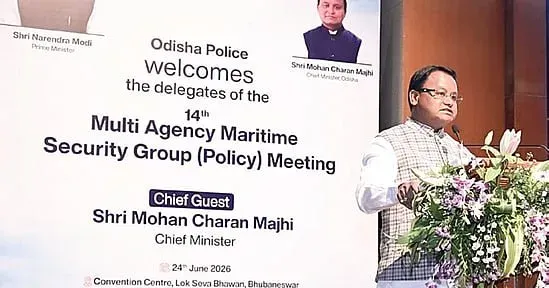
Odisha CM Mohan Majhi has articulated a 'security-first' maritime vision for the state, announced on 25 June 2026 .
Odisha's coastline stretches 485 kilometres , hosting major ports including Paradip and Dhamra .
The vision aligns with the central government's Sagarmala Project (launched 2015 ) and Maritime India Vision 2030 .
Key stakeholders include port operators, coastal security agencies, trade exporters, and fishing communities.
Odisha is positioned as a strategic node in India's Indo-Pacific trade and security architecture under the PM Gati Shakti framework.
Concrete budget allocations and tender announcements will be the next indicators of policy follow-through.
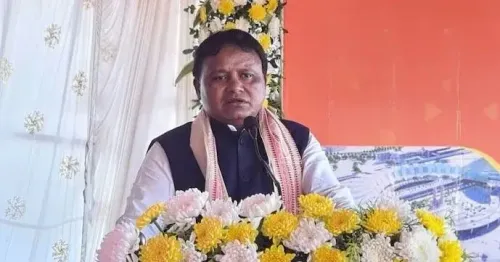
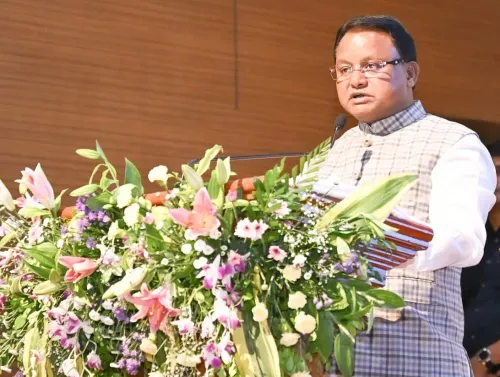
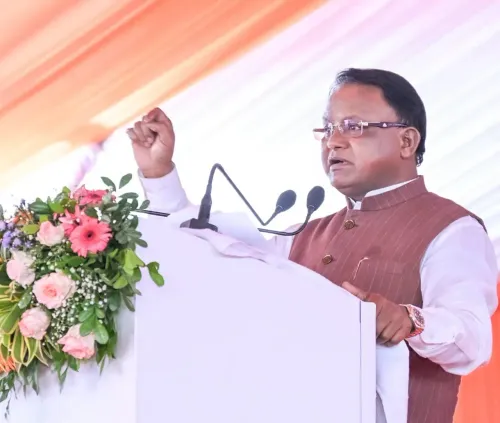
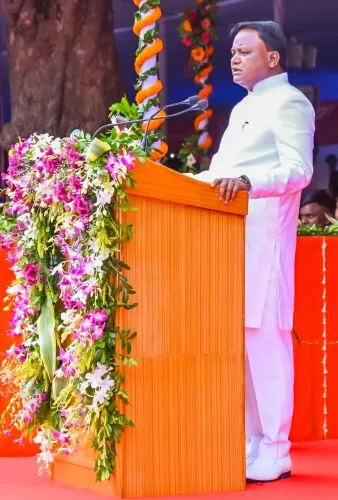
The Chief Minister's Office of Odisha shared a post on 25 June 2026 outlining Chief Minister Mohan Majhi's vision for positioning Odisha as a security-anchored maritime gateway, framing the state's 485-kilometre coastline as a strategic asset for trade and national security alike.
Context
Odisha hosts some of India's most significant eastern seaboard infrastructure, including Paradip Port and Dhamra Port, both of which handle bulk cargo and are central to the state's industrial economy. CM Majhi, who took office in June 2024 after the BJP ended the BJD's 24-year rule, has consistently sought to differentiate his administration through infrastructure-led growth narratives. The 'security-first' framing signals an intent to integrate coastal defence priorities alongside commercial port expansion.
Policy Backdrop
Odisha's maritime ambitions sit within a well-established national framework. The Sagarmala Project, launched by the central government in 2015, earmarked port modernisation and hinterland connectivity as pillars of coastal industrialisation, with Paradip Port among its key beneficiaries. The Maritime India Vision 2030, released in 2021, further set national targets for port capacity enhancement, coastal shipping growth, and the integration of maritime security infrastructure. Odisha's positioning aligns closely with these central mandates, and the state has historically leveraged Sagarmala funds for port-linked road and rail connectivity upgrades.
The broader PM Gati Shakti framework has reinforced the convergence of economic logistics and security objectives, treating coastal corridors not merely as trade routes but as strategic national assets. Odisha's long eastern coastline makes it a natural node in India's Indo-Pacific trade and security calculus.
Stakeholders and Impact
Port operators, coastal security agencies, and trade exporters stand to be most directly affected by any policy shifts arising from this vision. A security-first maritime approach could mean enhanced surveillance infrastructure, faster customs and clearance protocols aligned with defence requirements, and greater coordination between state maritime boards and central agencies such as the Indian Coast Guard. For exporters reliant on Paradip and Dhamra, improved security frameworks can reduce cargo risk and potentially lower insurance premiums on shipments to Southeast Asia and beyond.
Fishing communities along Odisha's coast, who depend on the same waters that commercial and security interests seek to regulate, represent a stakeholder group whose livelihoods will need to be balanced against any expansion of restricted maritime zones.
What's Next
Analysts and industry observers will watch for concrete follow-through in the form of state budget allocations, tender announcements for new port infrastructure, and memoranda of understanding with central maritime agencies in the coming fiscal year. Whether the 'security-first' framing translates into dedicated coastal surveillance investments or remains a rhetorical posture will become clearer as the Majhi government tables its next financial plan. Odisha's ability to attract private port investment may hinge significantly on how credibly it operationalises this security-and-trade integration vision.
Point of View
Seeking to align state ambitions with New Delhi's Indo-Pacific security priorities and unlock central funding streams under Sagarmala and PM Gati Shakti. By coupling commercial port expansion with coastal defence language, the BJP administration in Bhubaneswar is also differentiating itself from its predecessor's predominantly industrial-growth narrative. The real test will be whether this vision produces measurable infrastructure investment or remains a rhetorical positioning exercise ahead of the next state budget cycle. For eastern India's trade competitiveness, the stakes of getting this balance right are substantial.
NationPress
25 Jun 2026
Frequently Asked Questions
What is Odisha's maritime security vision announced in June 2026?
Chief Minister Mohan Majhi's office outlined a 'security-first' maritime vision positioning Odisha's 485-km coastline as a strategic gateway for both trade and national security, building on existing central frameworks like the Sagarmala Project.
Which major ports does Odisha have?
Odisha's principal ports include Paradip Port and Dhamra Port on the eastern seaboard, both of which handle significant bulk cargo and have been developed under the central government's Sagarmala Project.
What is the Sagarmala Project and how does it relate to Odisha?
The Sagarmala Project is a central government initiative launched in 2015 to modernise India's ports and improve connectivity. Odisha, particularly Paradip Port, has been a key beneficiary of Sagarmala-funded infrastructure upgrades.
Who is Mohan Majhi and when did he become Chief Minister of Odisha?
Mohan Majhi became Chief Minister of Odisha in June 2024 after the BJP won the state assembly elections, ending the Biju Janata Dal's 24-year rule under Naveen Patnaik.
How does Odisha fit into India's Indo-Pacific maritime strategy?
Odisha's long eastern coastline makes it a natural logistics and security node for India's trade with Southeast Asia and the broader Indo-Pacific region, a role reinforced by the PM Gati Shakti framework that integrates economic and defence infrastructure planning.