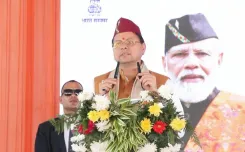
Odisha CM Majhi pushes KG-to-PG free education for 2036 goal
Synopsis
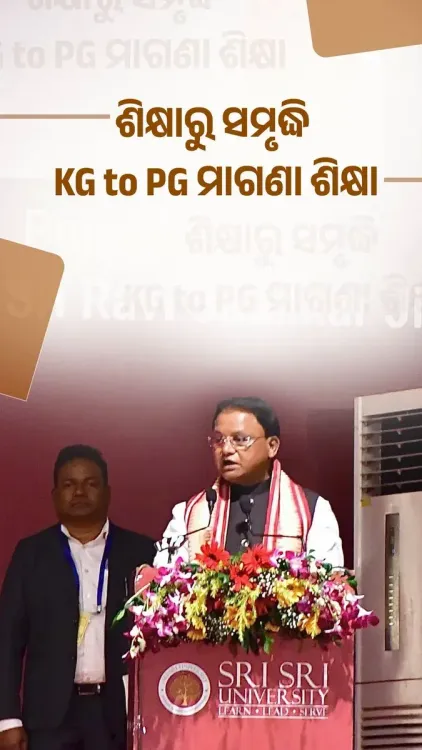
Odisha CM Mohan Charan Majhi has outlined a KG-to-PG free education initiative tied to Samruddha Odisha 2036 and Viksit Bharat 2047, with special financial support earmarked for girls from economically weaker families.
Key Takeaways
CM Mohan Charan Majhi announced a free education plan spanning kindergarten to postgraduate level in Odisha.
The initiative is linked to Samruddha Odisha by 2036 — the state's own development milestone — and the national Viksit Bharat 2047 framework.
Special financial support for daughters from economically weaker families is a stated priority within the broader education push.
Majhi has led Odisha's BJP government since June 2024 , with education forming a consistent policy pillar.
Specific funding structures and rollout timelines for the girls' support component are expected to be detailed in a future Odisha budget or assembly session.
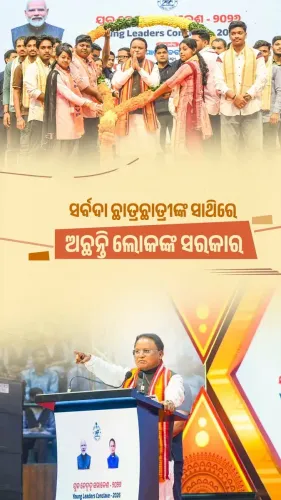
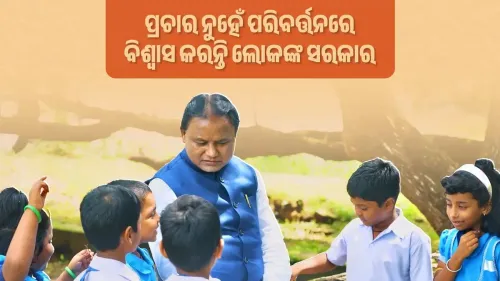
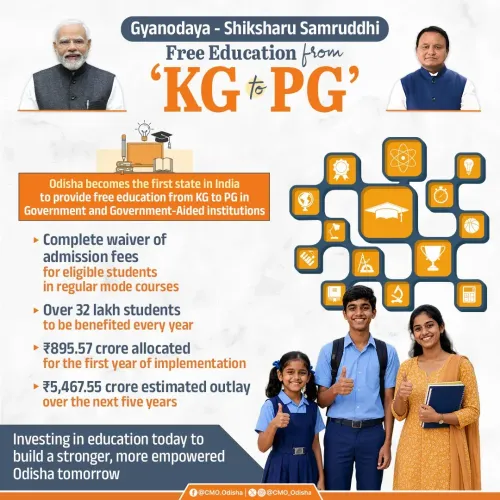
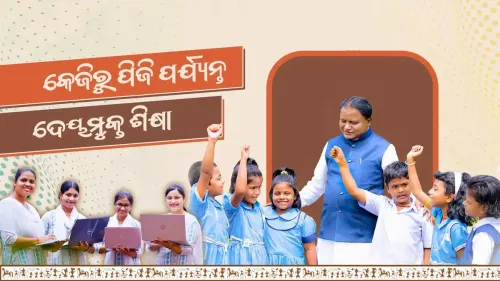
Free education from kindergarten to postgraduate — that is the centrepiece of Odisha Chief Minister Mohan Charan Majhi's education agenda, anchored to twin development timelines: a prosperous Samruddha Odisha by 2036 and a developed Viksit Bharat by 2047. The Chief Minister's Office of Odisha shared the vision on Tuesday, 17 November 2026, with the CM personally underscoring financial support for daughters from economically weaker families as a core pillar.
KG to PG: what the pledge actually covers
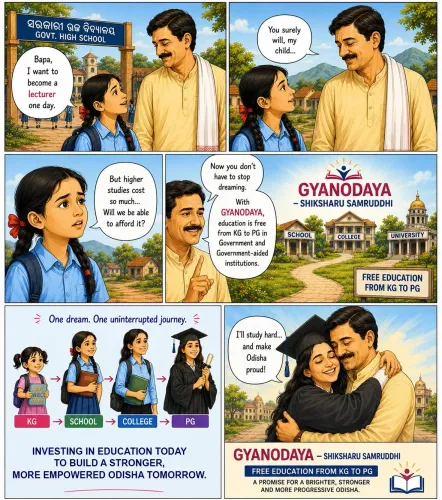
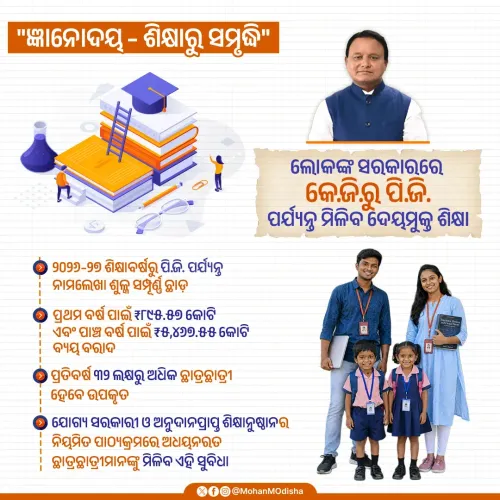
The ambition is sweeping in scope. CM Majhi framed the KG-to-PG initiative as a 'transformative' intervention — meaning Odisha's students, from their first day of nursery to the day they collect a postgraduate degree, would face zero tuition burden under the state's education plan. That is a vertical covering roughly seventeen years of formal schooling — primary, secondary, undergraduate, and postgraduate — all brought under a single, state-funded umbrella.
Alongside the universal free-education pledge, the CM drew specific attention to girls from economically weaker families, signalling financial support mechanisms to empower them for their futures. The exact structure and rollout timeline of that support is yet to be formally detailed in a budget or assembly session.
Samruddha Odisha and the national Viksit Bharat clock
Odisha is one of several Indian states that have aligned their own development calendars with the Government of India's Viksit Bharat 2047 framework — the national vision, formally outlined around 2023, to transform India into a fully developed economy by its centenary of independence. The state's own marker, Samruddha Odisha by 2036, sets an earlier internal deadline — a mid-course accountability checkpoint a full decade before the national target.
CM Majhi has led Odisha's BJP government since June 2024, and education has been a consistent thread in his administration's public messaging. Placing a KG-to-PG commitment inside this dual-timeline framing is a deliberate signal: education is not a welfare afterthought, but the structural engine for hitting both targets.
Girls' education at the centre of the equity push
The special emphasis on girls' education is not new in Indian state policy, but it carries added weight here. Gender and economic barriers have historically kept dropout rates high, particularly at the secondary and higher-education levels. By explicitly naming daughters from economically weaker families as a priority group, the CM is signalling that the KG-to-PG free-education pledge is designed to be equity-sensitive — not merely a universal entitlement that leaves the most vulnerable behind anyway.
Watchers of Odisha's legislative calendar will now look to the next state budget or assembly session for concrete funding lines, enrollment targets, and the precise architecture of the girls' financial-support component. That is where a rhetorical commitment either becomes a programme — or stalls.
Point of View
With Samruddha Odisha 2036 as an accountability marker. The dual timeline is politically smart: it tethers the BJP state government to Delhi's development narrative while giving CM Majhi a distinct, state-branded deliverable. The equity rider — targeted support for girls from poorer families — reflects a broader national pattern of using education policy to close gender and class gaps simultaneously. The real test will come at budget time, when rhetorical commitments must become line items.
NationPress
17 Nov 2026
Frequently Asked Questions
What is the KG to PG free education scheme in Odisha?
It is an initiative announced by Odisha CM Mohan Charan Majhi under which students in Odisha would receive free education from kindergarten through to postgraduate level, eliminating tuition costs across all stages of formal schooling.
What is Samruddha Odisha 2036?
Samruddha Odisha 2036 is the Odisha government's state-specific development vision, targeting a prosperous and developed Odisha by the year 2036 — a decade ahead of the national Viksit Bharat 2047 target.
What support is Odisha offering girls from economically weaker families under this plan?
CM Majhi has indicated that financial support will be provided to daughters from economically weaker families to empower them for their futures, though the specific mechanism and amounts are yet to be formally detailed.
Who is Mohan Charan Majhi?
Mohan Charan Majhi is the Chief Minister of Odisha, leading the BJP government in the state since June 2024, with a focus on education reform and aligning Odisha's growth with national development goals.
How does Odisha's education plan connect to Viksit Bharat 2047?
Viksit Bharat 2047 is the Government of India's framework to make India a fully developed nation by 2047. Odisha has aligned its education priorities — including the KG-to-PG free education initiative — with this national vision as part of its long-term development strategy.