Odisha CMO Reaffirms Tribal Welfare as Core State Priority
Synopsis
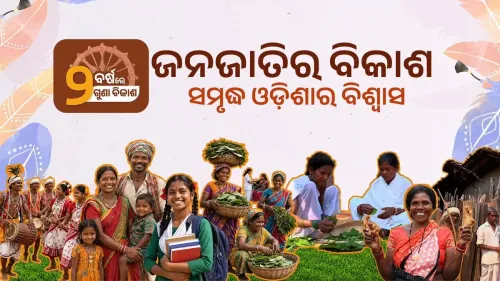
The Chief Minister's Office of Odisha reaffirmed on 16 November 2026 that tribal communities — roughly 23 percent of the state's population — are central to its inclusive development vision, pledging to protect rights, preserve culture, and expand education, healthcare, and livelihood access.
Key Takeaways
The Chief Minister's Office of Odisha posted a formal commitment to tribal welfare on 16 November 2026 .
Scheduled Tribes form roughly 23 percent of Odisha's total population, one of India's largest such proportions.
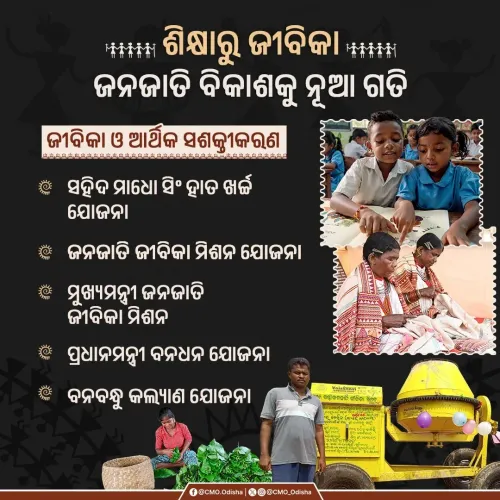
The state pledged to protect tribal rights, preserve traditions, and expand education, healthcare, and livelihoods .
The statement invoked 'inclusive development' ( ସମାବେଶୀ ବିକାଶ ), framing tribal participation as the foundation of a prosperous Odisha.
The Forest Rights Act, 2006 remains the national legislative backbone for tribal land and community rights in Odisha.
Budget allocations and new scheme guidelines in the next fiscal cycle will be the key test of this commitment.
Odisha's tribal communities — nearly one in four of the state's residents — are not a footnote in the government's agenda. On Monday, 16 November 2026, the Chief Minister's Office of Odisha issued a pointed reaffirmation that the state considers the holistic development of its Scheduled Tribe population a central, non-negotiable commitment.
The post, shared in both Odia and English, declared that tribal communities are 'an integral part of Odisha's rich heritage and cultural diversity' — framing their protection not as charity but as constitutional duty. The state government pledged to protect tribal rights, preserve traditions, and expand access to education, healthcare, and livelihoods.
Odisha's Tribal Population: Scale of the Commitment
Odisha is home to one of India's largest Scheduled Tribe populations, accounting for roughly 23 percent of the state's total population. Dozens of distinct indigenous communities — each with its own language, customs, and land relationship — make the state one of the most culturally layered in the country.
The original Odia text put it sharply: 'ଜନଜାତି ସମାଜ ଓଡ଼ିଶାର ସମୃଦ୍ଧ ଐତିହ୍ୟ, ପରମ୍ପରା ଓ ସାଂସ୍କୃତିକ ବିବିଧତାର ଅମୂଲ୍ୟ ପରିଚୟ' — meaning tribal society is the 'priceless identity' of Odisha's rich heritage, tradition, and cultural diversity. The choice of the word 'priceless' is deliberate: it signals cultural value that cannot be traded away in the name of development speed.
Rights Framework Behind the Pledge
The state's renewed commitment sits within a layered national rights architecture. The Scheduled Tribes and Other Traditional Forest Dwellers (Recognition of Forest Rights) Act, 2006 remains the bedrock legislation, recognising both individual and community forest rights across states including Odisha. The state has pursued inclusive development frameworks that combine cultural preservation with expanded access to education, health, and livelihood programmes across successive administrations.
The CMO's post extended this framework explicitly to 'ସମାବେଶୀ ବିକାଶ' — 'inclusive development' — describing the active participation of tribal communities not as a beneficiary relationship but as the 'foundational basis' for building a prosperous Odisha.
Education, Health, and Livelihood: The Three Pillars
The statement's specificity matters. By naming education, healthcare, and livelihoods as the three expansion areas, the government has set a measurable framework against which future budget allocations and scheme guidelines will be judged. Tribal education infrastructure — residential schools, language-sensitive curricula — and healthcare access in remote forested belts remain persistent challenges in the state's development story.
Analysts watching tribal welfare policy will now track whether the next state budget cycle translates this commitment into concrete allocations for tribal education and health infrastructure. Words on record create accountability; the numbers will tell the fuller story.
Point of View
The CMO's messaging signals a strategic shift toward rights-based, co-ownership language — a move that plays well both domestically with indigenous constituencies and within broader national conversations on Schedule V area governance. With roughly 23 percent of the state's population categorised as Scheduled Tribes, any government in Bhubaneswar ignores this bloc at significant electoral and administrative risk. The explicit naming of education, health, and livelihoods as pillars creates a public benchmark; the credibility of this statement will be tested when the next state budget is tabled. It also feeds into a wider India-wide contest among state governments to demonstrate leadership on tribal welfare as Centre-state dynamics around forest rights and mineral royalties remain contested.
NationPress
16 Nov 2026
Frequently Asked Questions
What percentage of Odisha's population belongs to Scheduled Tribes?
Scheduled Tribes account for roughly 23 percent of Odisha's total population, making the state home to one of India's largest indigenous community populations.
What did the Odisha CMO post about tribal communities in November 2026?
On 16 November 2026, the Chief Minister's Office of Odisha reaffirmed the state's commitment to protecting tribal rights, preserving their traditions, and expanding opportunities in education, healthcare, and livelihoods for holistic development.
What law protects the forest rights of tribal communities in Odisha?
The Scheduled Tribes and Other Traditional Forest Dwellers (Recognition of Forest Rights) Act, 2006 is the primary national legislation that recognises individual and community forest rights for tribal populations in Odisha and across India.
What is 'inclusive development' in the context of Odisha tribal policy?
In the CMO's statement, 'inclusive development' (Odia: ସମାବେଶୀ ବିକାଶ) means ensuring that tribal communities are active participants — not passive beneficiaries — in Odisha's growth, with guaranteed access to education, health, and livelihood programmes.
How many tribal communities live in Odisha?
Odisha is home to dozens of distinct indigenous communities, each with its own language and customs, making it one of the most culturally diverse states in India in terms of tribal heritage.