Odisha CMO backs PM SVANidhi to empower street vendors
Synopsis
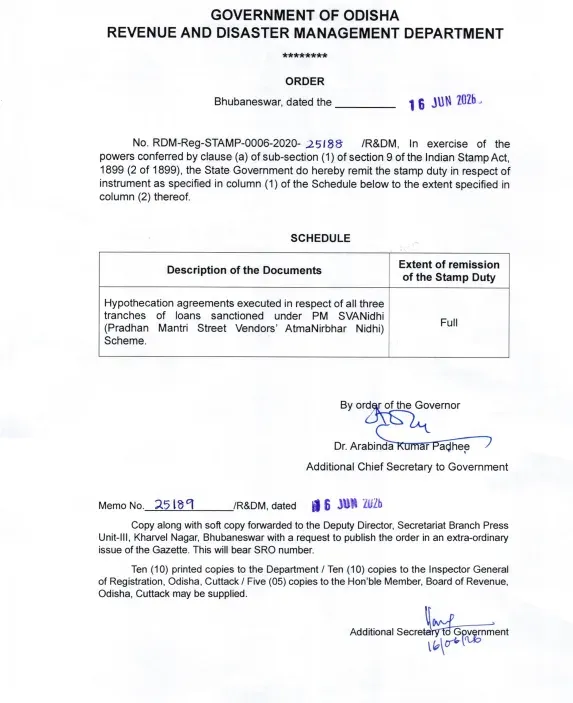
The Chief Minister's Office of Odisha on 17 June 2026 announced backing for a landmark decision under PM SVANidhi to ease credit access, reduce borrowing costs, and strengthen livelihoods for thousands of street vendors across the state.
Key Takeaways
The Chief Minister's Office of Odisha on 17 June 2026 announced support for a decision to expand credit access for street vendors under PM SVANidhi .
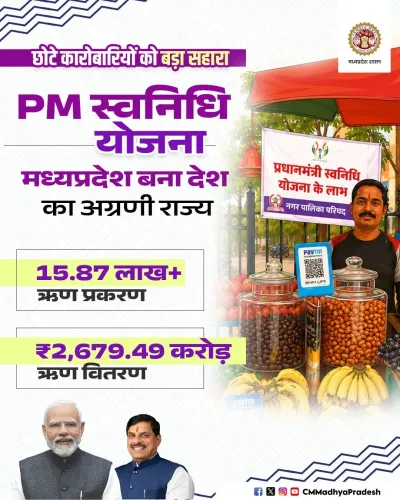
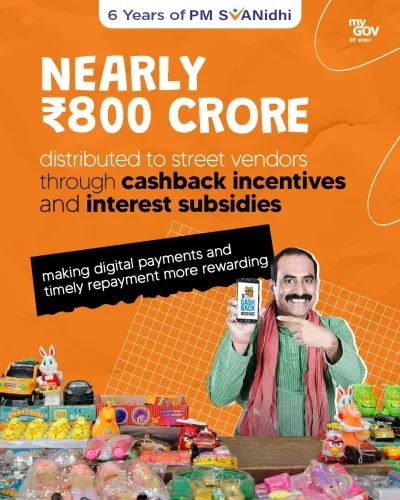
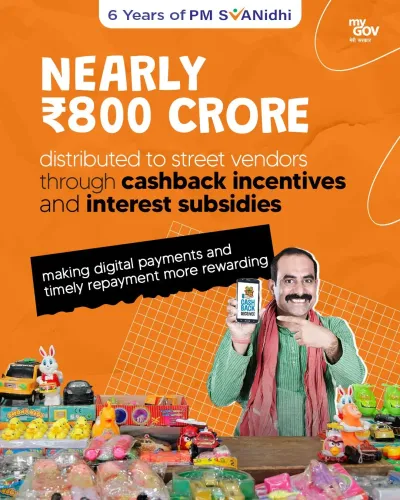
PM SVANidhi was launched in June 2020 and offers collateral-free working capital loans of up to Rs 50,000 with interest subvention of up to 7 per cent .
The announcement targets thousands of street vendors in Odisha , aiming to reduce dependence on high-cost informal credit.
The post invokes #ViksitOdisha , linking micro-enterprise credit to state-level economic growth goals under the Viksit Bharat 2047 framework.
The CMO tagged @PMOIndia , indicating active coordination between the Odisha government and the central government on implementation.
Specific details of the 'landmark decision' — such as new subsidy amounts or registration targets — are yet to be officially disclosed.
The Chief Minister's Office of Odisha on Wednesday, 17 June 2026 announced support for a landmark decision aimed at easing credit access for street vendors across the state, framing it as a step toward self-reliance and economic growth under the PM SVANidhi scheme.
Context
The CMO's post declared that the decision will 'ease access to credit, reduce borrowing costs, and support thousands of street vendors in their journey towards self-reliance and economic growth.' The announcement was made under the hashtags #PMSVANidhi and #ViksitOdisha, signalling alignment between state priorities and centrally sponsored financial inclusion efforts.
While the precise nature of the decision — whether a new state subsidy, a fresh implementation agreement, or an expanded registration drive — has not been detailed in the post, the messaging underscores Odisha's continued commitment to extending the scheme's reach to its large informal vending workforce.
Policy Backdrop
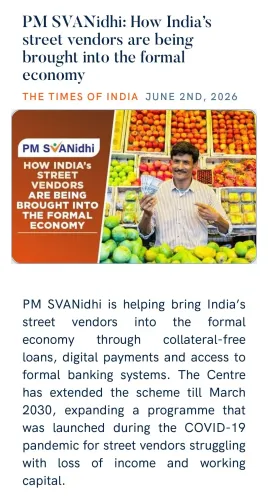
PM SVANidhi, formally the PM Street Vendor's AtmaNirbhar Nidhi scheme, was launched by the Ministry of Housing and Urban Affairs in June 2020 as part of the Atmanirbhar Bharat package. It was designed to provide collateral-free working capital loans — initially up to Rs 10,000, later scaled to Rs 50,000 — to street vendors who had been pushed into financial distress by pandemic-era lockdowns.
Successive phases of the scheme have emphasised digital onboarding, interest subvention of up to 7 per cent, and linkage with Mudra loans to gradually formalise small-scale vending. The broader policy intent is to reduce vendors' dependence on high-cost informal moneylenders and integrate them into the formal credit ecosystem.
Odisha, an eastern Indian state with a substantial urban informal sector, has coordinated with central urban livelihood schemes since the early 2020s. The state government's messaging explicitly invokes the #ViksitOdisha frame, connecting micro-enterprise credit access to wider state-level economic growth targets aligned with the Viksit Bharat 2047 vision.
Stakeholders and Impact
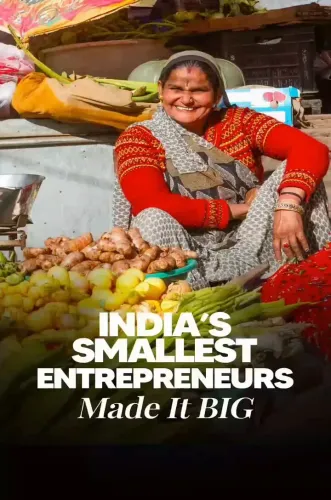
The primary beneficiaries are street vendors — a constituency that spans fruit sellers, food cart operators, small goods traders, and seasonal hawkers — who have historically relied on informal credit at steep interest rates. Easier access to institutional loans at subsidised rates can meaningfully reduce their cost of capital and improve net earnings.
Urban local bodies in Odisha are key implementation partners, responsible for vendor registration, survey of vending zones, and facilitating bank linkages. Increased state-level momentum under the scheme is expected to push up both registration numbers and loan disbursement volumes across Odisha's towns and cities.
What's Next
Observers will watch for state-level disbursement figures and vendor registration targets as details of the decision emerge. Any complementary Odisha urban street vending policy — including possible updates in the forthcoming assembly session — could further define the scope of this announcement.
The CMO's tagging of @PMOIndia in the post suggests active coordination with the central government, and follow-up notifications from the Prime Minister's Office or the Ministry of Housing and Urban Affairs may clarify implementation timelines and financial commitments.
Point of View
The state government is positioning itself as an active partner — rather than a passive recipient — of central welfare architecture. The move fits a broader pattern of BJP-governed and coalition-aligned states amplifying Atmanirbhar Bharat messaging on social media to demonstrate governance delivery to urban informal workers. The absence of specific disbursement figures, however, means the announcement remains aspirational until concrete implementation data is released.
NationPress
19 Sept 2026
Frequently Asked Questions
What is PM SVANidhi and how does it help street vendors in Odisha?
PM SVANidhi is a central government micro-credit scheme launched in June 2020 that provides collateral-free working capital loans of up to Rs 50,000 to street vendors at subsidised interest rates, helping them access formal credit instead of high-cost informal moneylenders. In Odisha, the state government is now backing expanded implementation of the scheme to reach thousands of vendors.
What did the Odisha Chief Minister's Office announce on 17 June 2026?
The Chief Minister's Office of Odisha announced support for a landmark decision under PM SVANidhi to ease credit access, reduce borrowing costs, and support thousands of street vendors in their journey toward self-reliance and economic growth.
Who are the beneficiaries of PM SVANidhi in Odisha?
Street vendors — including fruit sellers, food cart operators, small goods traders, and seasonal hawkers — are the primary beneficiaries. The scheme targets those who previously depended on informal moneylenders at steep interest rates.
What is the interest subsidy available under PM SVANidhi?
PM SVANidhi offers an interest subvention of up to 7 per cent on working capital loans, reducing the effective borrowing cost for registered street vendors who repay on time.
What does '#ViksitOdisha' mean in the context of this announcement?
'#ViksitOdisha' is the state government's development branding, linking micro-enterprise credit access and livelihood support to broader economic growth targets, aligned with the national Viksit Bharat 2047 vision of a developed India.