Op Drishti: J&K L-G Manoj Sinha hails Army's 446 cataract surgeries at border
Synopsis
The Indian Army conducted cataract surgeries inside an underground operation theatre at Tangdhar, Kupwara — a border zone under active shelling risk — airlifting equipment and treating residents for whom this was a first-ever encounter with advanced medical care. With 446 surgeries and over 1.5 lakh screenings, Op Drishti is redefining what civil-military outreach looks like in J&K's most inaccessible frontier.
Key Takeaways
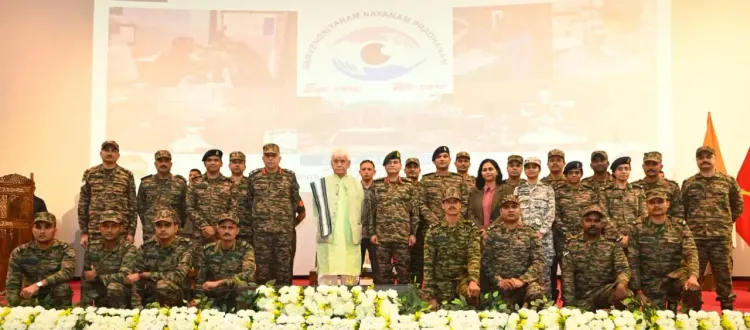
J&K L-G Manoj Sinha addressed the closing ceremony of Phase-II of the Op Drishti Mega Cataract Surgery Camp at Badami Bagh Cantonment, Srinagar on 30 September .
A total of 446 cataract surgeries were performed during this phase, including at a border location in Tangdhar, Kupwara .
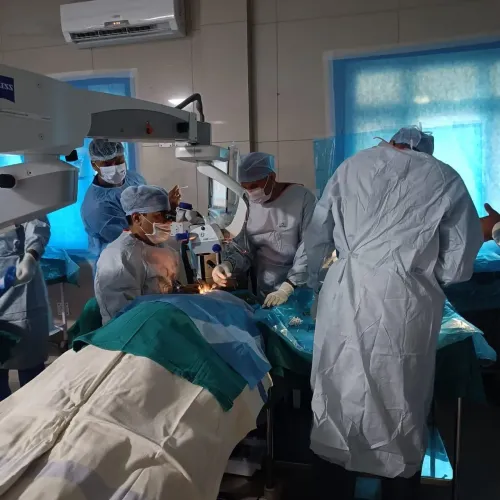
Medical teams led by Brigadier Sanjay Kumar Mishra operated an underground OT in Tangdhar under active shelling risk, with equipment airlifted to the site.
More than 1.5 lakh eye screenings have been conducted under the Op Drishti initiative since inception.
The Tangdhar camp was the 10th in the series and the first to operate from a border underground theatre.
L-G Sinha credited Prime Minister Narendra Modi and Raksha Mantri Rajnath Singh for their support to the initiative.
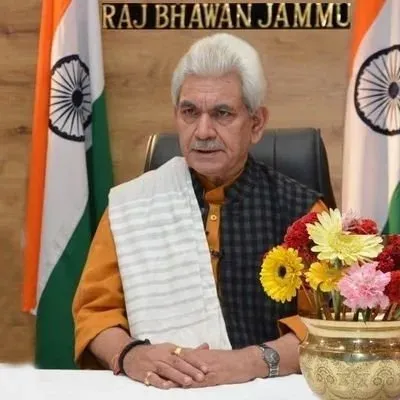
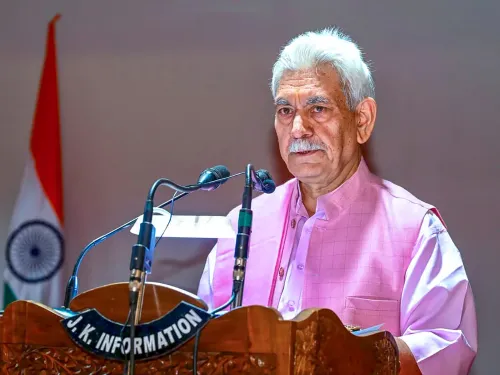
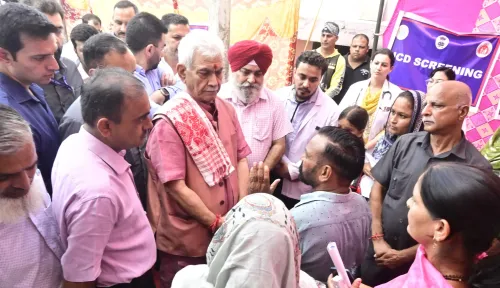
Jammu and Kashmir Lieutenant Governor Manoj Sinha on Wednesday, 30 September praised 'Operation Drishti' as far more than a medical initiative, calling it a living testament to the Indian Army's courage, dedication, and unwavering resolve to serve citizens in the most challenging terrain. Sinha was speaking at the closing ceremony of Phase-II of the Mega Cataract Surgery Camp held at Chinar Auditorium, Badami Bagh Cantonment in Srinagar.
Scale and Reach of the Initiative
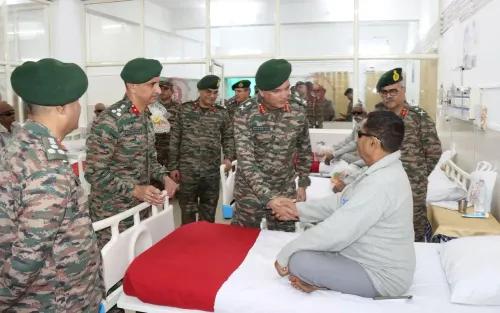
The 11th mega surgery camp under Op Drishti brought together patients, specialist doctors, medical teams, and Army personnel to deliver advanced eye care to communities that would otherwise struggle to access such treatment. In total, 446 cataract surgeries were conducted during this phase, with medical teams fanning out to some of the most remote corners of the Union Territory. More than 1.5 lakh eye screenings have been carried out under the initiative since its inception, extending vision-care facilities deep into border regions.
Surgeries Under Shelling Risk in Tangdhar
Perhaps the most remarkable chapter of this phase unfolded at Tangdhar in Kupwara, a border locality where the risk of shelling is a daily reality and road access remains severely limited. Medical teams, led by Brigadier Sanjay Kumar Mishra and fellow officers, set up and operated an underground operation theatre to conduct surgeries in a conflict-adjacent zone. Specialised equipment and surgical tools were airlifted into the area, and Army personnel facilitated the movement of patients from adjoining communities to the camp. For many residents, this was reportedly the first time they had ever received advanced medical treatment. L-G Sinha noted that the Tangdhar camp was the 10th under the broader Op Drishti series and was unique by virtue of its location along the Line of Control.
What the L-G Said
'I express my gratitude to Prime Minister Narendra Modi and Raksha Mantri Rajnath Singh. I also express my gratitude to the Army Chief and the medical teams,' Sinha said, acknowledging the political and institutional support that underpins the operation. He described the initiative as 'an example of service, courage, resolve, and an effort to provide value to human life,' and credited the doctors and support staff for carrying specialised care into difficult terrain. He added that the Army 'has not returned after completing its work; it has given the vision of standing with the people.'
Broader Impact on Civil-Military Relations
L-G Sinha said Op Drishti had done more than restore eyesight — it had deepened the bond between the Indian Army and local communities across Jammu and Kashmir. This comes amid sustained efforts by the Centre and the J&K administration to strengthen people-to-army trust in border districts, where decades of conflict have often strained civilian-military ties. Notably, conducting surgeries in an underground OT under active shelling risk represents a level of operational commitment rarely seen in humanitarian medical missions. The initiative signals that healthcare delivery in conflict-affected zones is increasingly being treated as a strategic priority alongside security operations.
What Comes Next
With Phase-II now concluded, officials have not yet announced a timeline for Phase-III, but the scale of outreach — over 1.5 lakh screenings and counting — suggests the programme is set to expand further into underserved border areas. The success of the Tangdhar underground OT model may serve as a template for future medical missions in similarly inaccessible locations across the Union Territory.
Point of View
A doctor in uniform performing cataract surgery carries outsized symbolic weight. The 1.5 lakh screenings figure also raises a question worth tracking — how many of those screened are receiving follow-up care, and is the programme building any permanent local medical capacity, or remaining dependent on periodic Army-led camps?
NationPress
30 Sept 2026
Frequently Asked Questions
What is Operation Drishti in Jammu and Kashmir?
Operation Drishti is an Indian Army-led mega cataract surgery initiative that provides free advanced eye care to residents of remote and border areas in Jammu and Kashmir. The programme has conducted over 1.5 lakh eye screenings and 446 surgeries under its latest phase, reaching communities with limited access to specialised medical infrastructure.
Where was the underground operation theatre set up under Op Drishti?
The underground operation theatre was set up at Tangdhar in Kupwara district, a border locality along the Line of Control where shelling risk makes conventional medical missions difficult. Equipment was airlifted to the site, and Army personnel facilitated patient access from surrounding areas.
How many surgeries were conducted in Phase-II of Op Drishti?
A total of 446 cataract surgeries were conducted during Phase-II of the Mega Cataract Surgery Camp under Op Drishti. The phase also contributed to a cumulative total of more than 1.5 lakh eye screenings across the initiative.
Who led the medical teams at the Tangdhar camp?
The medical teams at Tangdhar were led by Brigadier Sanjay Kumar Mishra along with other Army officers. They organised and conducted surgeries inside an underground operation theatre under challenging border conditions.
Why is Op Drishti significant for Jammu and Kashmir's border communities?
Op Drishti is significant because it delivers advanced eye care — including cataract surgeries — to residents of border and remote areas who have historically lacked access to such treatment. For many in Tangdhar, this was reportedly the first time they had received advanced medical care, and the initiative is also seen as strengthening civilian-military trust in conflict-affected districts.