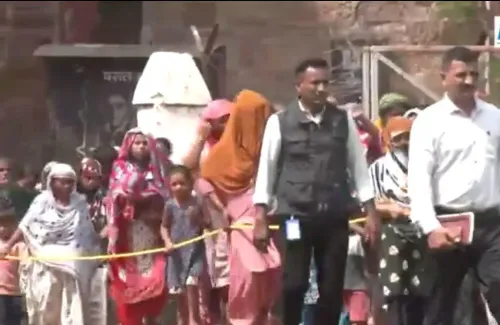
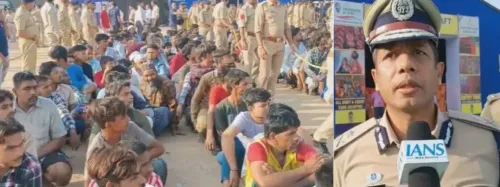
Operation Delta Hunt: 568 illegal Bangladeshis found in Gujarat, 192 in Ahmedabad
Synopsis
Operation Delta Hunt has done more than count undocumented migrants — it has mapped a sophisticated dispersal strategy, a cross-border trafficking chain, and a document-forgery trail that allowed hundreds of Bangladeshi nationals to live and work across Ahmedabad's industrial belt undetected. With 568 identified statewide and investigations still open, this is the largest such enforcement exercise in Gujarat since 2009.
Key Takeaways
Operation Delta Hunt has identified 568 Bangladeshi nationals allegedly residing illegally in Gujarat , with 192 cases in Ahmedabad alone as of 6 June 2025 .
The operation was built on a database of more than 6,200 suspected individuals generated through telecom analysis, intelligence inputs and field verification.
More than 100 of the 192 people identified in Ahmedabad were women; approximately 70–75% were allegedly involved in spa and prostitution work, according to police.
Many individuals held Aadhaar cards with West Bengal addresses; authorities are investigating how those documents were obtained.
Police allege a cross-border trafficking chain involving recruiters in Bangladesh , contacts in eastern India, and facilitators in Gujarat .
A similar crackdown in 2009 led to the deportation of more than 300 Bangladeshi nationals from Ahmedabad; settlements reportedly re-emerged over time.
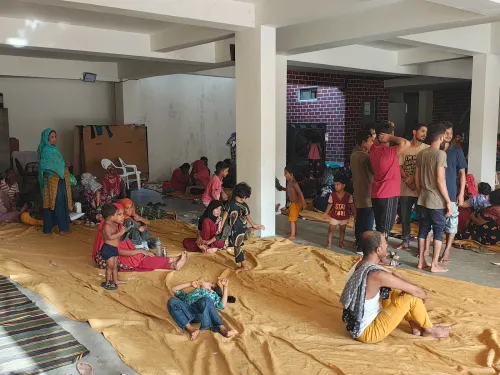
Gujarat Police's ongoing crackdown, codenamed Operation Delta Hunt, has identified 568 Bangladeshi nationals allegedly residing illegally across the state, with Ahmedabad accounting for the single largest concentration at 192 cases as of 6 June 2025. The operation has offered investigators an unprecedented look into how undocumented migrants were living, working and moving within Gujarat's industrial economy.
Scale and Scope of the Operation
The operation was launched simultaneously across Gujarat following weeks of intelligence gathering, telecom analysis, technical surveillance and field verification. Authorities built a database of more than 6,200 suspected individuals by analysing communication patterns and field-level inputs. More than 780 additional people were placed under verification during the initial stages.
In the first phase, police had confirmed 362 cases statewide, including 166 in Ahmedabad. Those numbers have since risen as investigations continue. At least 18 individuals attempting to flee were apprehended at checkpoints established at railway stations, bus terminals and major highways. Beyond Ahmedabad, illegal migrants were also identified in Surat, Vadodara, Bharuch, Rajkot and parts of Saurashtra and Kutch.
How Migrants Dispersed Across Ahmedabad
Ahmedabad Joint Commissioner of Police (Crime) Sharad Singhal said the pattern of settlement had shifted markedly from earlier years, when undocumented migrants were concentrated around Chandola Lake. This time, they were found spread across industrial and working-class neighbourhoods including Naroda, Odhav, Vatva GIDC, Danilimda, Shah Alam and Sarkhej.
'They were found from so many places like Naroda, Odhav, Vatva GIDC, Danilimda, Shah Alam and Sarkhej. Earlier, they were totally concentrated around Chandola Talav, but this time they were scattered around all of the city,' Singhal said. Most did not own homes and were living in small rented premises, often sharing one-room or two-room dwellings with several others. The dispersal made detection significantly harder for investigators.
Ahmedabad's large informal labour market — where workers from multiple Indian states are employed in factories and industrial units — provided an environment in which undocumented migrants could blend in more easily. Police found many of the men engaged in daily-wage labour, garbage collection, puncture repair and other casual jobs.
Women, Trafficking Allegations and Exploitation
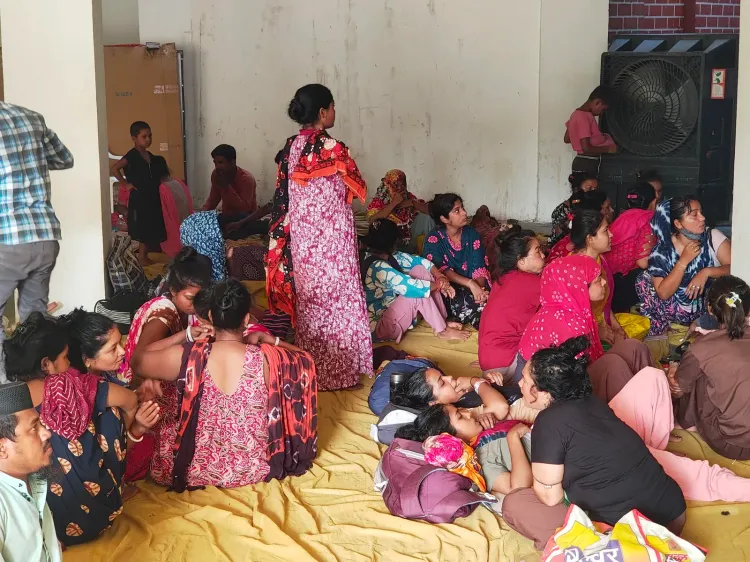
The investigation revealed a substantial number of women among those identified. According to Singhal, more than 100 of the 192 people identified in Ahmedabad were women. He said approximately 70 to 75 per cent of those women were allegedly involved in spa and prostitution work. Police clarified that no minors were found involved in prostitution-related activities.
Investigators allege that many women were brought to Gujarat through organised trafficking and facilitation networks. Police say they are now tracing agents who allegedly arranged illegal border crossings and subsequently connected women with spa businesses or prostitution rackets. 'We are searching for those agents who lured them and took money to pass the border illegally and then forced them into prostitution,' Singhal said.
According to investigators, the network reportedly stretches from recruiters in Bangladesh through contacts in eastern India to facilitators in Gujarat who communicated labour requirements from spas before arranging travel and accommodation. Singhal said many women earned around ₹500 a day and were dependent on intermediaries who controlled both accommodation and employment. 'They were exploited here. They know they cannot go back and cannot easily approach law-enforcement agencies,' he added. He noted that despite the low earnings, many believed that ₹10,000 to ₹15,000 per month from India represented significant support for their families in Bangladesh.
Forged Documents and Aadhaar Cards Under Scrutiny
One of the central threads of Operation Delta Hunt has been the examination of identity documents. Police found that many individuals possessed Aadhaar cards carrying addresses from rural areas of West Bengal. However, when investigators requested additional documents or parental identification, most were unable to produce them. 'Most of them have Aadhaar cards having addresses of West Bengal. But when we ask for other Indian IDs and IDs of their parents, they are not able to produce them,' Singhal said.
Authorities are now examining how those Aadhaar cards were created and who facilitated the process. Officials emphasised that Aadhaar is not proof of citizenship under Indian law and that verification involved multiple layers of document examination and intelligence checks. During raids, many individuals initially claimed to be Indian citizens and produced documents, but later acknowledged their status when mobile phones were examined.
Historical Pattern and What Comes Next
Singhal pointed out that a similar exercise was conducted in 2009, when more than 300 Bangladeshi nationals were deported from Ahmedabad. Settlements, he noted, gradually reappeared after those deportations and expanded over time — a pattern investigators are now seeking to break through a broader dismantling of facilitation networks.
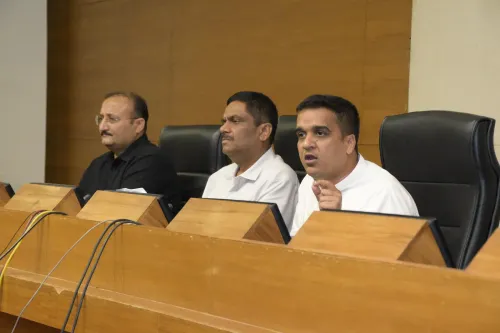
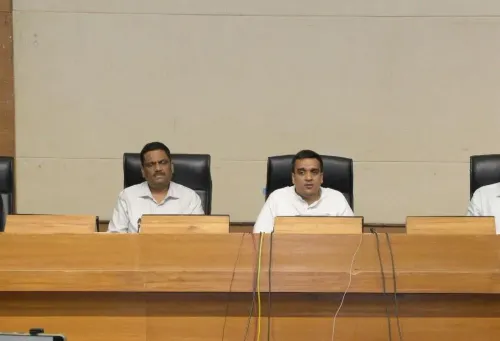
Deputy Chief Minister Harsh Sanghavi has indicated that police are examining the role of those who provided shelter, employment, forged documents or other assistance. Gujarat Director General of Police K.L.N. Rao said the operation relied heavily on data analysis and intelligence-led policing. The database built during Operation Delta Hunt will continue to be used to identify additional suspects. Most of those identified have reportedly expressed willingness to return to Bangladesh, though many cited the absence of employment there as a concern. The operation remains ongoing.
Point of View
If proven, would implicate not just border agents but a domestic chain of spa operators, landlords and labour contractors, most of whom remain unnamed. Until those facilitators face prosecution, enforcement will continue to target the most vulnerable end of the chain.
NationPress
24 Sept 2026
Frequently Asked Questions
What is Operation Delta Hunt in Gujarat?
Operation Delta Hunt is a statewide verification and enforcement drive launched by Gujarat Police to identify Bangladeshi nationals allegedly residing in the state illegally. As of 6 June 2025, the operation has identified 568 such individuals across Gujarat, with Ahmedabad accounting for 192 cases. It was built on a database of more than 6,200 suspected individuals generated through telecom analysis and intelligence inputs.
Why does Ahmedabad have the highest number of cases?
Ahmedabad's large informal labour market, industrial belt, and transient migrant population made it easier for undocumented individuals to blend in, according to police. Investigators found migrants dispersed across neighbourhoods such as Naroda, Odhav, Vatva GIDC and Danilimda — a shift from earlier years when they were concentrated around Chandola Lake.
What role did forged Aadhaar cards play in the investigation?
Many of the individuals identified held Aadhaar cards with West Bengal addresses but were unable to produce additional identity documents or parental identification when asked. Authorities are investigating how those Aadhaar cards were created and who facilitated the process. Officials have clarified that Aadhaar is not proof of citizenship under Indian law.
What trafficking allegations have emerged from Operation Delta Hunt?
Police allege that many women among those identified were brought to Gujarat through organised trafficking networks involving recruiters in Bangladesh, contacts in eastern India, and facilitators in Gujarat who arranged border crossings and connected women with spa businesses or prostitution rackets. Investigators say women were earning approximately ₹500 per day and were dependent on intermediaries who controlled their accommodation and employment.
Has Gujarat conducted a similar operation before?
Yes. A comparable exercise was carried out in 2009, when more than 300 Bangladeshi nationals were deported from Ahmedabad. According to senior police officials, settlements gradually re-emerged after those deportations and expanded over time, which is why the current operation is also targeting the facilitators and networks that enable illegal residence, not just the migrants themselves.