Owaisi Warns Only One Citizenship Proof Will Exist by 2030
Synopsis
AIMIM president Asaduddin Owaisi warned on 25 June 2026 that while the government treats no document as conclusive proof of citizenship today, by 2030 a single document will determine citizenship — raising alarm over exclusion risks for millions of Indians.
Key Takeaways
AIMIM president Asaduddin Owaisi posted on 25 June 2026 that the government currently treats no document as conclusive proof of citizenship.
Owaisi warned that by 2030 , only one document will serve as proof of citizenship in India.
The Citizenship Act, 1955 has been amended multiple times, most recently in 2019 , progressively tightening proof requirements.
The Assam NRC (2019) excluded nearly 1.9 million applicants, illustrating the stakes of documentation standards.
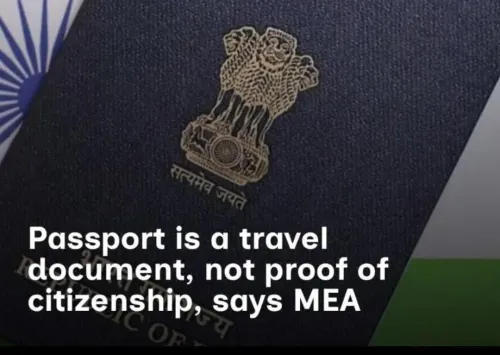
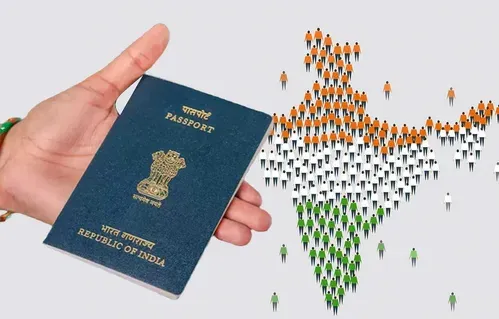
No single document — Aadhaar, passport, or voter ID — is currently recognised as conclusive proof of citizenship under Indian law.
Any move toward a single citizenship document is expected to face legal challenges in the Supreme Court and political opposition.
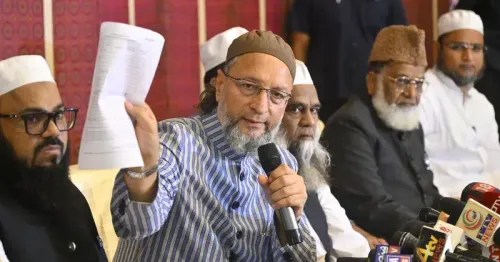
AIMIM president Asaduddin Owaisi on Thursday, 25 June 2026, issued a sharp warning on citizenship documentation, claiming that while the government currently holds no single document as conclusive proof of citizenship, by 2030 only one document will serve that purpose.
Context
Owaisi's post draws attention to a long-standing legal and administrative ambiguity at the heart of Indian citizenship law: no single document — not Aadhaar, not a passport, not a voter ID — is officially recognised as conclusive proof of citizenship. Courts and government authorities have consistently held that these documents establish identity and residence, not citizenship per se.
The AIMIM chief's statement implies that a future shift — converging all citizenship verification into one document by 2030 — would fundamentally alter how millions of Indians, particularly from marginalised communities, prove their belonging to the nation.
Policy Backdrop
The Citizenship Act, 1955, amended most recently in 2019, has progressively tightened proof requirements for citizenship by birth and descent. The 2003 amendment introduced the framework for a National Register of Indian Citizens (NRIC) and mandated that every citizen register, but the rules for a nationwide NRC were never fully notified by the central government.
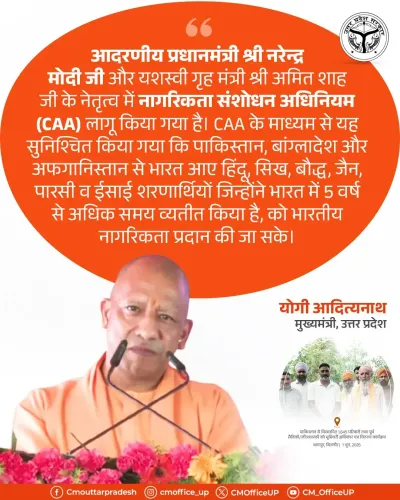
The Citizenship Amendment Act (CAA), 2019, granted fast-track citizenship to non-Muslim migrants from Afghanistan, Bangladesh, and Pakistan, intensifying debates over who bears the burden of proving citizenship and by what means. The Assam NRC, published in 2019, excluded nearly 1.9 million applicants, demonstrating the high human cost of documentation failures.
Parallel exercises — including the National Population Register (NPR) updation and proposed state-level NRCs — have sought to build a single authenticated citizen database. These moves have triggered sustained litigation and political contestation over what constitutes adequate proof of citizenship.
Stakeholders and Impact
Muslim citizens, Scheduled Castes, migrant workers, and communities in border states are most exposed to documentation-based exclusion. Rights groups have argued that a shift to a single mandatory citizenship document would disproportionately burden those who lack access to formal record systems — the elderly, the rural poor, and those displaced by floods or partition-era migrations.
Owaisi, as Lok Sabha MP from Hyderabad and a consistent critic of the CAA-NRC framework, has repeatedly raised these concerns in Parliament. His post signals that the AIMIM intends to keep citizenship documentation at the centre of its political messaging ahead of upcoming electoral cycles.
What's Next
Political and legal observers will watch for any fresh notification on nationwide NRC rules, an NPR updation schedule, or parliamentary debate on a proposed uniform citizenship document. If the government moves toward a single conclusive citizenship credential, it is almost certain to face constitutional challenges in the Supreme Court and renewed protests from opposition parties and civil society groups.
Owaisi's framing — that the current regime of 'no document is conclusive' will give way to 'one document decides all' — is likely to sharpen the political fault lines around citizenship, identity, and belonging as India approaches the next general election cycle.
Point of View
He connects the CAA-NRC legislative arc to a concrete deadline, making an abstract bureaucratic process feel urgent and personal to voters. This fits a broader pattern in which the AIMIM uses citizenship anxiety as an organising tool among Muslim and marginalised communities. The statement also pre-empts any government move toward a unified citizen credential by branding it as exclusionary before it is even formally announced.
NationPress
25 Jun 2026
Frequently Asked Questions
Is any document conclusive proof of citizenship in India?
No. Under current Indian law, documents such as Aadhaar, passport, and voter ID establish identity and residence but are not officially recognised as conclusive proof of citizenship. Courts have consistently upheld this distinction.
What is the NRC and how does it relate to citizenship proof?
The National Register of Citizens (NRC) is a register of verified Indian citizens. The Assam NRC, published in 2019, excluded nearly 1.9 million applicants who could not furnish adequate documentation, highlighting how documentation standards directly determine citizenship status.
What did Owaisi say about citizenship documents and 2030?
AIMIM president Asaduddin Owaisi warned on 25 June 2026 that while the government currently treats no document as conclusive proof of citizenship, by 2030 only one document will serve that purpose — implying a significant and potentially exclusionary policy shift.
What is the Citizenship Amendment Act (CAA) and why is it controversial?
The CAA, passed in 2019, grants fast-track citizenship to non-Muslim migrants from Afghanistan, Bangladesh, and Pakistan. Critics, including Owaisi, argue it discriminates on religious grounds and, when combined with an NRC, could be used to disenfranchise Muslim citizens.
Who is Asaduddin Owaisi?
Asaduddin Owaisi is the president of the All India Majlis-e-Ittehadul Muslimeen (AIMIM) and a Lok Sabha MP from Hyderabad. He is a prominent voice on minority rights and has consistently opposed the CAA-NRC framework in Parliament and in public discourse.