Jal Shakti Minister Paatil: 15.9 Cr Homes Now Have Tap Water
Synopsis
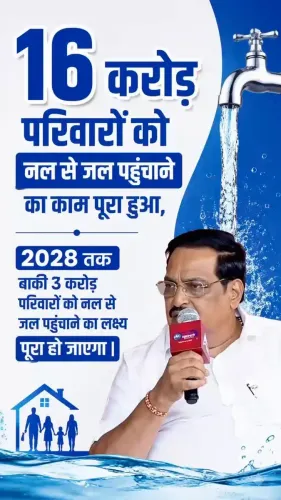
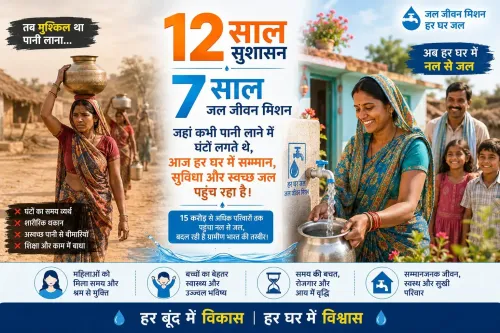
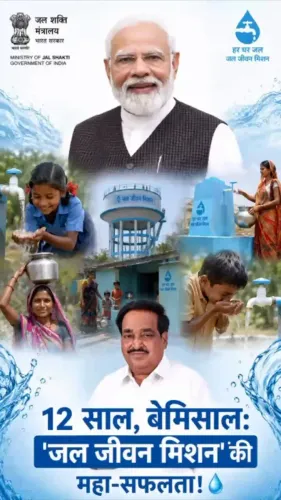
Union Jal Shakti Minister C. R. Paatil announced that over 2 lakh villages have self-certified as 'Har Ghar Jal' and that 15.9 crore rural families — 82.2% of India's rural households — now have piped tap water under the Jal Jeevan Mission launched in 2019.
Key Takeaways
Over 2 lakh villages have formally self-certified as 'Har Ghar Jal' as of 7 August 2026 .
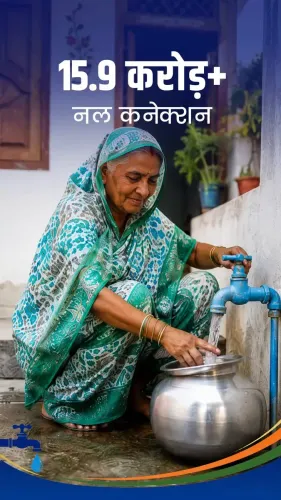
15.9 crore rural families , or 82.2% of India's rural households, now have functional tap water connections.
The Jal Jeevan Mission was launched in 2019 with a target to cover every rural household, originally by 2024.
The self-certification process is community-led — gram sabhas and panchayats verify and declare village-level completion.
Roughly 1 in 5 rural households still awaits coverage, with harder-to-reach geographies posing the steepest remaining challenge.
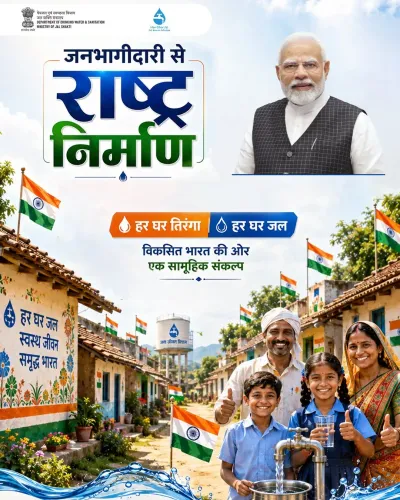
Paatil framed the milestone as evidence of jan bhagidari (public participation) and community ownership, not just infrastructure delivery.
More than 15.9 crore rural families across India now have piped tap water at home — and on Friday, 7 August 2026, Union Jal Shakti Minister C. R. Paatil marked a milestone that puts that number in sharp relief: over 2 lakh villages have formally self-certified as 'Har Ghar Jal', declaring that every household within their boundaries has a functional tap connection.
Paatil shared the update on X, crediting Prime Minister Narendra Modi's leadership for what he called an 'historic achievement' on the road to universal rural water access. 'यह केवल अवसंरचना निर्माण नहीं' ('This is not merely infrastructure creation'), he wrote — framing the milestone as proof of community ownership, public participation, and a national resolve on water security.
What '2 Lakh Villages Self-Certified' Actually Means
The self-certification process is a defining feature of the Jal Jeevan Mission (JJM). Village communities — through their gram sabhas and panchayats — verify and declare that every household in their village has a tap connection delivering potable water. It is not a government audit from above; it is a bottom-up declaration of completion, designed to build community accountability and long-term ownership of the infrastructure.
Crossing 2 lakh villages in this self-verification process represents a qualitative shift. It signals that the mission is no longer just laying pipes — it is handing infrastructure over to communities who are vouching for it themselves.
JJM at a Glance: From 2019 Promise to 82.2% Reality
Jal Jeevan Mission was launched in 2019, subsuming the earlier National Rural Drinking Water Programme, with a mandate to deliver functional household tap connections to every rural home in India. The original deadline was 2024. As of today's update, coverage stands at 82.2% — meaning roughly 1 in 5 rural households is still waiting.
That remaining gap is the next frontier. State-wise progress varies significantly, and the villages yet to be covered tend to be in harder-to-reach geographies. How fast the mission closes that last 17.8% will define its final legacy.
Jan Bhagidari: The Political Architecture Behind the Numbers
The Jal Jeevan Mission was always designed as more than a pipes-and-pumps programme. The jan bhagidari (public participation) model — where communities contribute to planning, monitoring, and maintaining their water systems — is a deliberate policy choice that mirrors the architecture of other flagship central schemes. It shifts the burden of sustainability from the state to the village, which is both its strength and its risk.
Minister Paatil's post leans heavily into this framing: the numbers matter, but so does the story of community ownership and water security as a collective resolve. With elections and parliamentary reviews always on the horizon, milestones like this carry both administrative and political weight.
Eighty-two percent is a number worth celebrating. The question now is whether the final stretch — the most difficult villages, the most stretched state budgets — gets the same momentum.
Point of View
The self-certification model — while politically elegant — places verification responsibility on communities that may face pressure to declare completion prematurely, raising questions about actual functional coverage on the ground. The mission's true test will come in the final 17.8%: remote, financially stretched, and politically less visible villages where the cost-per-connection is highest. Paatil's framing of this as a 'jan bhagidari' success also serves to distribute political credit downward to communities, a pattern consistent with how the BJP has sought to embed flagship schemes into local governance narratives ahead of electoral cycles.
NationPress
22 Sept 2026
Frequently Asked Questions
What is the Jal Jeevan Mission and when was it launched?
The Jal Jeevan Mission is a central government scheme launched in 2019 to provide functional household tap connections to every rural home in India. It subsumed the earlier National Rural Drinking Water Programme and originally aimed for full coverage by 2024.
How many rural households have tap water in India as of 2026?
As of 7 August 2026, over 15.9 crore rural families — representing 82.2% of India's rural households — have piped tap water connections under the Jal Jeevan Mission, according to Union Jal Shakti Minister C. R. Paatil.
What does 'Har Ghar Jal self-certified village' mean?
A 'Har Ghar Jal self-certified village' is one where the local gram sabha or panchayat has formally verified and declared that every household in the village has a functional tap water connection. It is a community-led verification process, not a top-down government audit.
Who is C. R. Paatil and what is his role in Jal Jeevan Mission?
C. R. Paatil is the Union Minister of Jal Shakti and a senior BJP leader and former Gujarat BJP state president. As the minister overseeing the Jal Shakti Ministry, he is responsible for implementing and monitoring the Jal Jeevan Mission.
How many villages have been self-certified under Har Ghar Jal?
More than 2 lakh (200,000) villages across India have self-certified as 'Har Ghar Jal' as of 7 August 2026, meaning their communities have declared universal tap water access within their boundaries.