CR Paatil Hails Distribution of 51,000 Govt Appointment Letters
Synopsis
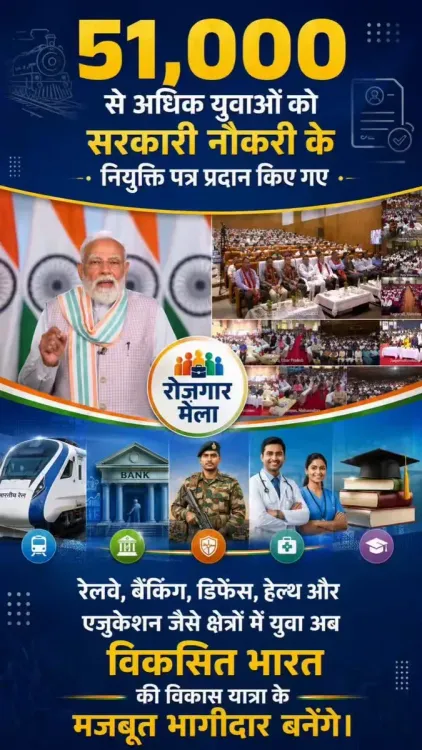
Union Jal Shakti Minister C. R. Paatil on 23 May 2026 praised the Modi government's distribution of appointment letters to over 51,000 young recruits in railways, banking, defence, health and education, framing it as a milestone for the Viksit Bharat agenda.
Key Takeaways
Union Jal Shakti Minister C.
Paatil publicly lauded the central government's latest recruitment drive on 23 May 2026 .
More than 51,000 appointment letters were distributed to young candidates across key public-sector departments.
Sectors covered include railways, banking, defence, health and education .
The drive is part of the Rozgar Mela programme, running since 2022 , aimed at clearing central government vacancy backlogs.
The government has linked the recruitment push to its Viksit Bharat (Developed India) policy goal.
Paatil framed the appointments as empowering youth self-reliance, not merely filling posts.
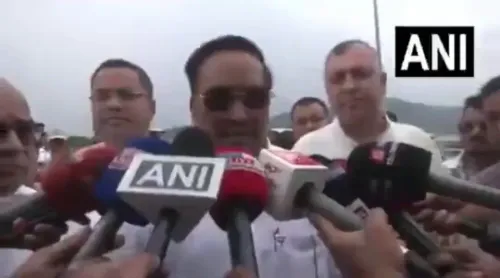
Union Jal Shakti Minister C. R. Paatil on Saturday, 23 May 2026 lauded the central government's decision to distribute appointment letters to more than 51,000 young recruits across key public-sector departments, calling it a decisive step toward youth empowerment under Prime Minister Narendra Modi.
Context
Posting in Hindi on X, Paatil wrote that handing over appointment letters to over 51,000 youth is not merely the provision of jobs but an act of giving 'new energy to their dreams, self-reliance and the resolve of a developed India' ('unke sapnon, aatmanirbharata aur Viksit Bharat ke sankalp ko nayi urja dena hai'). He specifically named railways, banking, defence, health and education as the sectors receiving fresh recruits. The minister concluded by stating that 'empowered youth are the greatest strength of a developed India.'
The post accompanies a video shared by the minister and is framed as a tribute to the Modi government's employment agenda rather than an announcement originating from the Jal Shakti Ministry itself.
Policy Backdrop
The distribution event fits the pattern of the Rozgar Mela programme, launched in 2022, under which the central government periodically hands out bulk appointment letters to candidates who have cleared competitive examinations for posts across ministries and public-sector bodies. The initiative was designed to clear long-standing vacancy backlogs and speed up the on-boarding process.
Indian Railways, one of the country's largest central employers, has been a consistent feature of these drives, with recruitment conducted through the Railway Recruitment Boards (RRBs). Public-sector banks and defence establishments have similarly been part of successive Rozgar Mela cohorts. The government has explicitly linked these recruitments to its Viksit Bharat (Developed India) vision, presenting public-sector hiring as a structural investment in human capital.
Stakeholders and Impact
The primary beneficiaries are young Indians who cleared central government recruitment examinations and had been awaiting formal induction. Sectors such as health and education stand to gain improved frontline staffing, while railways and banking are expected to address service-delivery gaps caused by unfilled posts.
For the BJP, mass appointment-letter events have also served as a visible communication tool, allowing senior leaders across portfolios — including ministers like Paatil whose own ministry does not oversee these sectors — to amplify the government's employment narrative ahead of political cycles. Youth unemployment and vacancy backlogs have remained a politically sensitive issue, making each Rozgar Mela a high-profile moment.
What's Next
Attention will now turn to whether parliamentary or audit disclosures confirm the cumulative tally of vacancies filled versus those originally notified across central departments in 2025-26. Civil-society groups and opposition parties have periodically questioned the gap between posts advertised and those actually filled, making official data on total recruitment a key metric to watch.
The government's ability to sustain the cadence of Rozgar Mela events through the remainder of the financial year will be closely tracked as a signal of its commitment to the broader Viksit Bharat employment agenda.
Point of View
Reinforcing the BJP's whole-of-government messaging on employment. By invoking 'Viksit Bharat' and 'Aatmanirbhar Bharat' in a single post, Paatil ties a routine administrative event to the government's two flagship narrative arcs. The Rozgar Mela format has matured into a recurring political communication tool, and senior leaders across ministries routinely co-opt it to signal responsiveness on youth unemployment — a persistently sensitive issue. The durability of this strategy will ultimately depend on whether audited data on total vacancies filled keeps pace with the optics of bulk distribution events.
NationPress
22 Sept 2026
Frequently Asked Questions
What is the Rozgar Mela and how does it work?
Rozgar Mela is a central government programme launched in 2022 under which appointment letters are handed out in bulk to candidates who have already cleared competitive examinations for posts in ministries and public-sector bodies, speeding up their formal induction.
Which sectors received the 51,000 appointment letters mentioned by CR Paatil?
According to Paatil's post, the appointment letters were distributed across railways, banking, defence, health and education departments of the central government.
What is Viksit Bharat and why is it linked to government recruitment?
Viksit Bharat, meaning 'Developed India,' is the Modi government's overarching development vision targeting a fully developed economy by 2047. The government frames public-sector hiring as a structural investment in human capital that directly supports this goal.
Why is a Jal Shakti minister commenting on railway and banking jobs?
Senior BJP leaders across portfolios routinely amplify central government employment milestones as part of coordinated political messaging, even when the recruitment falls outside their own ministry's mandate.
How many jobs has the Rozgar Mela programme created since 2022?
The cumulative total of appointments made through successive Rozgar Mela events since 2022 has not been independently verified in a single official audit; parliamentary and government disclosures for 2025-26 are awaited.