Jal Shakti Minister Paatil Reviews PMKSY Projects in Nagaland, Odisha, Bihar
Synopsis
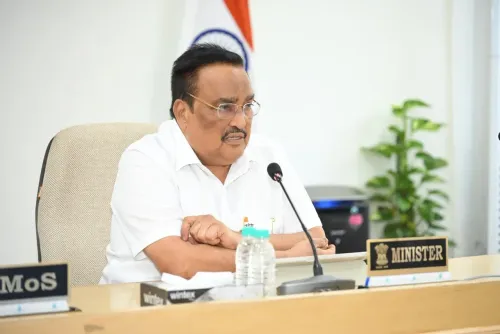
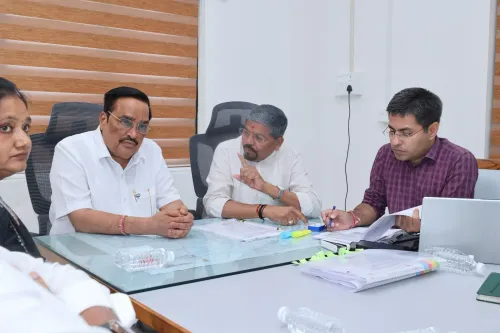
Union Jal Shakti Minister C. R. Paatil on 12 June 2026 chaired a PMKSY review meeting on SMI and RRR projects in Nagaland, Odisha, and Bihar, issuing directives for swift, time-bound completion to ensure last-mile irrigation benefits reach farmers in these historically under-irrigated states.
Key Takeaways
Union Jal Shakti Minister C.
Paatil chaired a PMKSY review meeting on 12 June 2026 .
The meeting covered SMI (Surface Minor Irrigation) and RRR (Repair, Renovation and Restoration) components in Nagaland, Odisha, and Bihar .
Paatil directed officials to ensure 'swift and time-bound completion' of all projects under review.
PMKSY was launched in July 2015 to converge irrigation programmes under the goal of Har Khet Ko Pani .
The three states have historically lower irrigation coverage than north-western India, making central oversight critical for agricultural productivity.
State-wise progress reports and fund utilisation are expected to be reviewed at subsequent quarterly meetings and in Parliament's monsoon session.
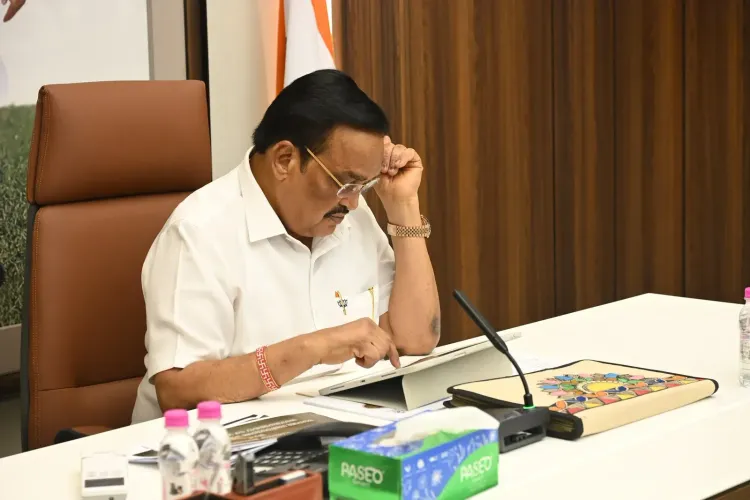
Union Jal Shakti Minister C. R. Paatil on Friday, 12 June 2026 chaired a review meeting on Pradhan Mantri Krishi Sinchayee Yojana (PMKSY) projects covering Nagaland, Odisha, and Bihar, assessing progress on Surface Minor Irrigation (SMI) and Repair, Renovation and Restoration (RRR) components and directing officials to ensure time-bound completion so benefits reach the last beneficiary.
Context
Posting on X in Hindi, Minister Paatil said he 'परियोजनाओं की प्रगति का विस्तृत आकलन' ('conducted a detailed assessment of project progress') and issued directives for 'swift and time-bound completion' of the schemes. He underlined the government's commitment to ensuring that 'every scheme's benefit reaches the last person', citing the leadership of Prime Minister Narendra Modi. The meeting covered both the SMI component, which funds new minor irrigation infrastructure, and the RRR component, which focuses on restoring existing water bodies to boost storage capacity.
Policy Backdrop
PMKSY was launched in July 2015 by converging the Accelerated Irrigation Benefits Programme (AIBP), minor irrigation, and watershed development into a single umbrella scheme under the Ministry of Jal Shakti, with the overarching goal of 'Har Khet Ko Pani' — water to every farm. The RRR component was integrated from 2015 onward to address the deterioration of traditional water bodies, while SMI allocations specifically targeting eastern and north-eastern states have been operative since 2016-17. Nagaland, Odisha, and Bihar historically lag behind north-western states in irrigation coverage, making central oversight of these projects particularly significant for agricultural productivity in these regions.
Stakeholders and Impact
The primary beneficiaries are farmers and rural communities in the three states who depend on rain-fed agriculture and lack access to assured irrigation. Bihar and Odisha carry large concentrations of small and marginal farmers, while Nagaland's hill terrain makes minor irrigation infrastructure critical for sustaining local food production. Timely completion of SMI and RRR projects would expand irrigated area, reduce dependence on monsoon variability, and improve water-use efficiency at the field level. The Union government's central funding role means that delays in fund utilisation or physical execution directly affect the pace at which these communities gain access to reliable irrigation.
What's Next
State-wise physical progress reports and fund utilisation data are expected to be reviewed at subsequent quarterly oversight meetings and may be taken up during the monsoon session of Parliament. Minister Paatil's directive for 'time-bound completion' signals that project-executing agencies in the three states will face closer monitoring in the coming months. Sustained central scrutiny of PMKSY implementation in low-irrigation-coverage states is likely to remain a recurring feature of the Jal Shakti Ministry's agenda as the government pushes to meet its agricultural welfare targets.
Point of View
Odisha, and Bihar — three states with significant agricultural vulnerability — the Jal Shakti Ministry is reinforcing central oversight as a lever to push state-level execution. The explicit emphasis on last-mile delivery echoes a broader BJP governance narrative around scheme saturation and welfare reach ahead of electoral cycles in several eastern states. Sustained ministerial attention to fund utilisation and physical completion timelines will be the real test of whether this oversight translates into on-ground irrigation gains.
NationPress
26 Oct 2026
Frequently Asked Questions
What is PMKSY and what does it cover?
Pradhan Mantri Krishi Sinchayee Yojana (PMKSY) is a central scheme launched in July 2015 that integrates irrigation programmes — including AIBP, minor irrigation, and watershed development — under the Ministry of Jal Shakti, with the goal of providing water to every farm ('Har Khet Ko Pani').
What are SMI and RRR projects under PMKSY?
SMI stands for Surface Minor Irrigation, which funds new minor irrigation infrastructure, while RRR stands for Repair, Renovation and Restoration of water bodies, aimed at restoring existing water storage structures to increase capacity.
Why did Jal Shakti Minister C. R. Paatil review projects in Nagaland, Odisha, and Bihar specifically?
Nagaland, Odisha, and Bihar have historically lower irrigation coverage compared with north-western states, making central oversight of PMKSY projects in these regions particularly important for improving agricultural productivity and farmer welfare.
What did C. R. Paatil direct at the PMKSY review meeting on 12 June 2026?
Minister Paatil directed officials to ensure swift and time-bound completion of SMI and RRR projects in the three states so that the benefits of these irrigation schemes reach the last beneficiary effectively.
What happens after the PMKSY review meeting?
State-wise physical progress reports and fund utilisation certificates are expected to be reviewed at subsequent quarterly oversight meetings and may also be taken up during the monsoon session of Parliament.