Jal Shakti Minister Paatil Urges Farmers to Diversify Crops Amid El Niño Risk
Synopsis
Union Jal Shakti Minister C. R. Paatil on June 1, 2026 called on Indian farmers to adopt alternative crops and diversification strategies to guard against El Niño-linked monsoon deficits, framing farmer-led adaptation as the key to overcoming the climate threat under the #KhetBachaoAbhiyan banner.
Key Takeaways
Paatil , Union Jal Shakti Minister, posted on June 1, 2026 urging farmers to diversify crops amid El Niño drought risk.
The post carried the hashtag #KhetBachaoAbhiyan and advised adoption of alternative crops in anticipation of low rainfall.
El Niño is a Pacific Ocean climate pattern historically linked to weakened Indian monsoon and drought in rainfed farming regions.
The National Mission for Sustainable Agriculture (2011) and Pradhan Mantri Krishi Sinchayee Yojana (2015) form the existing policy backbone for such adaptation efforts.
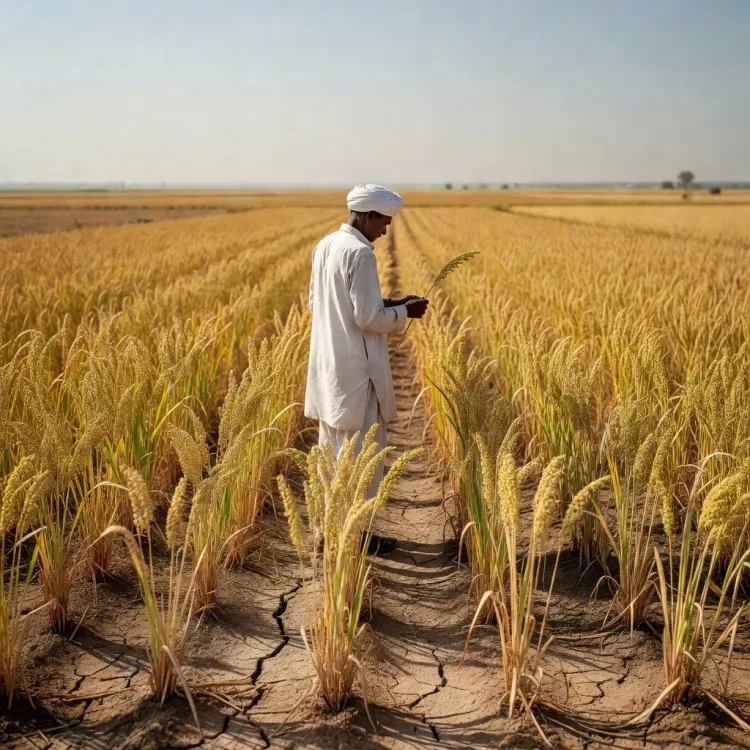
Post- 2015–16 El Niño , the central government scaled up contingency plans promoting millets and pulses as drought-resilient alternatives.
IMD's June 2026 monsoon forecast update will be the next key trigger for coordinated inter-ministerial advisories.
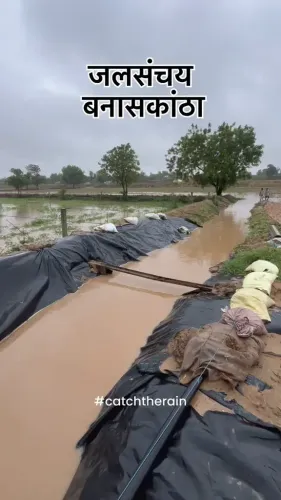
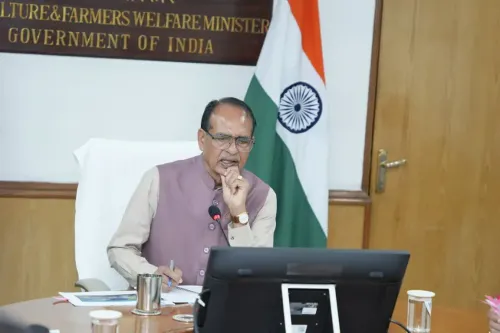
Union Jal Shakti Minister C. R. Paatil on Monday, June 1, 2026, called on farmers across India to embrace alternative crops and crop diversification as a shield against reduced rainfall and drought risk linked to an El Niño weather pattern. Posting on X under the hashtag #KhetBachaoAbhiyan ('Save the Farm Campaign'), Paatil framed the challenge in farmer-first terms, writing: 'The threat of El Niño will pass only when the farmer himself adapts.'
Context
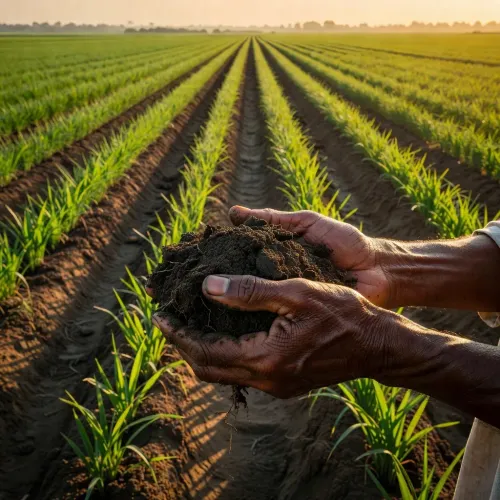
Paatil's post carries a direct advisory sub-text, urging farmers to 'adopt alternative crops and crop diversification amid fears of low rainfall and drought.' The appeal is aimed squarely at rainfed farming communities, which remain the most exposed to monsoon variability and have the least access to assured irrigation. The hashtag #KhetBachaoAbhiyan signals a broader campaign framing, though its operational details are yet to be officially announced.
El Niño — a periodic warming of the central and eastern Pacific Ocean — is historically associated with a weakened Indian summer monsoon, raising the spectre of below-normal kharif-season rainfall. The India Meteorological Department (IMD) is expected to issue an updated monsoon forecast in June 2026, which will be closely watched by agriculture and water ministries.
Policy Backdrop
The minister's message aligns with a well-established central government playbook on climate-risk agriculture. The National Mission for Sustainable Agriculture (2011) has long promoted climate-resilient practices, including crop diversification and improved water-use efficiency, as core adaptation strategies for rainfed districts.
In 2023, the Ministry of Agriculture and IMD issued joint advisories urging states to promote drought-resistant crop varieties and encourage farmers to shift away from water-intensive crops ahead of a potential El Niño monsoon. The Pradhan Mantri Krishi Sinchayee Yojana (2015) further expanded micro-irrigation coverage to reduce dependence on seasonal rainfall in vulnerable regions. After the severe 2015–16 El Niño drought, the central government scaled up contingency plans promoting millets and pulses in rainfed areas — crops that require significantly less water than paddy or sugarcane.
Paatil's intervention from the Jal Shakti Ministry — which oversees water resources and the Jal Jeevan Mission — underscores the convergence of water security and agricultural resilience messaging that successive governments have pursued. The emphasis on farmer-level behavioural change reflects a policy acknowledgement that large irrigation infrastructure alone cannot cover all rainfed acreage in time to address near-term climate shocks.
Stakeholders and Impact
The primary audience is rainfed farmers, who cultivate a significant share of India's net sown area and whose incomes are directly tied to monsoon performance. State agriculture departments are the key implementation channel: they are responsible for translating central advisories into district-level sowing guidance, seed distribution, and extension support ahead of the kharif sowing season, which typically begins in June–July.
Crop diversification away from water-intensive varieties towards millets, pulses, and oilseeds can also support the government's broader goals on nutritional security and import substitution for edible oils and protein crops. Farmers who diversify early in a drought year are better positioned to avoid total crop failure and access relief mechanisms.
What's Next
The immediate trigger for action will be IMD's June 2026 monsoon forecast update, which will determine how urgently states escalate their kharif contingency plans. If the forecast confirms below-normal rainfall, the Ministries of Jal Shakti, Agriculture, and Earth Sciences are expected to issue coordinated advisories — a pattern established in prior El Niño years. Paatil's early public messaging positions the Jal Shakti Ministry as an active voice in that inter-ministerial response, signalling that water-side planning is already under way even before the monsoon's formal onset.
Point of View
High-visibility signal that the central government is preparing its El Niño response playbook well before the monsoon's formal onset — a departure from the reactive advisories that followed the 2015–16 drought. By anchoring the message in farmer agency rather than government relief, the Jal Shakti Ministry is nudging the policy conversation toward demand-side water management and crop-mix reform, areas where progress has historically been slow. The use of a campaign hashtag suggests coordination with a broader outreach effort, though its institutional backing remains to be seen. If IMD's June 2026 forecast confirms below-normal rainfall, this post may be recalled as the opening salvo of a sustained inter-ministerial communication drive.
NationPress
22 Sept 2026
Frequently Asked Questions
What is El Niño and how does it affect Indian farmers?
El Niño is a periodic warming of the Pacific Ocean that typically weakens the Indian summer monsoon, raising the risk of below-normal rainfall and drought, which directly harms rainfed farmers who depend on seasonal rains for their kharif crops.
What is the #KhetBachaoAbhiyan campaign?
#KhetBachaoAbhiyan, which translates roughly to 'Save the Farm Campaign,' is a hashtag used by Jal Shakti Minister C. R. Paatil in his June 2026 post urging farmers to adopt crop diversification; its full operational scope has not yet been officially announced.
Which crops should farmers grow during an El Niño year in India?
Central government advisories in prior El Niño years have recommended drought-resistant varieties, millets, pulses, and oilseeds as alternatives to water-intensive crops like paddy and sugarcane in rainfed districts.
What government schemes support crop diversification in India?
The National Mission for Sustainable Agriculture (2011) and the Pradhan Mantri Krishi Sinchayee Yojana (2015) are the two primary central schemes supporting climate-resilient farming, crop diversification, and micro-irrigation for rainfed farmers.
What is the IMD monsoon forecast for June 2026?
As of this report, IMD's detailed June 2026 monsoon forecast update is awaited; its findings will determine how urgently state governments escalate kharif contingency plans for the upcoming sowing season.