Jal Shakti Minister Paatil Backs Soil Testing for Balanced Farm Inputs
Synopsis
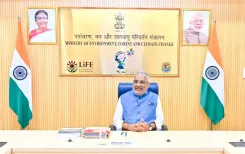
Union Jal Shakti Minister C. R. Paatil on June 1, 2026 called on farmers to fertilize only after soil testing under #KhetBachaoAbhiyan, linking evidence-based nutrient management to lower costs, healthier soil, and the ministry's water conservation priorities.
Key Takeaways
Union Jal Shakti Minister C.
Paatil posted on June 1, 2026 urging fertilizer use only after soil testing.
The message was tagged under #KhetBachaoAbhiyan ('Save the Farm Campaign').
He warned that untested fertilizer application can 'ruin farming' and called for balanced nutrient management.
The push aligns with the Soil Health Card Scheme , launched in February 2015 , which provides crop-specific fertilizer guidance based on soil tests.
The Jal Shakti framework connects balanced fertilization to reduced chemical runoff and improved groundwater sustainability.
Small and marginal farmers are the primary target audience, as soil-test-guided inputs can significantly cut unnecessary expenditure.
Union Jal Shakti Minister C. R. Paatil on Monday, June 1, 2026 urged farmers to apply fertilizers only on the basis of soil testing, warning that untested fertilizer use risks long-term damage to agricultural land. The minister posted the message under the hashtag #KhetBachaoAbhiyan, calling for balanced nutrient management to lower input costs and protect soil health.
Context
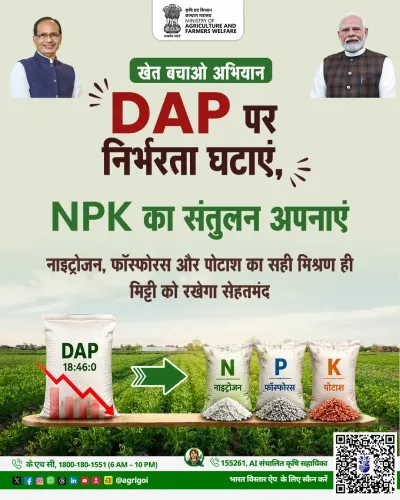
Paatil's post carries a pointed warning: 'बिना जांच के खाद, खेती को करेगी बर्बाद!' ('Fertilizer without testing will ruin farming!'). The sub-text directs farmers to distribute fertilizers 'only on the basis of soil testing this time' and to 'adopt balanced nutrition, reduce costs.' The message is addressed to the farming community broadly, with particular relevance for small and marginal farmers who often apply fertilizers in blanket quantities without nutrient analysis.
Indiscriminate fertilizer use — particularly of urea — has been linked to declining soil organic matter, micronutrient depletion, and increased input expenditure across major agricultural states. The minister's framing ties fertilizer discipline directly to farm viability and soil longevity.
Policy Backdrop
The call aligns with the Soil Health Card Scheme, a central government initiative launched in February 2015 that provides farmers with soil nutrient reports and crop-specific fertilizer recommendations based on laboratory testing. The scheme was designed precisely to shift cultivation practices from habit-based to evidence-based fertilizer application.
Successive Union Budgets and agricultural missions have reinforced soil testing as a pillar of sustainable input management. Within the Jal Shakti framework, the linkage is ecological: balanced fertilization reduces chemical runoff into water bodies, supporting groundwater quality and irrigation sustainability — both central concerns of the ministry.
Government messaging on #KhetBachaoAbhiyan ('Save the Farm Campaign') reflects a continuing effort to anchor farm-input decisions in scientific data rather than market habit or subsidy-driven over-application.
Stakeholders and Impact
Small and marginal farmers, who constitute the majority of India's agricultural workforce, stand to benefit most from soil-test-guided fertilization, as it can reduce unnecessary expenditure on inputs that do not match actual soil deficiencies. Fertilizer subsidy reform discussions in recent years have also pointed toward linking subsidy disbursal to soil health data, which would make this messaging a precursor to potential policy shifts.
Soil degradation has long-term consequences for food security and rural incomes. Evidence-based nutrient management, if adopted at scale, can arrest declining soil organic carbon levels that have been documented across the Indo-Gangetic Plain and other high-intensity cultivation zones.
What's Next
Observers will watch whether state agriculture departments scale up soil testing camps ahead of the kharif 2026 sowing season in response to this push. The integration of soil health data into fertilizer subsidy architecture — a reform long discussed in policy circles — may gain renewed attention if the #KhetBachaoAbhiyan messaging is backed by programmatic action at the ground level. The minister's post signals that soil health will remain a visible policy communication priority through the current agricultural season.
Point of View
The post functions as a visible signal to state governments and agriculture departments that the Centre expects soil testing to be a front-line tool in the coming kharif season.
NationPress
15 Oct 2026
Frequently Asked Questions
What is the #KhetBachaoAbhiyan campaign about?
#KhetBachaoAbhiyan, or 'Save the Farm Campaign,' promotes evidence-based farming practices, particularly urging farmers to apply fertilizers only after soil testing to reduce costs and prevent soil degradation. Specific programmatic details of the campaign have not been officially announced as of the minister's June 1, 2026 post.
What is the Soil Health Card Scheme?
The Soil Health Card Scheme is a central government initiative launched in February 2015 that provides farmers with a card detailing their soil's nutrient status and recommending crop-specific fertilizer doses based on laboratory soil tests.
Why is untested fertilizer use harmful for soil?
Applying fertilizers without soil testing often leads to over-use of certain nutrients like urea, which depletes soil organic matter, causes micronutrient imbalances, accelerates soil acidification, and increases input costs without proportional yield benefits.
How does soil testing relate to the Jal Shakti Ministry's work?
Balanced fertilization guided by soil tests reduces chemical runoff into rivers and groundwater, which directly supports the Jal Shakti Ministry's mandate of water conservation, groundwater protection, and sustainable irrigation.
How can Indian farmers get their soil tested?
Farmers can access soil testing through government-run soil testing laboratories and periodic soil health camps organised by state agriculture departments, after which they receive a Soil Health Card with fertilizer recommendations tailored to their plot.