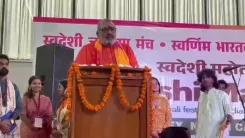
Jal Shakti Minister Paatil vows Yamuna will soon be clean
Synopsis
Union Jal Shakti Minister C. R. Paatil on 9 June 2026 invoked PM Modi's resolve and declared that the Yamuna will soon be clean, signalling a renewed central government push on one of India's most persistent river-pollution challenges.
Key Takeaways
Paatil , Union Minister of Jal Shakti, posted on 9 June 2026 that the Yamuna will soon be clean, citing PM Modi 's resolve.
The Yamuna Action Plan was first launched in 1993 ; the river's pollution — especially in the Delhi stretch — has persisted across multiple government tenures.
The Namami Gange programme , launched in 2015 , covers Yamuna pollution abatement as part of the broader Ganga basin mandate.
The Ministry of Jal Shakti was formed in 2019 by merging two central ministries to consolidate water resource and river development functions.
The minister's post does not specify a deadline or project, but the phrase 'jaldi hi' ('soon') implies an imminent government action on the Yamuna clean-up.
Updated water quality data and new project sanctions under Namami Gange extensions are the key developments to watch.
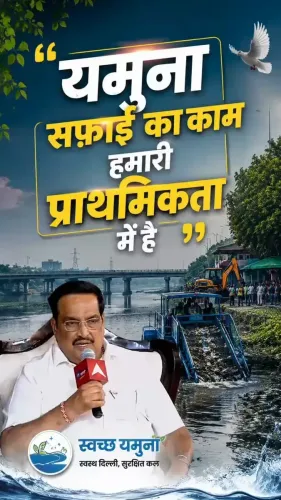
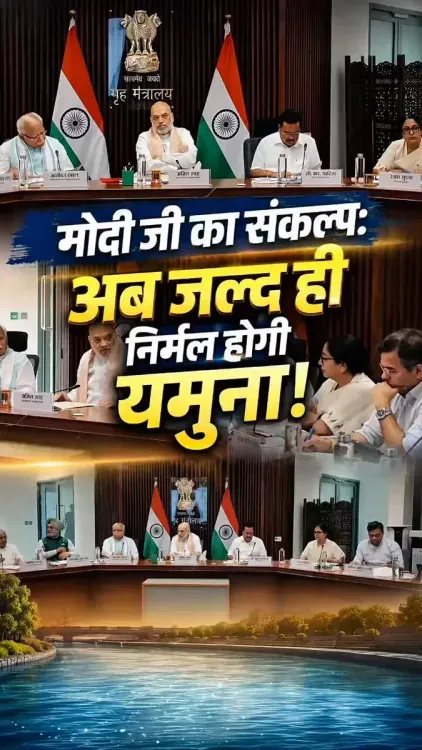
Union Jal Shakti Minister C. R. Paatil on Tuesday, 9 June 2026 posted a message on X reaffirming the central government's commitment to cleaning the Yamuna river, invoking Prime Minister Narendra Modi's resolve and declaring that the river will soon be purified.
The post, written in Hindi, reads: 'Modi ji ka sankalp: Ab jaldi hi nirmal hogi Yamuna!' — translated as 'Modi's resolve: The Yamuna will soon be clean!' The minister's statement signals a renewed push from the Ministry of Jal Shakti on one of India's most politically and environmentally significant river-cleaning goals.
Context
The Yamuna, a major tributary of the Ganga, flows through Delhi, Haryana, and Uttar Pradesh and has been severely degraded by decades of untreated sewage discharge and industrial effluents. The river's pollution levels — particularly in the Delhi stretch — have remained a persistent concern for residents, civic bodies, and courts alike. Successive governments at both the central and state levels have pledged remediation, making Paatil's statement part of a long-running political and administrative conversation.
The Yamuna Action Plan, first launched in 1993, was among the earliest structured efforts to address the river's deterioration, with multiple phases following over subsequent decades. Despite infrastructure investments, water quality improvement has remained uneven across stretches.
Policy Backdrop
The Namami Gange programme, launched in 2015 under the Modi government, extended the national river-cleaning mandate to the Ganga basin's tributaries, including the Yamuna. The programme has funded sewage treatment plants, riverfront development, and industrial compliance drives across the basin. The Ministry of Jal Shakti itself was created in 2019 by merging the ministries of Water Resources and Drinking Water and Sanitation, consolidating river development and water management under a single ministry.
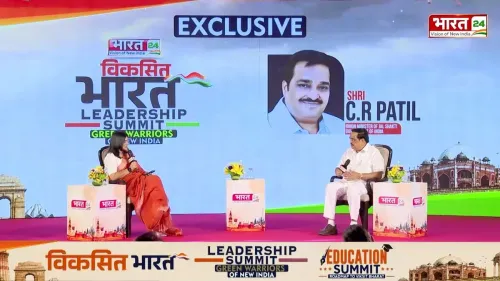
Paatil, a senior BJP leader and former Gujarat state president, has been at the helm of Jal Shakti and has consistently framed the Yamuna's revival as a personal and governmental priority. His post does not specify a deadline or a particular project sanction, but uses the phrase 'jaldi hi' — 'soon' — suggesting an imminent development in the government's Yamuna clean-up timeline.
Stakeholders and Impact
The communities most directly affected by Yamuna pollution span Delhi's roughly 3 crore residents who depend on the river basin for water supply, along with farming and fishing communities in downstream Haryana and Uttar Pradesh. Improved water quality would have direct consequences for public health, agricultural output, and the ecological health of the broader Ganga system.
Environmental advocates and civic groups have long called for measurable, time-bound targets on sewage treatment capacity and industrial discharge compliance. The minister's post is likely to be read in that context — as a political signal ahead of possible project announcements or updated water-quality disclosures.
What's Next
Observers will watch for the release of updated water quality data for the Yamuna's Delhi stretch and downstream reaches, as well as any supplementary budget allocations or new project sanctions under extensions of the Namami Gange programme. Any formal government announcement on revised targets or new infrastructure commissions in the coming weeks would lend specificity to the minister's declaration. The statement sets a public benchmark against which the government's near-term actions on the Yamuna will be measured.
Point of View
A framing the BJP has used effectively with the Ganga. The Yamuna, however, carries heavier political freight given Delhi's centrality: any credible progress would be a significant win for the government, while continued stagnation risks reinforcing a long-standing criticism that pledges on the river outpace delivery. The statement is best read as a precursor to a concrete announcement rather than a standalone declaration.
NationPress
25 Oct 2026
Frequently Asked Questions
Is the Yamuna river going to be cleaned soon?
Union Jal Shakti Minister C. R. Paatil stated on 9 June 2026 that the Yamuna will 'soon' be clean, invoking PM Modi's resolve, though no specific deadline or project was named in the post.
What is the government doing to clean the Yamuna?
The central government has pursued Yamuna clean-up through the Yamuna Action Plan since 1993 and through the Namami Gange programme since 2015, funding sewage treatment plants, industrial compliance drives, and riverfront development.
What is the Namami Gange programme?
Namami Gange is a central government programme launched in 2015 to rejuvenate the Ganga river and its tributaries, including the Yamuna, through sewage treatment infrastructure, pollution abatement, and ecological restoration.
Who is C. R. Paatil?
C. R. Paatil is the Union Minister of Jal Shakti, responsible for river development and water resources, and is a senior BJP leader who previously served as Gujarat state president.
Why is the Yamuna so polluted?
The Yamuna — particularly its Delhi stretch — is heavily polluted due to decades of untreated sewage discharge from urban areas and industrial effluents, with remediation efforts hampered by gaps in sewage treatment capacity and enforcement.