Varah March banned in MP's Dhar: police deployed, activists arrested
Synopsis
Dhar's district administration banned the 'Varah March' on 15 September, arrested several organisers and sealed the contested Ganjikhana site — a structure Hindus call 'Vijay Mandir' and Muslims call 'Lat Masjid'. The crackdown follows a surge in activity by Hindu groups since the Bhojshala handover, making this one of MP's most combustible heritage-identity flashpoints.
Key Takeaways
Dhar administration revoked permission for the 'Varah March' by Sanatan Prahari Samiti on 15 September , citing security concerns.
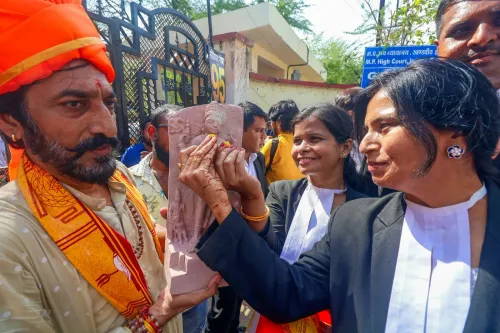
Several office-bearers of the Samiti were arrested on Tuesday morning; all posters and hoardings related to the march were ordered removed.
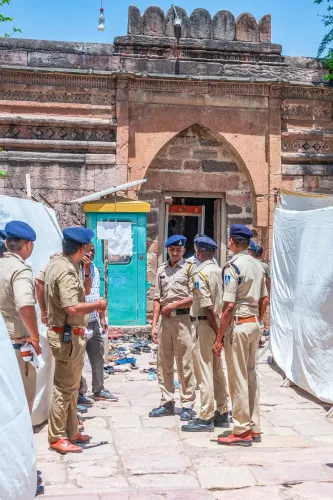
The Archaeological Survey of India (ASI) shut the Ganjikhana protected site for the day; unauthorised entry is punishable under the Ancient Monuments Act, 1958 .
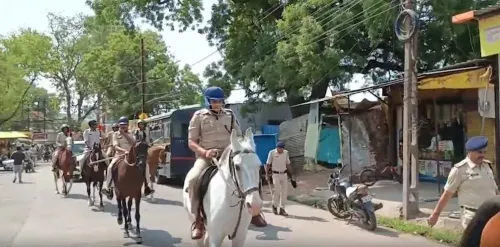
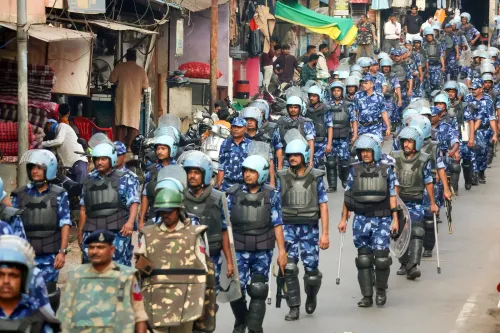
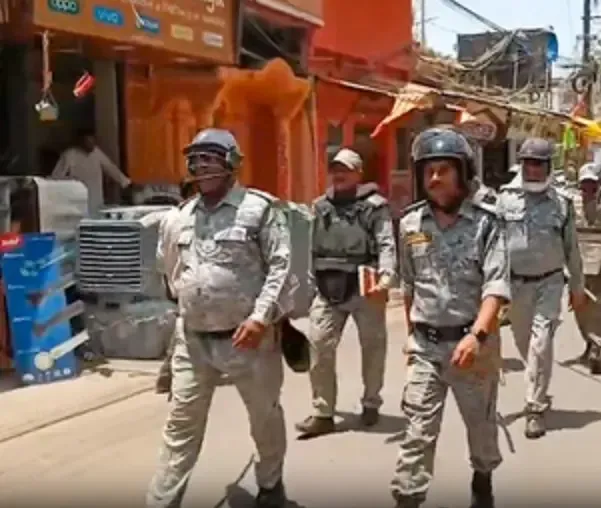
Nearly two dozen SHOs plus SDOP and DSP-rank officers were deployed; surveillance conducted via CCTV cameras and drones.
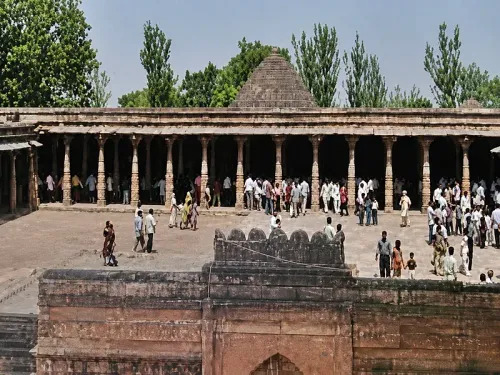
The disputed structure — built in 1405 CE by Dilawar Khan — is claimed by Hindu groups to be a Paramara-era temple dating to the early 9th century.
Tensions escalated after the nearby Bhojshala site was handed over to Hindu organisations.
The district administration in Dhar, Madhya Pradesh, revoked permission for the 'Varah March' proposed by the 'Sanatan Prahari Samiti' on 15 September 2026, citing security concerns and the imperative to maintain law and order. A heavy police force was mobilised across the city, and several office-bearers linked to the march were arrested on Tuesday morning, as authorities moved swiftly to prevent communal tension at a historically contested site.
What Led to the Crackdown
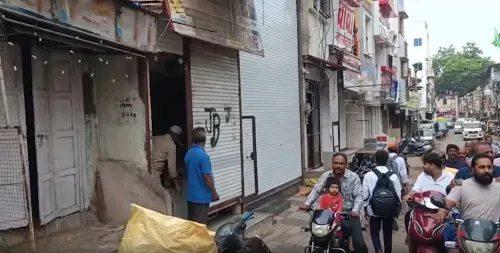
Assistant Superintendent of Police Vijay Dawar confirmed that the permission was cancelled over security concerns, appealing to residents to maintain peace and avoid unnecessary movement outside their homes. In tandem, the administration ordered the immediate removal of all posters and hoardings related to the proposed march.
Anticipating possible unrest, the Archaeological Survey of India (ASI) kept the protected structure at Ganjikhana closed to the public on Tuesday. The ASI issued a formal order warning that any unauthorised entry or activity would attract action under the Ancient Monuments and Archaeological Sites and Remains Act, 1958.
Scale of Security Deployment
Authorities mounted a substantial security apparatus across Dhar. A large contingent comprising nearly two dozen Station House Officers (SHOs) along with officers of Sub-Divisional Officer of Police (SDOP) and Deputy Superintendent of Police (DSP) ranks was deployed. Fixed police pickets were established at the PG College ground and major intersections, while mobile vans conducted continuous patrols.
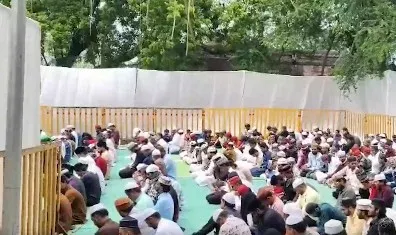
Surveillance was carried out through CCTV cameras, drones, and observers posted atop high-rise buildings. Forces were positioned in sensitive areas, and outsiders were advised not to visit Dhar for the time being. Security was set to be tightened further during the window originally proposed for the march.
The Contested Structure at the Centre of the Row
The site in question — the protected archaeological structure at Ganjikhana — is referred to as 'Vijay Mandir' (Temple of Victory) by Hindu groups and as 'Lat Masjid' by the Muslim community. Historically, the mosque was constructed in 1405 CE by Dilawar Khan as a Friday mosque to mark his declaration of independence from Delhi and the founding of the Malwa Sultanate. Its name, reportedly, derives from a fragmentary iron pillar — known as 'Lat' in Hindi — located within its compound.
Hindu organisations, however, maintain that the structure predates the Malwa Sultanate and was originally a temple commissioned by King Bhoja of the Paramara dynasty (early 9th century) following his conquest of the Telangana region. They point to a pillar featuring an image of Lord Varaha and an 'Ashtadhatu' (eight-metal alloy) rust-resistant pillar — which they claim bears a Varaha image and was installed by King Bhoja — as evidence of its temple origins.
How the Bhojshala Ruling Intensified the Dispute
The current controversy reportedly intensified after the Bhojshala site in Dhar was handed over to Hindu organisations. Groups emboldened by that development have since pressed their claim over the Lat Masjid structure, lending the Varah March a charged political and religious context that the district administration deemed too volatile to permit. This is not the first time that competing claims over historical structures in Madhya Pradesh have required police action — the pattern echoes earlier flashpoints in Vidisha and Burhanpur.
As the situation remains tense, all eyes will be on whether Dhar's administration can hold the peace while the broader legal and religious dispute over the Ganjikhana structure finds a longer-term resolution.
Point of View
Adjacent claims are immediately activated. The Bhojshala handover did not resolve a dispute — it signalled an opening, and organised groups moved quickly. District administrations are being left to manage the fallout of unresolved macro-level legal and political decisions with blunt tools — bans and boots on the ground — that buy time but settle nothing. Until the courts and the Centre provide a durable, consistent framework for adjudicating overlapping historical claims, Dhar will not be the last flashpoint.
NationPress
15 Sept 2026
Frequently Asked Questions
What is the Varah March and why was it cancelled in Dhar?
The Varah March was a procession proposed by the Sanatan Prahari Samiti in Dhar, Madhya Pradesh, near the contested Ganjikhana site. The district administration revoked its permission on 15 September 2026, citing security concerns and the need to prevent communal tension.
What is the dispute over the Lat Masjid (Vijay Mandir) in Dhar?
The Lat Masjid is an ASI-protected structure in Dhar that Muslim communities recognise as a mosque built in 1405 CE by Dilawar Khan. Hindu groups call it 'Vijay Mandir', claiming it was originally a temple built during the Paramara dynasty by King Bhoja in the early 9th century, citing a pillar bearing a Lord Varaha image as evidence.
How many people were arrested in connection with the Varah March?
Several office-bearers of the Sanatan Prahari Samiti were detained and subsequently arrested on Tuesday morning, according to officials. The exact number has not been officially confirmed.
Why is the Ganjikhana site closed today?
The Archaeological Survey of India issued a formal order closing the Ganjikhana protected structure on 15 September 2026 to prevent any unauthorised entry or activity linked to the proposed march. Violations are punishable under the Ancient Monuments and Archaeological Sites and Remains Act, 1958.
How does the Bhojshala decision connect to the Dhar controversy?
Tensions around the Lat Masjid-Vijay Mandir dispute reportedly intensified after the Bhojshala site in Dhar was handed over to Hindu organisations. That decision emboldened groups to press similar claims over the Ganjikhana structure, providing the immediate backdrop for the Varah March and the administration's subsequent ban.