Sachin Pilot flags CBSE OSM flaws, demands accountability on NEET 2026 leak
Synopsis
Congress general secretary Sachin Pilot has called out CBSE over its flawed OSM evaluation system, saying over 18.5 lakh Class XII students face marking errors, blurred copies and high revaluation fees. He also demanded answers on the COEMPT tender and pressed the government on accountability in the alleged NEET 2026 paper leak.
Key Takeaways
Congress leader Sachin Pilot says more than 18.5 lakh CBSE Class XII students are suffering due to flawed implementation of the OSM (Online Scoring and Marking) system .
Student complaints include excessively strict marking, blurred answer sheet copies, evaluation errors, high revaluation fees, and website crashes.
Pilot backed Rahul Gandhi's four questions on the tender awarded to COEMPT , calling them 'extremely serious' and demanding clear answers from the government.
He also demanded accountability from the Education Ministry , CBSE , and NTA over the alleged NEET 2026 paper leak .
Pilot described the situation as causing 'mental agony' to students and parents, and said it cannot be ignored.
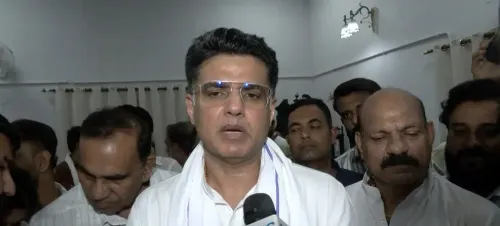
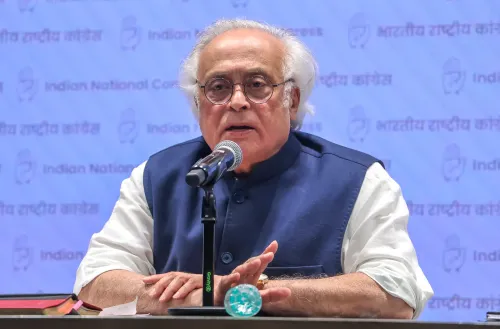
Congress leader and general secretary Sachin Pilot on Wednesday, 27 May 2026, called out the Central Board of Secondary Education (CBSE) over what he described as a flawed implementation of the Online Scoring and Marking (OSM) system, saying more than 18.5 lakh Class XII students are suffering as a direct consequence. Pilot also demanded clear answers on the tender awarded to COEMPT — questions he said were first raised by Leader of Opposition Rahul Gandhi — and pressed the government on accountability in the alleged NEET 2026 paper leak.
Context
In his post, Pilot listed a range of student grievances tied to the OSM rollout: 'excessively strict marking, blurred answer sheet copies, evaluation errors, high revaluation fees, website crashes, and lack of transparency in the assessment.' The scale of the problem, he argued, is not incidental — over 18.5 lakh students appearing for the CBSE Grade XII examination are directly affected by these systemic failures.
Pilot also pointed to four specific questions raised by Rahul Gandhi regarding the tender awarded to COEMPT, describing them as 'extremely serious' and demanding they be 'clearly answered.' The tender and its circumstances remain a focal point of Opposition scrutiny of CBSE's procurement process.
Policy Backdrop
CBSE has administered Class XII board examinations for decades, and the shift toward digitalised evaluation — including online marking platforms — has been a gradual process accelerated after the COVID-19 pandemic disrupted conventional paper-checking cycles. Recurring complaints about online evaluation portals, including server crashes and inconsistent marking, have accompanied this transition since at least 2018.
Separately, the National Testing Agency (NTA), established by executive order in 2017 to conduct major entrance examinations including NEET, has faced sustained criticism over procedural lapses. The alleged NEET 2026 paper leak — which Pilot specifically cited — has intensified demands for independent oversight of both tendering and examination conduct. The research note flags that specific details of the NEET 2026 leak and the COEMPT tender are still emerging and have not been independently confirmed from established public records.
Stakeholders and Impact
The most immediate stakeholders are the 18.5 lakh-plus CBSE Class XII students whose marks, revaluation requests, and university admissions timelines are directly tied to the resolution of these complaints. Parents have also raised concerns, with Pilot noting that 'the mental agony caused to students and parents due to this shoddy system cannot simply be ignored.'
Medical aspirants form a second, overlapping group: students preparing for or awaiting NEET 2026 results face uncertainty if the integrity of the examination is under question. The Education Ministry, CBSE, and NTA are the institutional actors Pilot explicitly names as accountable parties whose silence or inaction he is challenging.
What's Next
The Opposition is likely to press the Education Ministry for formal responses to Rahul Gandhi's questions on the COEMPT tender, both inside and outside Parliament. Any government reply — or the absence of one — will shape the political temperature around education governance ahead of the next academic cycle.
For students, the immediate priority is a credible resolution of OSM-related marking disputes and a transparent revaluation mechanism at affordable cost. Whether CBSE revises its evaluation protocols and whether NTA faces a formal inquiry into the alleged NEET 2026 paper leak will determine the longer-term institutional response to what Pilot has framed as a systemic accountability failure.
Point of View
The Congress is signalling a coordinated parliamentary and public-opinion strategy rather than an isolated reaction. The post reflects a broader Opposition pattern of using institutional failures in centralised examination bodies to question the governance model that consolidated board and entrance testing under CBSE and NTA from the mid-2010s onward. If the government does not respond substantively to the tender questions and the OSM complaints, the issue is likely to follow students into the university admissions season, keeping pressure on the Education Ministry well beyond the examination cycle.
NationPress
11 Oct 2026
Frequently Asked Questions
What is the CBSE OSM system and why are students complaining?
The OSM (Online Scoring and Marking) system is CBSE's digital platform for evaluating Class XII answer sheets. Students have complained about excessively strict marking, blurred copies of answer sheets, evaluation errors, high revaluation fees, and website crashes that have affected more than 18.5 lakh students appearing in the 2026 board examinations.
What is the COEMPT tender that Rahul Gandhi questioned?
Rahul Gandhi, as Leader of Opposition, raised four questions regarding a tender awarded to an entity called COEMPT in connection with CBSE's examination processes. Sachin Pilot has described these questions as 'extremely serious' and demanded clear answers from the government, though full details of the tender are still emerging.
What is the NEET 2026 paper leak controversy?
An alleged paper leak in the NEET 2026 entrance examination has raised concerns about the integrity of the medical admissions process. Sachin Pilot has demanded accountability from the Education Ministry, CBSE, and NTA over the incident, though specific verified details are still being established.
Who is responsible for NEET examinations in India?
The National Testing Agency (NTA), established by executive order in 2017, is responsible for conducting NEET and other major national entrance examinations. Before NTA's creation, CBSE conducted NEET. NTA has faced repeated scrutiny over procedural lapses in examination conduct.
What has the Congress demanded from the government on education issues?
Congress general secretary Sachin Pilot has demanded that the government, the Education Ministry, CBSE, and NTA answer for the OSM system failures affecting 18.5 lakh Class XII students, clarify the COEMPT tender questioned by Rahul Gandhi, and provide accountability for the alleged NEET 2026 paper leak.