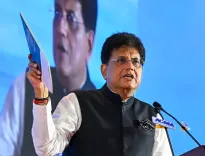
Piyush Goyal Marks 12 Years of Make in India

Synopsis
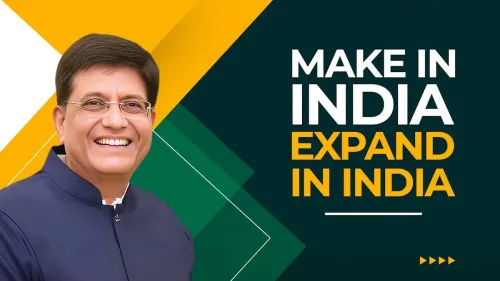
On the 12th anniversary of Make in India — launched 25 September 2014 — Commerce Minister Piyush Goyal praised PM Modi's 'visionary leadership' for drawing global attention to India's talent, technology and products, marking a milestone in India's manufacturing ambitions.
Key Takeaways
Make in India turned 12 years old on 25 September 2026 , having been launched by PM Narendra Modi on the same date in 2014 .
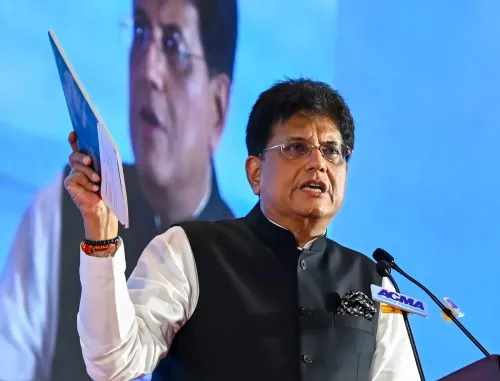
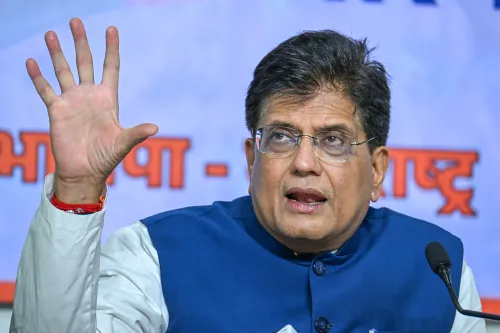
Union Commerce Minister Piyush Goyal marked the anniversary on X, highlighting India's talent, technology, hard work and products.
The initiative originally targeted 25 sectors to raise manufacturing's share of GDP and integrate India into global value chains.
Production Linked Incentive (PLI) schemes , introduced from 2020 , have acted as a second engine reinforcing the Make in India framework.
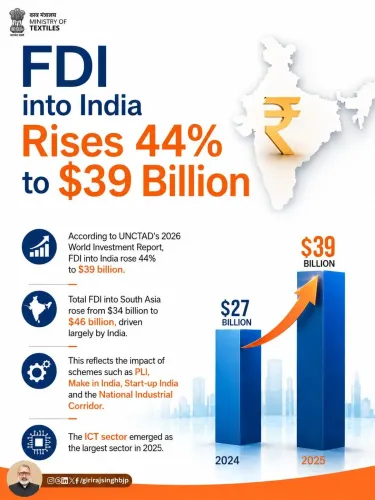
Upcoming FDI inflow data and PLI scheme reviews will serve as key benchmarks for the programme's second decade.
Twelve years after Prime Minister Narendra Modi unveiled a campaign that would reshape how the world looked at Indian manufacturing, Union Commerce and Industry Minister Piyush Goyal marked the anniversary on 25 September 2026 with a pointed celebration of the ground covered — and a clear signal that the mission is far from over.
Posting on X, Goyal wrote: 'Bharat ka talent, Bharat ki technology, Bharat ki mehnat, Bharat ke utpaad aur Bharat ka hi naam' — 'India's talent, India's technology, India's hard work, India's products and India's very own name' — crediting Prime Minister Modi's 'visionary leadership' for drawing global attention to the #12YearsOfMakeInIndia milestone.
A campaign born on 25 September 2014
Make in India was launched by PM Modi on 25 September 2014 with a single, ambitious goal: lift manufacturing's share of India's GDP and pull the country deep into global value chains. The iconic roaring lion, assembled from cogs and gears, became one of the most recognisable symbols of any Indian policy initiative in a generation. For the first time, India was pitching itself not just as a market, but as a factory floor for the world.
The initiative targeted 25 sectors — from defence and aerospace to textiles and food processing — aiming to make India a global manufacturing hub while creating millions of jobs at home. It was as much a branding exercise as a structural reform, sending a message to boardrooms from Tokyo to Detroit that India was open for business on its own terms.
PLI schemes: the second engine
The campaign found a powerful second wind from 2020 onwards, when the government layered Production Linked Incentive (PLI) schemes across key sectors — semiconductors, mobile phones, pharmaceuticals, automobiles, and more. The PLI architecture tied government incentives directly to incremental production, forcing manufacturers to perform, not just promise. Together, Make in India and the PLI framework form the twin pillars of India's current industrial policy.
For Goyal, who sits at the intersection of trade, investment promotion, and industry as Commerce Minister, the anniversary is not merely symbolic. It is a ledger he is expected to defend in every bilateral trade negotiation and every FDI pitch India makes abroad.
What the next chapter looks like
Analysts and policymakers will watch the next official rounds of manufacturing output data and FDI inflow figures to benchmark how much of the anniversary rhetoric translates into hard numbers. Upcoming reviews of PLI scheme expansions, especially in sunrise sectors like green energy and electronics, will test whether the momentum holds into the programme's second decade.
Twelve years in, Make in India is no longer a promise — it is a record waiting to be read. The world, as Goyal's post insists, is watching.
Point of View
Not just promise. Coming at a time when India is navigating complex trade negotiations and competing fiercely for global supply-chain relocation, invoking the Make in India narrative reinforces India's positioning as a reliable manufacturing destination. The layering of PLI schemes since 2020 suggests the government acknowledges that the original campaign needed structural teeth, and the next test will be whether those incentives have genuinely diversified India's export basket. Twelve years is a long enough runway that data — not slogans — will increasingly define the legacy.
NationPress
25 Sept 2026
Frequently Asked Questions
When was Make in India launched?
Make in India was launched by Prime Minister Narendra Modi on 25 September 2014 , marking its 12th anniversary in 2026 .
What is the goal of Make in India?
The initiative aims to increase the share of manufacturing in India's GDP, attract foreign direct investment, create jobs, and integrate India into global supply chains across 25 key sectors .
What are PLI schemes and how do they relate to Make in India?
Production Linked Incentive (PLI) schemes , introduced from 2020 , provide government incentives tied to incremental domestic production and are considered the second major pillar reinforcing the Make in India framework.
What did Piyush Goyal say about Make in India's anniversary?
Goyal posted on X celebrating 12 years of Make in India , saying the initiative — built on India's talent, technology, hard work and products — has drawn global attention under PM Modi's visionary leadership .
What should we watch for in Make in India's next phase?
Key indicators to watch include official manufacturing output data , FDI inflow figures into priority sectors, and any expansions or reviews of existing PLI schemes , especially in semiconductors and green energy.