PK Mishra credits PM Modi's leadership in 2001 Gujarat quake and Covid-19 response
Synopsis
India's top civil servant PK Mishra has offered a rare first-hand account of PM Modi's crisis leadership — from personally overseeing village-level earthquake rehabilitation in 2001 Gujarat to running an 'all-of-government' Covid response — framing both episodes as evidence of a governance philosophy built on long-range vision, ground-level monitoring, and persistent reform against bureaucratic resistance.
Key Takeaways
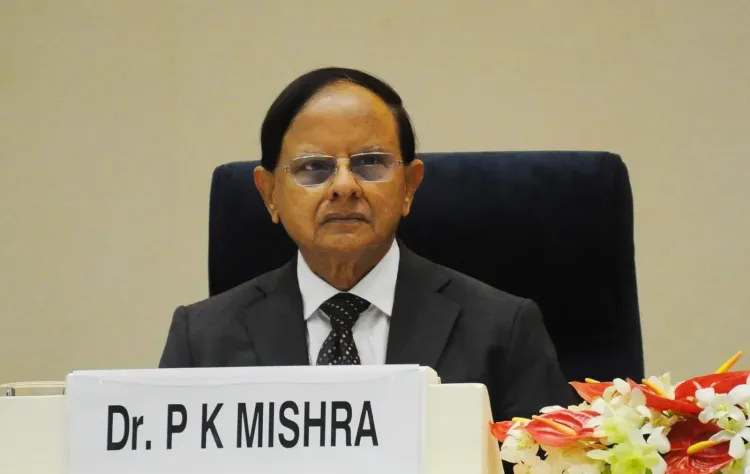
PK Mishra , Principal Secretary to the PM, praised Narendra Modi 's leadership at the NITI Aayog National Workshop on 17 November 2026 .
Mishra recalled Modi assuming as Gujarat CM nine months after the Bhuj earthquake , which killed 14,000 people and damaged or destroyed a million houses .
The earthquake prompted India's first State Disaster Management Act and the creation of the Gujarat State Disaster Management Authority .
Modi's Jyotigram Yojana separated rural electricity feeders to provide villages up to 18–20 hours of domestic power daily, despite initial bureaucratic resistance.
During Covid-19, Modi convened meetings with all state Chief Ministers , set up empowered committees, and announced a pre-lockdown ' Janta Curfew '.
Mishra described Modi's leadership framework as: vision, stakeholder consultation, timely execution, and personal monitoring to the last beneficiary.
PK Mishra, Principal Secretary to the Prime Minister, on Tuesday, 17 November 2026, credited Prime Minister Narendra Modi with a 'visionary and determined' approach in steering Gujarat through the devastating 2001 Bhuj earthquake and later navigating the country through the Covid-19 pandemic. Mishra made the remarks after addressing the inaugural session of the NITI Aayog National Workshop in New Delhi.
Bhuj Earthquake: A Leadership Test in Crisis
Mishra, who said he personally witnessed Modi's response as then-Chief Minister of Gujarat, described the earthquake aftermath as 'one of the biggest challenges' the leader faced upon taking office. 'It was a very devastating earthquake: 14,000 people died, and a million houses were damaged or destroyed,' he said. According to Mishra, Modi's approach went beyond immediate relief, focusing on medium- and long-term rehabilitation and reconstruction.
Mishra recalled a telling instance of Modi's hands-on governance style: 'PM Modi had asked the officers who had written the rehabilitation policy of a village to visit the affected region during the weekend and report to him in the weekly Monday meeting.' He said the officials returned and themselves suggested policy changes after witnessing ground realities — an example, Mishra argued, of how Modi ensured reforms were effective rather than theoretical.
Institutional Legacy of the 2001 Disaster
Mishra noted that the earthquake prompted the creation of several lasting institutions, including the Gujarat State Disaster Management Authority and the Gujarat State Disaster Management Act — described as the first such legislation in the country at the time. He also credited the post-earthquake period with spurring broader Gujarat initiatives such as the Vibrant Gujarat Investors Summit, the Swagat grievance redressal programme, and Krishi Mahotsav.
Highlighting the Jyotigram Yojana as a signature example of Modi's problem-solving persistence, Mishra explained that the scheme separated rural electricity feeders into two lines — one for agricultural irrigation (available for 3–4 hours) and another for domestic village supply (18–20 hours or round-the-clock). 'When he had suggested the idea, it was not accepted by engineers or even senior officers. They said it was not feasible... it never happened before,' he said, adding that Modi persisted until a pilot project proved the concept. The Centre subsequently encouraged other states to adopt the model.
Covid-19: 'All-of-Government, All-of-Society' Approach
Turning to the pandemic, Mishra said Modi's Covid-19 response was defined by an 'all-of-government and all-of-society' approach under conditions of deep uncertainty. 'Nobody knew what effects the pandemic would have, even in other countries. There was a lot of uncertainty but he was involved very effectively,' he said.
He listed several structural features of the response: empowered inter-ministerial committees with autonomous decision-making authority, regular consultations with all state Chief Ministers, and the pre-lockdown announcement of a 'Janta Curfew' to build public understanding before stricter restrictions were imposed. Mishra also noted that India ensured a portion of its Covid-19 vaccines reached other countries in need — a dimension he characterised as reflecting Modi's 'human and visionary approach'.
Modi's Leadership Framework, as Described by Mishra
Mishra outlined what he characterised as Modi's core leadership principles: a long-range vision for the country, the capacity to listen without impatience, stakeholder consultation before decisions, and rigorous personal monitoring of implementation down to the 'last beneficiary'. 'Once he takes a decision, then he focuses on how it can actually be executed,' Mishra said.
The remarks at the NITI Aayog workshop signal a continuing effort by senior officials to document and frame Modi's governance record ahead of ongoing policy discussions. How that institutional memory translates into current disaster-preparedness and public-health frameworks will be closely watched.
Point of View
But the broader framing glosses over the humanitarian criticism India received for the initial pace of its Covid vaccine rollout domestically before exports were prioritised. The more substantive question the workshop setting invites — how Gujarat's post-earthquake institutional innovations have been replicated at national scale — was not addressed in the reported remarks, leaving the account as tribute rather than audit.
NationPress
17 Nov 2026
Frequently Asked Questions
What did PK Mishra say about PM Modi's response to the 2001 Gujarat earthquake?
PK Mishra, Principal Secretary to PM Modi, said that Modi — then Gujarat's Chief Minister — led a rehabilitation and reconstruction effort after the Bhuj earthquake that killed 14,000 people and damaged or destroyed a million homes. Mishra credited Modi with personally monitoring ground-level policy implementation and creating lasting institutions, including the Gujarat State Disaster Management Authority and India's first State Disaster Management Act.
What is the Jyotigram Yojana that Mishra highlighted?
Jyotigram Yojana is a Gujarat government scheme that separated rural electricity feeders into two lines — one for agricultural irrigation and one for domestic village supply — allowing villages to receive up to 18–20 hours of power daily. Mishra said the idea was initially resisted by engineers and senior officials as 'not feasible' before Modi pushed through a pilot project that demonstrated its impact.
How did Mishra describe India's Covid-19 pandemic management under PM Modi?
Mishra described an 'all-of-government and all-of-society' approach that included empowered inter-ministerial committees, regular consultations with all Chief Ministers, a pre-lockdown Janta Curfew announcement, and ensuring Covid vaccines also reached other countries. He said Modi remained 'involved very effectively' despite deep uncertainty about the pandemic's trajectory.
Where did PK Mishra make these remarks?
Mishra made the remarks in New Delhi on 17 November 2026, after addressing the inaugural session of the NITI Aayog National Workshop. He spoke to reporters following his address.
What leadership principles did Mishra attribute to PM Modi?
Mishra outlined four core principles: a long-range national vision, the capacity to listen to all stakeholders without impatience, timely execution once a decision is made, and personal monitoring of implementation down to the last beneficiary.