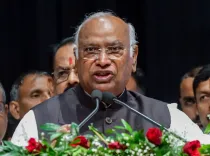
Giriraj Singh reopens PLI Textiles applications, halves turnover bar
Synopsis
Union Textiles Minister Giriraj Singh has announced the reopening of PLI scheme applications for textiles, slashing the minimum turnover threshold from ₹200 crore to ₹100 crore. The move broadens eligibility for mid-size manufacturers, aiming to drive investment, production, and jobs in a sector central to India's Atmanirbhar Bharat push.
Key Takeaways
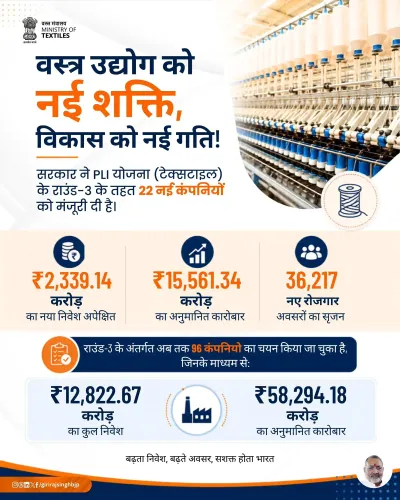
The PLI Scheme for Textiles application window has been reopened by the Ministry of Textiles.
The minimum annual turnover threshold has been cut from ₹200 crore to ₹100 crore , doubling the range of eligible manufacturers.
The scheme was originally approved by the Union Cabinet in September 2021 with an outlay of ₹10,683 crore over five years .
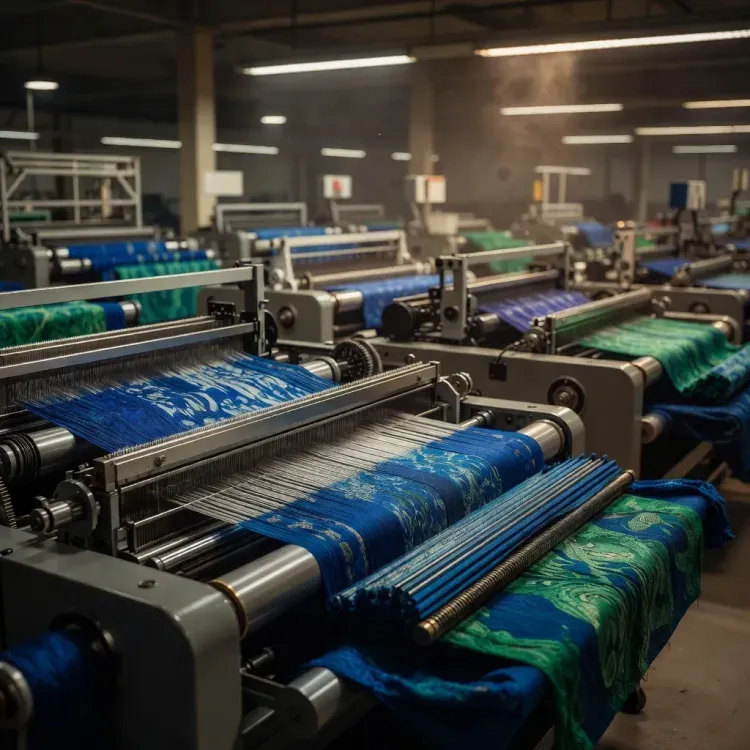
The scheme targets man-made fibre apparel, garments, and technical textiles — sectors with rising global demand.
Textiles is one of 14 sectors covered under India's PLI programme, part of the Atmanirbhar Bharat framework.
Fresh application numbers, investment commitments, and job-creation data will be the key metrics to track in upcoming ministry updates.
A lower entry ticket just opened the door for thousands of Indian textile makers. Union Textiles Minister Giriraj Singh announced on Thursday, 29 October 2026 that the application window under the Production Linked Incentive (PLI) Scheme for Textiles has been reopened — and crucially, the minimum annual turnover threshold has been slashed from ₹200 crore to ₹100 crore, putting the scheme within reach of a far wider universe of manufacturers.
Posting in Hindi on X, Singh wrote: 'कपड़ा उद्योग को नई गति देने के लिए PLI योजना के तहत आवेदन प्रक्रिया फिर से खोली गई है' — 'The application process under the PLI scheme has been reopened to give fresh momentum to the textile industry.' The minister added that cutting the turnover bar would benefit more manufacturing units and strengthen India's position in global markets through higher investment, production, and employment.Why the original ₹200 crore bar left smaller units cold
When the Union Cabinet approved the PLI Scheme for Textiles in September 2021 with a total outlay of ₹10,683 crore over five years, the scheme was designed to accelerate a structural shift — from India's traditional cotton-heavy base toward man-made fibre (MMF) apparel and technical textiles, where global demand is growing fastest. The incentives were tied to incremental sales growth, rewarding companies that scaled up production.
The problem: the ₹200 crore minimum turnover filter effectively screened out a large segment of mid-size manufacturers, concentrating the scheme's benefits among already-large players. For a sector that employs tens of millions of workers — many of them in small and medium units — that was a significant gap. Lowering the bar to ₹100 crore is a direct response to that critique, widening the competitive pool without diluting the incentive structure.
Textiles inside India's 14-sector PLI push
Textiles is one of 14 sectors brought under India's PLI umbrella since 2020, part of the broader Atmanirbhar Bharat strategy to boost domestic value addition, cut import dependence, and sharpen export competitiveness. The sector carries outsized weight: it is labour-intensive, geographically dispersed, and central to India's ambition of capturing global supply chains that are diversifying away from a single dominant source.
Reopening the application window signals that the Ministry of Textiles wants a second, broader wave of participants — not just a handful of large conglomerates but a deeper bench of mid-size producers who can collectively move the needle on output and jobs.
What the numbers to watch will tell us
The true test of this announcement lies in the fresh applications received, investment commitments formalised, and job-creation figures that the Ministry of Textiles is expected to report in subsequent quarterly updates. If the revised threshold triggers a significant jump in applicants, it will validate the thesis that entry barriers — not lack of interest — were holding smaller manufacturers back. If uptake remains thin, the ministry may need to look beyond eligibility rules at financing access and compliance costs.
Either way, India's textile sector just got a second shot at one of its most consequential incentive programmes — and this time, the gate is half as high.
Point of View
The move is also politically legible: widening scheme access deepens the government's manufacturing story ahead of potential state election cycles in textile-heavy states. The PLI architecture across sectors has faced persistent criticism for high entry barriers, and this revision in textiles could serve as a template for similar recalibrations elsewhere. Whether it translates into real investment or remains largely aspirational will depend on how quickly the ministry processes applications and disburses incentives.
NationPress
29 Oct 2026
Frequently Asked Questions
What is the PLI scheme for textiles in India?
The Production Linked Incentive (PLI) Scheme for Textiles was approved by the Union Cabinet in September 2021 with an outlay of ₹10,683 crore over five years to promote manufacturing of man-made fibre apparel, garments, and technical textiles by linking financial incentives to incremental sales growth.
Why has the PLI textile application process been reopened?
Union Textiles Minister Giriraj Singh announced the reopening to give more manufacturing units access to the scheme, including mid-size companies previously excluded by the higher ₹200 crore turnover bar.
What is the new minimum turnover requirement for the textile PLI scheme?
The minimum annual turnover threshold has been reduced from ₹200 crore to ₹100 crore, making the scheme accessible to a wider range of textile manufacturers.
How does the textile PLI scheme fit into Atmanirbhar Bharat?
Textiles is one of 14 sectors covered under India's PLI programme launched since 2020, aimed at boosting domestic value addition, reducing import dependence, and strengthening India's global export competitiveness under the Atmanirbhar Bharat framework.
Who benefits from the reduced turnover threshold in the textile PLI scheme?
Mid-size textile manufacturers with annual turnovers between ₹100 crore and ₹200 crore — previously ineligible — are the primary beneficiaries, alongside MSME units looking to scale up in man-made fibre and technical textiles.