PM Modi: Cabinet approves Aqua Line Metro extension for Noida

Synopsis
The Union Cabinet has approved an extension of the Noida-Greater Noida Aqua Line Metro, PM Modi announced on 11 November 2026, promising shorter commutes, less congestion, and better access to offices, schools, and hospitals for residents of one of India's fastest-growing urban corridors.
Key Takeaways
The Union Cabinet has approved an extension of the Aqua Line Metro corridor connecting Noida and Greater Noida .
PM Narendra Modi made the announcement on 11 November 2026 , framing it as an 'Ease of Living' gain for residents.
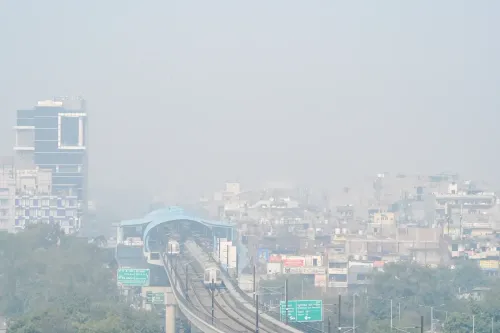
The original Aqua Line was inaugurated in December 2019 and runs through Noida's IT and commercial zones into Greater Noida.
Expected benefits include reduced road congestion, shorter daily commutes, and better access to offices, schools, hospitals, and commercial hubs.
Specific details — route alignment, number of stations, project cost, and completion timeline — will be available in the official government release.
The decision continues the NCR's established policy of incremental metro corridor extensions to match rapid urban growth.
Millions of daily commuters in one of India's fastest-growing urban corridors just got a significant reprieve. Prime Minister Narendra Modi announced on Wednesday, 11 November 2026 that the Union Cabinet has approved an extension of the Aqua Line Metro — the rail corridor connecting Noida and Greater Noida in Uttar Pradesh — a move the Prime Minister framed directly around the question of quality of life.
What the Cabinet cleared — and why it matters now
The Aqua Line has been operational since its inauguration in December 2019, threading through Noida's IT clusters and Greater Noida's rapidly expanding residential and industrial zones. But the two cities have grown faster than the original corridor could serve, leaving large pockets of both cities dependent on road transport and facing worsening gridlock. The Cabinet's approval of an extension addresses that gap directly.
PM Modi listed the key benefits plainly: easier access to offices, schools, hospitals, and commercial hubs; reduced road congestion; and shorter daily commutes. 'As Noida and Greater Noida grow, why should daily commutes become longer?' he wrote — a rhetorical question that doubles as the clearest possible statement of the government's urban mobility logic.
The Aqua Line's journey from 2019 to today
When the original Noida-Greater Noida Aqua Line opened seven years ago, it was celebrated as a template for metro connectivity beyond Delhi's core. The corridor linked key nodes in Gautam Buddh Nagar district and provided a spine for public transport in an area that had long relied on private vehicles and auto-rickshaws. Wednesday's Cabinet decision continues the established pattern of incremental corridor extensions — building on proven infrastructure rather than starting from scratch — that successive governments have used to deepen metro coverage across the National Capital Region.
The specific route alignment, number of new stations, total project cost, and construction timeline will be detailed in the government's official release; the broad approval, however, is confirmed.
Ease of Living as the governing frame
Modi's post explicitly invoked 'Ease of Living' — the citizen-facing counterpart to the government's better-known 'Ease of Doing Business' agenda. The choice of framing is deliberate: metro expansion is presented not as a prestige infrastructure project but as a direct intervention in how ordinary residents spend their mornings and evenings. For the lakhs of commuters who travel daily between Noida's Sector 51 interchange and Greater Noida's business and educational districts, that distinction is more than rhetorical.
Urban planners have long argued that metro connectivity in satellite cities must keep pace with real-estate and commercial growth rather than lag behind it. The Aqua Line extension signals that the government agrees — and is acting on it before the gap widens further.
Point of View
Which reframes large infrastructure outlays as direct quality-of-life interventions for ordinary citizens rather than top-down prestige projects. Politically, Noida and Greater Noida sit in Uttar Pradesh — a state that remains central to BJP's electoral arithmetic — making metro connectivity here doubly valuable as both genuine urban policy and visible governance. The incremental extension model also reflects a pragmatic fiscal logic: leveraging sunk costs in an existing corridor is cheaper and faster than building new lines. What will matter next is execution speed, since rapid real-estate growth in Greater Noida means the demand-supply gap in transit widens every year the project is delayed.
NationPress
11 Nov 2026
Frequently Asked Questions
What is the Aqua Line Metro?
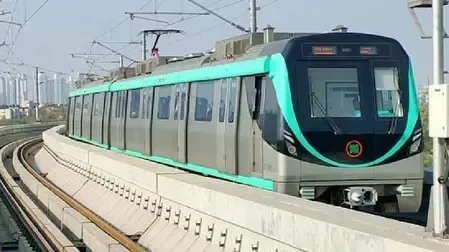
The Aqua Line is a metro rail corridor connecting Noida and Greater Noida in Uttar Pradesh, inaugurated in December 2019. It runs through key IT, commercial, and residential zones in the Gautam Buddh Nagar district.
What did the Cabinet approve for the Aqua Line Metro?
The Union Cabinet approved an extension of the existing Noida-Greater Noida Aqua Line Metro, as announced by PM Narendra Modi on 11 November 2026. Specific details on new stations and costs are in the official government release.
How will the Aqua Line extension benefit Noida and Greater Noida residents?
The extension is expected to provide easier access to offices, schools, hospitals, and commercial hubs, reduce road congestion, and shorten daily commutes for residents across the two cities.
When was the original Noida-Greater Noida Aqua Line built?
The original Aqua Line Metro was inaugurated in December 2019 and has since served as a key public transit spine for the Noida-Greater Noida urban corridor.
Where can I find the full details of the Aqua Line Metro extension project?
The Union government's Press Information Bureau has published the full details of the Cabinet approval, including project specifics, in its official press release.