Centre mandates EVs for government staff cars, doubles price ceiling to ₹20 lakh
Synopsis
India's Finance Ministry has made EVs the mandatory default for all central government staff car purchases — and backed the shift with a ₹20 lakh price ceiling, double what ICE vehicles are allowed. Any ministry that still wants a petrol or diesel car will need written justification approved at Secretary level. It is one of the most direct uses of state procurement power to accelerate EV adoption.
Key Takeaways
The Finance Ministry's Department of Expenditure issued a notification on 11 November 2026 making EVs the 'default and preferred choice' for central government staff car procurement.
The EV price ceiling has been doubled to ₹20 lakh ; the ICE vehicle ceiling is set at ₹10 lakh .
Ministries wishing to procure an ICE vehicle must submit a justified proposal for case-by-case relaxation, approved at Secretary level with Financial Adviser concurrence.
The order builds on earlier instructions from 1 September 2022 that had mandated EV hiring.
All procurement remains governed by the General Financial Rules (GFR), 2017 .
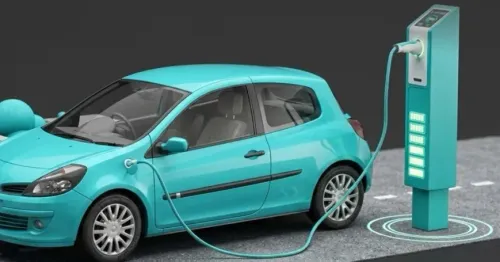
The Finance Ministry on 11 November 2026 issued a notification making electric vehicles (EVs) the 'default and preferred choice' for procurement of staff cars across all central government ministries and departments, with the order taking effect immediately. The directive, issued by the ministry's Department of Expenditure, marks a significant shift in the Centre's fleet policy, pushing fossil-fuel vehicles firmly to the margins of government procurement.
Key Changes in the New Order
The notification has doubled the net dealer price ceiling for EV procurement by central government bodies to ₹20 lakh, while the ceiling for internal combustion engine (ICE) vehicles — covering petrol, diesel, and hybrid cars — has been set at ₹10 lakh. The sharp pricing differential is designed to tilt procurement decisions structurally toward EVs. The order also mandates a preference for EVs when hiring vehicles for government use.
According to the notification, 'Going forward, Ministries and Departments shall ordinarily procure Electric Vehicles (EVs) at the time of condemnation or replacement of their existing ICE staff cars. EVs shall be the default and preferred choice for procurement.'
When ICE Vehicles May Still Be Considered
The order does not impose an outright ban on ICE vehicle procurement, but raises the bar significantly. Any ministry or department seeking an ICE vehicle must submit a duly justified proposal to the Department of Expenditure for a case-by-case relaxation. Such a request must carry the approval of the Secretary of the concerned administrative ministry or department, along with the concurrence of the Financial Adviser. A similar approval mechanism applies if hiring of an ICE vehicle is deemed necessary.
Continuity With Earlier Policy
The new directive builds on instructions issued on 1 September 2022, which had already mandated the hiring of electric vehicles across central government entities. All other terms governing entitlement, procurement, and hiring of vehicles remain unchanged. Procurement continues to be governed by the General Financial Rules (GFR), 2017, as amended.
Why This Matters
The order is explicitly framed around three objectives: promoting electric mobility, reducing dependence on fossil fuels, and accounting for the lifecycle cost advantages of EVs over conventional vehicles. Notably, by doubling the EV price ceiling while capping ICE vehicles at half that amount, the government is effectively using procurement policy as a demand-creation tool — a signal to the domestic EV market that the state itself will be a major buyer. This comes amid India's broader push toward its net-zero commitments and the government's ongoing FAME scheme to accelerate EV adoption. For fleet operators and EV manufacturers, a mandatory government shift of this scale could meaningfully boost order volumes in the near term.
Point of View
It removes the convenient excuse that EVs are unaffordable on government budgets. What will determine real-world impact is enforcement: past procurement mandates have often been quietly bypassed at the departmental level, and the case-by-case relaxation window, while bureaucratically guarded, still exists. The bigger signal here is to the market — when the Indian state commits its own fleet to EVs, it validates domestic demand in a way that subsidies alone cannot. Whether manufacturers can supply the right vehicles at or below ₹20 lakh without compromising range will be the next test.
NationPress
11 Nov 2026
Frequently Asked Questions
What has the Finance Ministry ordered regarding government staff cars?
The Finance Ministry has issued a notification making electric vehicles the default and preferred choice for procurement of staff cars across all central government ministries and departments. The order came into effect immediately on 11 November 2026.
What is the new price ceiling for EVs under government procurement?
The notification doubles the net dealer price ceiling for EV procurement by central government bodies to ₹20 lakh. For ICE vehicles — including petrol, diesel, and hybrid cars — the ceiling has been fixed at ₹10 lakh.
Can ministries still buy petrol or diesel vehicles under the new rules?
Yes, but only as an exception. A ministry must submit a duly justified proposal to the Department of Expenditure for a case-by-case relaxation, with approval from the Secretary of the concerned ministry and concurrence of the Financial Adviser.
How does this order relate to earlier government EV directives?
The new order builds on instructions issued on 1 September 2022, which had already mandated the hiring of electric vehicles across central government entities. All other terms on entitlement, procurement, and hiring remain unchanged.
Why has the government issued this notification?
The order is aimed at promoting electric mobility, reducing dependence on fossil fuels, and factoring in the lifecycle cost advantages of EVs. It also uses government procurement as a demand-creation mechanism to support India's broader EV adoption goals.