PM Modi Hails Vikram-1 Success and Olympiad Wins on Mann Ki Baat
Synopsis
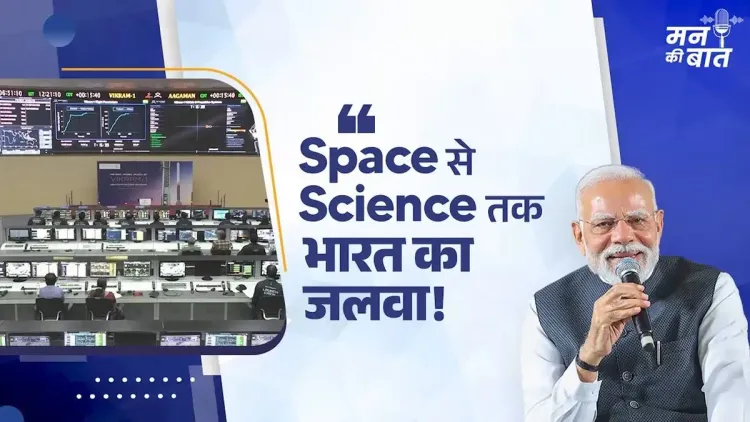
Prime Minister Narendra Modi used his July 2026 Mann Ki Baat address to celebrate Vikram-1's success as India's first private orbital rocket and rising student medal tallies at international science Olympiads, framing both as proof of India's scientific ascent.
Key Takeaways
PM Modi called the past month 'outstanding for science and space' in his Mann Ki Baat address on 26 July 2026 .
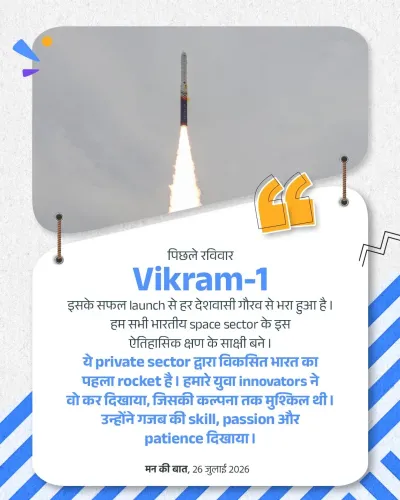
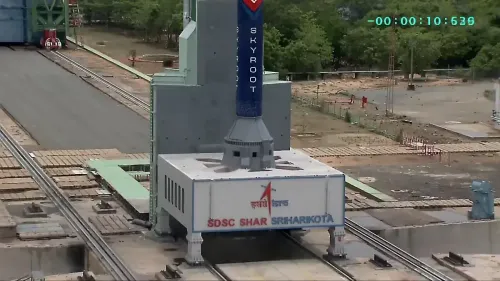
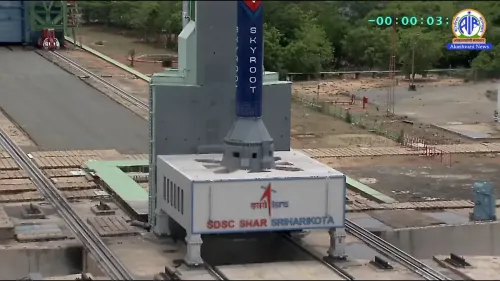
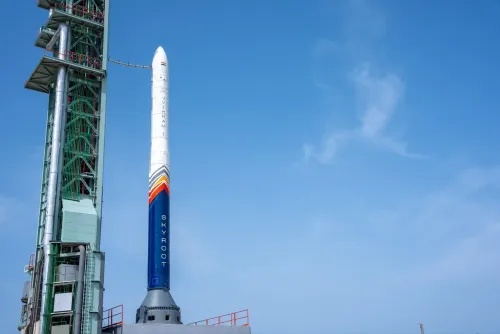
Vikram-1 , developed by Hyderabad -based Skyroot Aerospace , is India's first privately built orbital rocket and its success was specifically cited by the Prime Minister.
India's 2020 space sector reforms and the creation of IN-SPACe enabled private firms like Skyroot to develop and launch rockets.
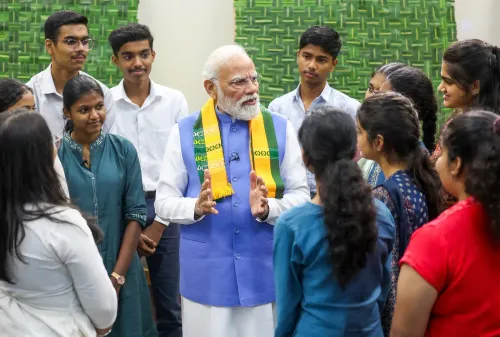
Indian students' performances at International Science Olympiads in mathematics, physics, and chemistry were praised as motivation for younger generations.
The achievements align with the government's Atmanirbhar Bharat objective of reducing external dependence in critical and advanced technologies.
Next milestones include Skyroot 's orbital flight schedule and progress on the Space Activities Bill in Parliament.
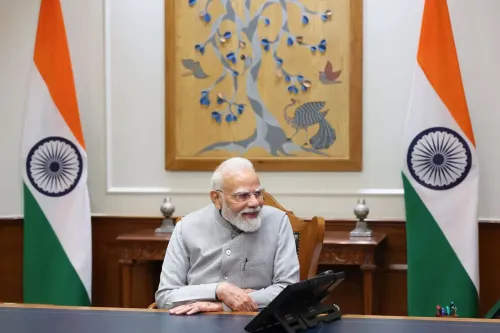
Prime Minister Narendra Modi on Sunday, 26 July 2026 lauded India's recent achievements in science and space, calling the past month 'outstanding' during his monthly radio address, Mann Ki Baat. He specifically highlighted the success of Vikram-1, India's first privately built orbital rocket, and praised student performances at international science Olympiads.
Context
In his post tied to Mann Ki Baat, Prime Minister Modi described Vikram-1's success as having 'captured the imagination of the entire nation.' He also noted that wins at 'various Olympiads will surely motivate more youngsters to excel in the sciences,' framing both achievements as complementary signals of India's growing scientific momentum.
Mann Ki Baat is PM Modi's monthly radio programme, broadcast on All India Radio, which the Prime Minister regularly uses to spotlight citizen achievements, policy milestones, and national pride moments to a mass audience across the country.
Policy Backdrop
Vikram-1 is developed by Hyderabad-based Skyroot Aerospace, a private firm building the Vikram series of launch vehicles. Its progress is a direct product of India's landmark 2020 space sector reforms, which opened satellite launches and rocket development to private capital and created the regulatory body IN-SPACe to facilitate such ventures.
The broader arc traces back to Chandrayaan-3's successful soft landing in August 2023, which galvanised public enthusiasm for indigenous space missions and validated India's capability to execute complex deep-space manoeuvres. The dual-track approach — sustaining public-sector prestige missions while enabling private startups — sits at the core of the government's Atmanirbhar Bharat vision for critical technologies.
On the education front, India has recorded rising medal tallies at International Science Olympiads in mathematics, physics, chemistry, and related disciplines in recent years. Government-backed training programmes and school-level initiatives have progressively expanded the talent pipeline feeding these competitions.
Stakeholders and Impact
For Skyroot Aerospace and the wider private space ecosystem, a high-profile endorsement from the Prime Minister on a platform as widely heard as Mann Ki Baat translates into significant public and investor attention. It reinforces the government's commitment to the liberalised space policy framework that made such ventures possible.
STEM students and the broader scientific community stand to benefit from the visibility these achievements generate. When Olympiad successes and space milestones are amplified at the highest political level, they tend to spur enrolment in science streams and competitive training programmes, particularly in Tier-2 and Tier-3 cities.
What's Next
Attention will now turn to Skyroot Aerospace's confirmed orbital flight schedule and the trajectory of India's student teams through the 2026-27 International Olympiad cycle. Parliamentary movement on the long-pending Space Activities Bill, which would provide a formal legal framework for private space operations, is also expected to gain renewed scrutiny in light of these milestones.
If the momentum holds, India's dual investment in private launch capability and school-level science talent could position the country as a significant force in both the commercial space economy and global scientific competition over the coming decade.
Point of View
The Prime Minister reinforces the idea that India's scientific ambition operates on multiple fronts simultaneously. This dual framing serves the Atmanirbhar Bharat arc, positioning space liberalisation and STEM talent development as mutually reinforcing pillars. The political signal to the private space ecosystem is equally clear: high-profile government endorsement at this level can accelerate both investor confidence and regulatory goodwill.
NationPress
26 Jul 2026
Frequently Asked Questions
What is Vikram-1 and who built it?
Vikram-1 is India's first privately developed orbital rocket, built by Hyderabad-based startup Skyroot Aerospace under the space sector liberalisation framework established in 2020.
What did PM Modi say about Vikram-1 on Mann Ki Baat?
PM Modi said Vikram-1's success has 'captured the imagination of the entire nation,' praising it as a highlight of what he called an outstanding month for Indian science and space.
What is Mann Ki Baat?
Mann Ki Baat is Prime Minister Narendra Modi's monthly radio programme broadcast on All India Radio, used to highlight national achievements, citizen stories, and policy priorities.
How did Indian students perform at International Science Olympiads?
PM Modi referenced successes at various International Science Olympiads, noting that these wins would motivate more youngsters to pursue excellence in the sciences, though specific medal counts were not detailed in the post.
What is IN-SPACe and how does it relate to Vikram-1?
IN-SPACe, or the Indian National Space Promotion and Authorisation Centre, was created under the 2020 space sector reforms to regulate and enable private entities like Skyroot Aerospace to develop and launch rockets independently.