PM Modi Highlights Preventive Healthcare Focus for Women, Poor, Middle Class
Synopsis
Prime Minister Narendra Modi on 17 July 2026 highlighted the government's sustained focus on preventive healthcare, stating that women, the poor, and the middle class are all benefiting — a thrust rooted in schemes like Ayushman Bharat, POSHAN Abhiyaan, and Swachh Bharat since 2014.
Key Takeaways
PM Modi on 17 July 2026 reaffirmed the government's continuous focus on preventive healthcare , not just curative treatment.
He identified women, the poor, and the middle class as key beneficiaries of this approach.
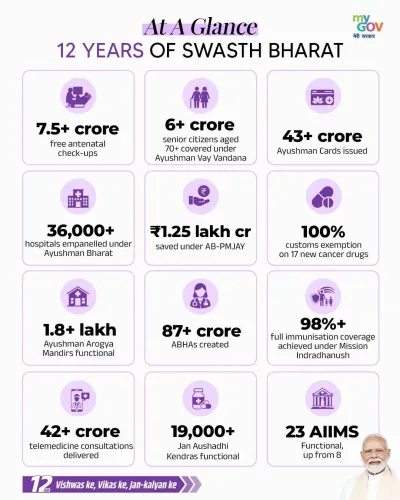
Ayushman Bharat (2018) created 1.5 lakh Health and Wellness Centres to deliver free screening and early detection at the primary care level.
The National Health Policy 2017 formally shifted India's health focus toward preventive and promotive care to reduce out-of-pocket costs.
Complementary programmes — Swachh Bharat Mission , Intensified Mission Indradhanush , and POSHAN Abhiyaan — reinforce the preventive stack targeting disease at source.
The explicit mention of the middle class signals policy attention to lifestyle disease burden beyond traditional welfare beneficiaries.
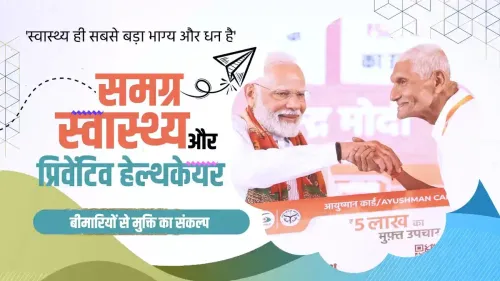
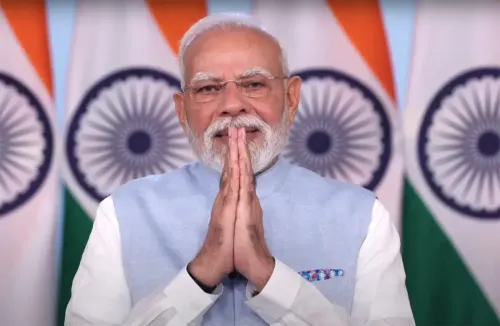
Prime Minister Narendra Modi on Friday, 17 July 2026, reaffirmed the government's sustained commitment to preventive healthcare, stating that the benefits of this focus extend beyond treatment of illness to reach women, the poor, and the middle class alike. The post, shared on X, underscores a policy thrust that has defined the BJP-led government's health agenda since 2014.
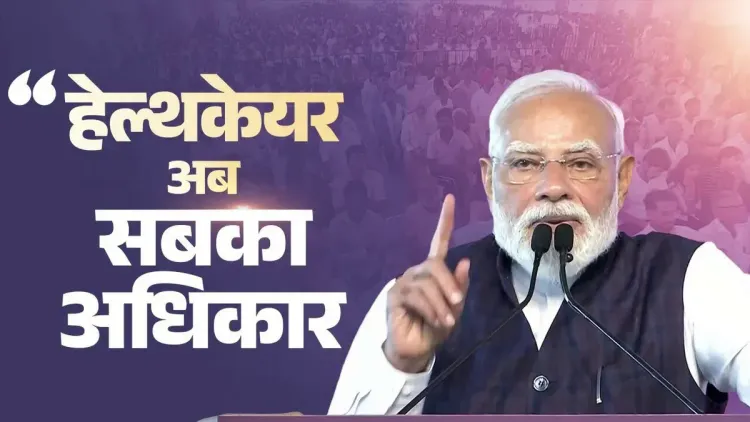
In his post, Prime Minister Modi wrote in Hindi: 'बीमारियों के इलाज पर ही नहीं, Preventive Healthcare पर भी हमारा निरंतर फोकस रहा है।' ['Our continuous focus has been not only on treating diseases, but also on Preventive Healthcare.'] He added that the benefits are reaching mothers, sisters, poor citizens, and the middle class.
Context
The statement arrives as the government continues to position its health architecture around reducing disease incidence before it requires expensive curative intervention. This framing aligns with the National Health Policy 2017, which formally shifted India's stated health priorities from curative to preventive and promotive care, with an explicit goal of reducing out-of-pocket expenditure for households.
The emphasis on women and the poor reflects long-standing targeting in flagship programmes, while the specific mention of the middle class signals an acknowledgement that rising lifestyle diseases — diabetes, hypertension, and cardiovascular conditions — are increasingly a concern beyond low-income groups.
Policy Backdrop
Ayushman Bharat, launched in 2018, combined the PM Jan Arogya Yojana (PM-JAY) insurance cover with a network of 1.5 lakh Health and Wellness Centres (HWCs). The HWCs were specifically designed to deliver free screening, early detection, yoga sessions, and other preventive services at the primary care level, taking the focus upstream from hospitals.
Complementary programmes reinforce this approach. The Swachh Bharat Mission, launched in 2014, targeted sanitation as a preventive lever against water-borne and infectious diseases. Intensified Mission Indradhanush, expanded from 2014 onwards, drove immunisation coverage for children and pregnant women. The POSHAN Abhiyaan of 2018 addressed malnutrition among women, children, and adolescents — a root cause of preventable illness.
Stakeholders and Impact
Women and children have been primary beneficiaries of the preventive stack, with maternal health screenings, anaemia checks, and nutrition supplements delivered through HWCs and anganwadis. Low-income families gain the most from free early-detection services that prevent conditions from escalating to costly hospitalisation.
The explicit inclusion of the middle class in the Prime Minister's framing is notable. Middle-class households, often excluded from means-tested welfare but burdened by out-of-pocket health costs, stand to benefit from accessible screening infrastructure and preventive digital health tools being rolled out under the broader Ayushman Bharat Digital Mission.
What's Next
Observers will watch the next Union Budget health allocations for signals on whether preventive care infrastructure — particularly HWC expansion and nutrition programmes — receives increased outlays. A formal performance review of Ayushman Bharat's preventive care uptake metrics would provide the clearest measure of whether the government's stated focus is translating into measurable reductions in disease burden across the three groups the Prime Minister cited.
Point of View
The message broadens the political constituency for preventive health investment, a group historically underserved by welfare architecture. This fits a consistent pattern since 2014 of layering sanitation, nutrition, immunisation, and primary care into a unified preventive stack. The real test will come in budget allocations and independent assessments of Health and Wellness Centre utilisation — the gap between stated focus and measurable outcomes remains the central question for health policy analysts.
NationPress
17 Jul 2026
Frequently Asked Questions
What did PM Modi say about preventive healthcare on 17 July 2026?
PM Modi stated that the government's continuous focus on preventive healthcare — not just treating diseases — is benefiting women, the poor, and the middle class. He shared this on X on 17 July 2026.
What is Ayushman Bharat and how does it support preventive care?
Ayushman Bharat, launched in 2018, includes a network of 1.5 lakh Health and Wellness Centres that provide free screening, early detection, and preventive services at the primary care level, alongside the PM-JAY insurance cover for hospitalisation.
How does India's National Health Policy 2017 relate to preventive healthcare?
The National Health Policy 2017 formally shifted India's stated health priorities from curative to preventive and promotive care, aiming to reduce out-of-pocket expenditure for families by catching illness earlier.
Which government schemes focus on preventive health for women and children in India?
Key schemes include Ayushman Bharat's Health and Wellness Centres, POSHAN Abhiyaan (2018) for nutrition, Intensified Mission Indradhanush for immunisation, and Swachh Bharat Mission for sanitation — all targeting disease prevention for women, children, and the poor.
Does India's preventive healthcare push benefit the middle class?
PM Modi's post explicitly mentions the middle class as a beneficiary, reflecting growing policy attention to lifestyle diseases like diabetes and hypertension that affect middle-income households and are best addressed through early screening and prevention.