PM Modi Highlights Vasudhaiva Kutumbakam in Global Development Push

Synopsis
Prime Minister Narendra Modi on June 16, 2026, invoked India's Vasudhaiva Kutumbakam philosophy, stating that development must connect to people's aspirations and citing the International Solar Alliance and Coalition for Disaster Resilient Infrastructure as expressions of that principle in India's global partnerships.
Key Takeaways
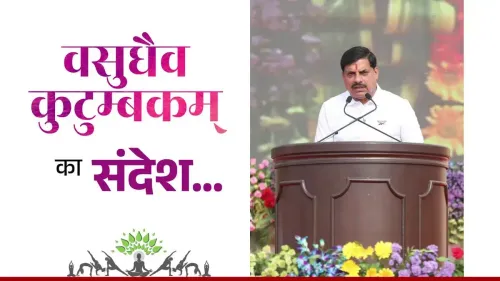
PM Modi on June 16, 2026 , reaffirmed India's foreign policy doctrine of viewing the world as one family ( Vasudhaiva Kutumbakam ).
He cited the International Solar Alliance , co-launched with France at the 2015 Paris Climate Conference , as a model of people-centric international partnership.
The Coalition for Disaster Resilient Infrastructure (CDRI) , initiated by India at the UN Climate Action Summit in September 2019 and headquartered in New Delhi , was also highlighted.
Both platforms prioritise technology sharing, capacity building, and concessional finance for Global South nations.
India's approach positions New Delhi as a bridge between developed and developing economies on climate and development agendas.
The statement signals continued emphasis on multilateral climate diplomacy ahead of upcoming UNFCCC COP negotiations.
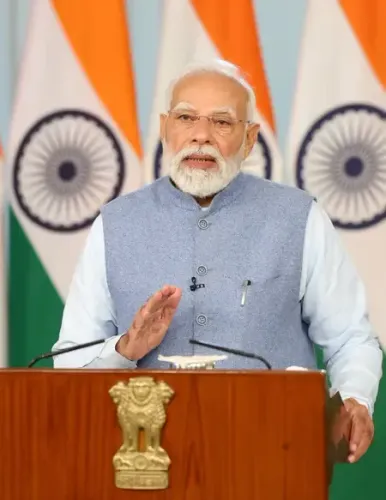
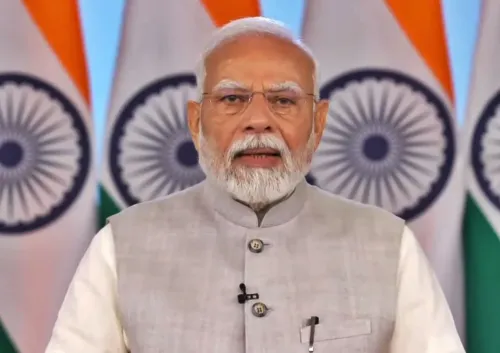
Prime Minister Narendra Modi on Tuesday, June 16, 2026, invoked India's philosophy of viewing the world as one family, reaffirming that effective development must be rooted in the aspirations of people and that this principle underpins India's major international partnerships.
Context
In the post, PM Modi wrote: 'We, in India, view the world as one family. Our experience shows that development is most effective when it is connected to the aspirations of people. This principle also forms the basis of our international partnerships like the International Solar Alliance, Coalition for...' The message, though appearing truncated on the platform, reflects a long-standing articulation of India's foreign policy doctrine rooted in the Sanskrit concept of Vasudhaiva Kutumbakam (the world is one family).
This philosophy was most prominently institutionalised when India adopted it as the theme of the 2023 G20 New Delhi Summit — 'Vasudhaiva Kutumbakam – One Earth, One Family, One Future' — signalling its centrality to how New Delhi presents itself on the global stage.
Policy Backdrop
The two partnerships cited by PM Modi represent flagship examples of India's multilateral climate and development diplomacy. The International Solar Alliance (ISA) was co-launched by India and France at the 2015 Paris Climate Conference, bringing together 121 prospective member countries to accelerate solar energy adoption, particularly across the Global South.
The Coalition for Disaster Resilient Infrastructure (CDRI), headquartered in New Delhi, was announced by India at the UN Climate Action Summit in September 2019. It promotes climate-resilient infrastructure standards and capacity building for member nations, with a focus on countries most vulnerable to climate-induced disasters.
Both initiatives reflect a broader pattern in India's foreign policy: creating issue-specific multilateral platforms that translate domestic development priorities — needs-based growth, energy access, resilient infrastructure — into cooperative frameworks with partner nations.
Stakeholders and Impact
The primary beneficiaries of these frameworks are developing countries and Global South nations that gain access to technology sharing, capacity building, and concessional finance. The renewable energy sector and infrastructure planners across member states are directly engaged through ISA and CDRI project pipelines.
India's approach complements its bilateral lines of credit and trilateral cooperation frameworks with partners including the United States, Japan, and European Union member states, positioning New Delhi as a bridge between developed and developing economies on climate and growth agendas.
What's Next
Future ISA Assembly sessions and CDRI Governing Council meetings will be closely watched for membership growth and new project announcements. Related policy signals from PM Modi are likely to intensify ahead of upcoming UNFCCC COP negotiations, where India's multilateral climate credentials carry significant diplomatic weight.
The restatement of the 'one family' principle at this juncture suggests New Delhi continues to frame its international engagement around people-centric development — a posture that distinguishes India's multilateralism from purely transactional or geopolitical alignments.
Point of View
The government signals that India's soft power is inseparable from its development diplomacy. This framing serves a dual purpose: it differentiates India from both Western-led conditionality-based aid and China's infrastructure-heavy Belt and Road model. As UNFCCC COP negotiations approach, such messaging reinforces India's bid for moral leadership among climate-vulnerable developing nations.
NationPress
16 Sept 2026
Frequently Asked Questions
What is Vasudhaiva Kutumbakam and why does PM Modi use it?
Vasudhaiva Kutumbakam is a Sanskrit phrase meaning 'the world is one family.' PM Modi uses it as the philosophical foundation of India's foreign policy, most prominently as the theme of the 2023 G20 New Delhi Summit.
What is the International Solar Alliance?
The International Solar Alliance is an intergovernmental organisation co-launched by India and France at the 2015 Paris Climate Conference to accelerate solar energy adoption among 121 prospective member countries, with a focus on the Global South.
What is the Coalition for Disaster Resilient Infrastructure?
The Coalition for Disaster Resilient Infrastructure (CDRI) is a global partnership initiated by India at the UN Climate Action Summit in September 2019, headquartered in New Delhi, that promotes climate-resilient infrastructure standards and capacity building.
What does India mean by people-centric development in foreign policy?
India uses the term to describe an approach where international partnerships are shaped by the actual needs and aspirations of citizens in partner countries, rather than purely strategic or commercial interests — reflected in initiatives like ISA and CDRI.
How does India's climate diplomacy differ from other major powers?
India positions itself as a bridge between developed and developing nations, offering technology sharing and concessional finance without political conditionalities, distinguishing its model from Western aid frameworks and China's Belt and Road infrastructure approach.