PM Modi pays tribute to Birsa Munda at Parliament on Janjatiya Gaurav Divas
Synopsis
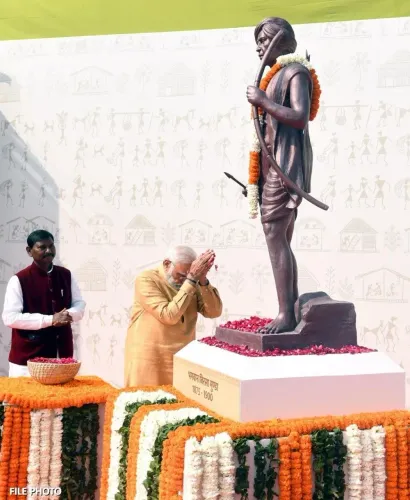
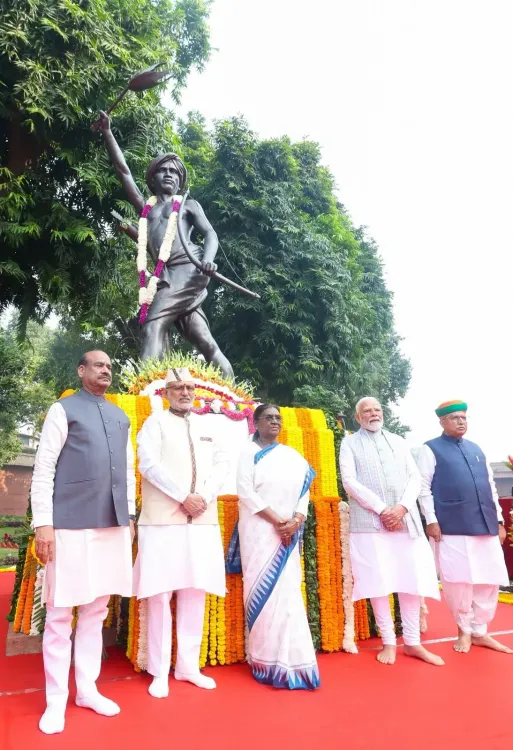
Prime Minister Narendra Modi paid tribute to Birsa Munda at the Parliament premises on 15 November 2026, the tribal freedom fighter's birth anniversary, observed nationally as Janjatiya Gaurav Divas since 2021. Modi hailed Munda's courage and devotion to the motherland as an eternal inspiration.
Key Takeaways
Prime Minister Narendra Modi offered tribute to Birsa Munda at the Parliament premises on 15 November 2026 .
Birsa Munda (1875–1900) led the Ulgulan rebellion against British land-alienation in the Chotanagpur region and died in Ranchi jail at age 25.
The Government of India designated 15 November as Janjatiya Gaurav Divas (Tribal Pride Day) in 2021 to honour tribal freedom fighters.
Birsa Munda is the only tribal leader whose portrait is displayed in the Central Hall of Parliament .
The tribute aligns with a broader BJP effort to engage Scheduled Tribe communities across Jharkhand, Odisha and Chhattisgarh .
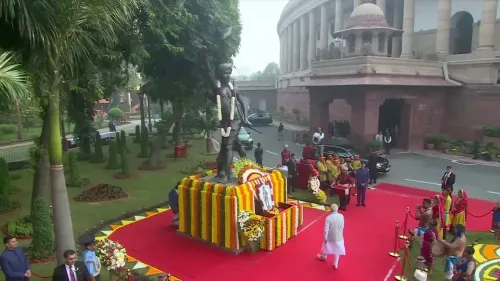
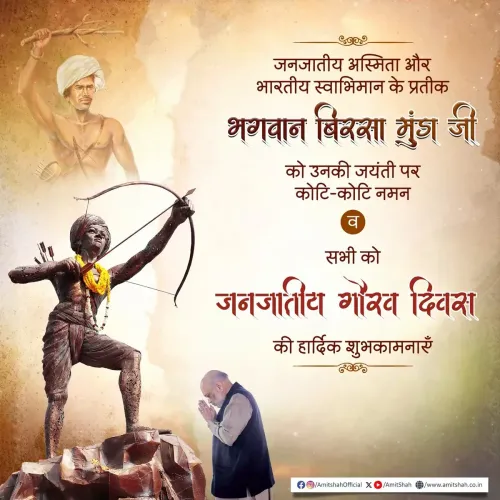
A hundred and twenty-six years after his death in a colonial jail cell, Birsa Munda was remembered at the heart of Indian democracy. Prime Minister Narendra Modi paid floral tribute to the tribal freedom fighter at the Parliament premises on Sunday, 15 November 2026 — the birth anniversary of the man who shook British authority in the forests of Chotanagpur.
Posting on X in Hindi, the Prime Minister wrote: 'Bhagwan Birsa Munda ji ki jayanti ke avsar par Sansad parisar mein unhe bhaavbheeni shraddhanjali arpit ki.' — 'On the occasion of Bhagwan Birsa Munda's birth anniversary, I offered a heartfelt tribute to him at the Parliament premises.' He added that Munda's 'indomitable courage, struggle and devotion to the motherland will continue to inspire every generation.'
Who was Birsa Munda — and why 'Bhagwan'?
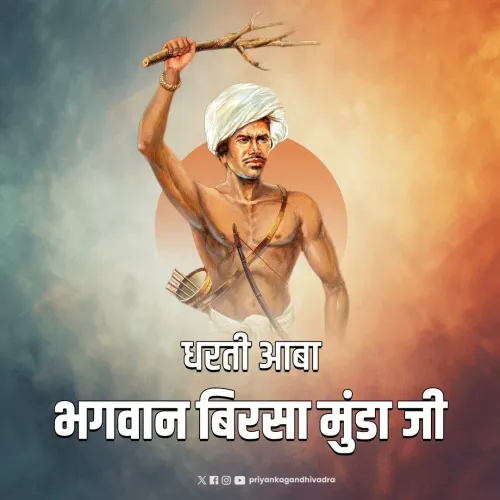
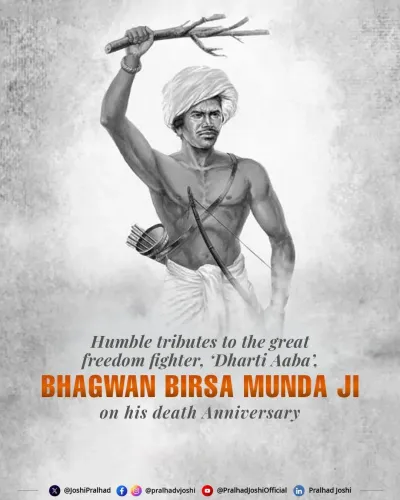
Birsa Munda (1875–1900) was a Munda tribal leader from what is today Jharkhand. He led the Ulgulan — meaning 'the great tumult' — a rebellion against British land-alienation policies that had stripped tribal communities of ancestral forests in the Chotanagpur region. Arrested by the British, he died in Ranchi jail at just 25 years of age. His followers elevated him to the status of a deity — hence the prefix Bhagwan — and he remains the only tribal leader whose portrait hangs in the Central Hall of Parliament.
Janjatiya Gaurav Divas — from calendar date to national observance
The day carries institutional weight beyond personal tribute. In 2021, the Government of India formally designated 15 November as Janjatiya Gaurav Divas — Tribal Pride Day — to honour tribal freedom fighters, with Birsa Munda's birth anniversary as the anchor date. The observance is now marked annually with events across states that carry large Scheduled Tribe populations, including Jharkhand, Odisha and Chhattisgarh.
Tribal outreach and the politics of remembrance
The BJP-led government's consistent highlighting of tribal icons from the freedom struggle is part of a deliberate effort to deepen political and cultural connect with Scheduled Tribe communities, who constitute roughly 8.6 per cent of India's population and hold decisive electoral weight across central and eastern India. Institutional gestures — a portrait in Parliament, a national day, flagship schemes — form the visible layer of this outreach. Schemes like PM JANMAN, targeting Particularly Vulnerable Tribal Groups, represent the programmatic layer. Together they signal a sustained, multi-front engagement.
Birsa Munda's story — a young man who died resisting dispossession — speaks with particular resonance to communities still navigating questions of land rights and forest access. The Prime Minister's tribute ensures that resonance finds the largest possible platform, once a year, at the seat of national power.
Point of View
Not its footnotes. For the BJP, elevating Birsa Munda to near-sovereign status serves a dual purpose: it reclaims a freedom-movement legacy that the party argues is under-represented in mainstream historiography, and it anchors outreach in states like Jharkhand and Odisha where tribal vote-share is pivotal. The institutionalisation of the day in 2021 — combined with schemes like PM JANMAN — suggests a long-term strategy of pairing symbolic recognition with welfare delivery. How well the programmatic layer keeps pace with the commemorative energy will ultimately determine whether the political dividends endure.
NationPress
15 Nov 2026
Frequently Asked Questions
Who was Birsa Munda and why is he called 'Bhagwan'?
Birsa Munda (1875–1900) was a Munda tribal leader from present-day Jharkhand who led the Ulgulan rebellion against British colonial rule and land alienation in the Chotanagpur region. His followers revered him as a divine figure — hence the prefix 'Bhagwan' — and he died in British custody at the age of 25.
What is Janjatiya Gaurav Divas and when was it started?
Janjatiya Gaurav Divas, or Tribal Pride Day, is observed on 15 November every year. The Government of India instituted it in 2021 to honour tribal freedom fighters, with the date chosen to coincide with Birsa Munda's birth anniversary.
Why did PM Modi pay tribute to Birsa Munda at Parliament?
Prime Minister Modi paid tribute at the Parliament premises on 15 November 2026 as part of the annual Janjatiya Gaurav Divas observance, honouring Birsa Munda's legacy of resistance and sacrifice. Munda is the only tribal leader whose portrait hangs in the Central Hall of Parliament.
What was the Ulgulan rebellion led by Birsa Munda?
The Ulgulan — meaning 'the great tumult' — was a late-19th-century uprising led by Birsa Munda against British policies that dispossessed tribal communities of their ancestral forests and land in the Chotanagpur region of what is now Jharkhand.
What is the PM JANMAN scheme for tribal communities?
PM JANMAN is a central government scheme aimed at improving the living conditions of Particularly Vulnerable Tribal Groups (PVTGs) across India, covering housing, clean water, road connectivity and other basic services. It is one of the flagship welfare programmes highlighted alongside tribal commemorations.