PM Modi unveils Ganga-Mahakam vision for India-Indonesia ties
Synopsis
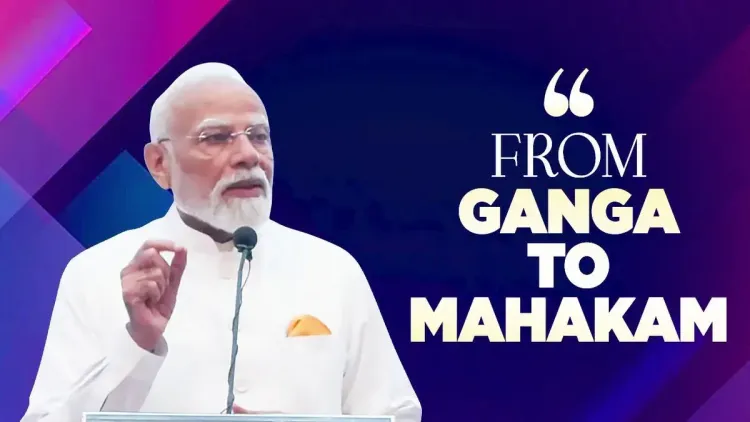
Prime Minister Narendra Modi on 7 July 2026 announced the Ganga-Mahakam vision, a five-pillar framework for India-Indonesia ties covering civilisational connect, shared development, security trust, maritime prosperity and Global South leadership — marking what he called a new era in the bilateral partnership.
Key Takeaways
PM Modi declared a 'new era' in the India-Indonesia partnership on 7 July 2026 .
The Ganga-Mahakam vision rests on five pillars: Civilisational Connect, Shared Development, Security and Strategic Trust, Maritime Prosperity, and Voice of the Global South.
The name draws on two rivers — India's Ganga and Indonesia's Mahakam — symbolising deep historical and cultural ties.
The framework builds on the Comprehensive Strategic Partnership established in 2018 during Modi's Jakarta visit.
The maritime pillar addresses shared interests in freedom of navigation across the Indian Ocean and South China Sea .
Implementation details are expected to emerge at upcoming ASEAN-India or East Asia Summit meetings.
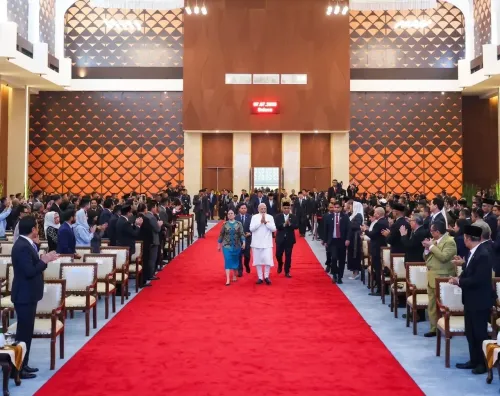
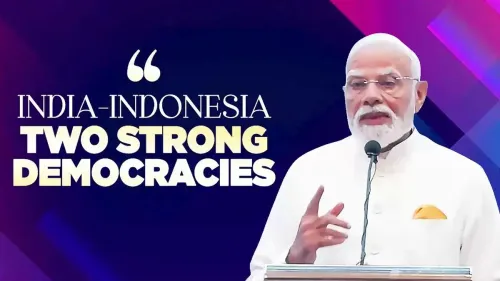
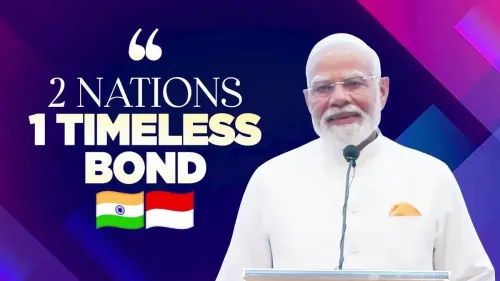
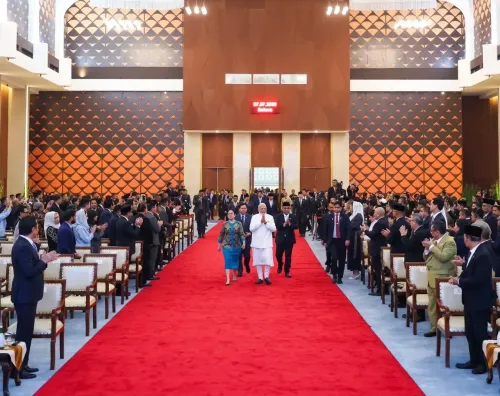
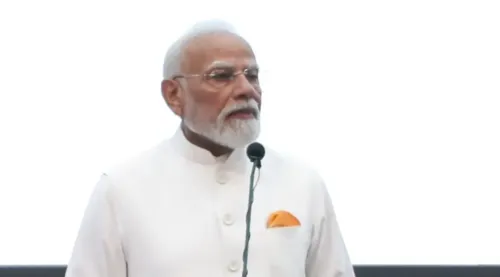
Prime Minister Narendra Modi on Tuesday, 7 July 2026 declared that a new era has dawned in the India-Indonesia partnership, outlining a five-pillar framework he called the Ganga-Mahakam vision to guide the two nations' relationship forward. The announcement, made via a post on X, signals a significant elevation in bilateral ambition spanning civilisational, strategic and maritime dimensions.
Context
In his post, Prime Minister Modi named five pillars underpinning the Ganga-Mahakam vision: Civilisational Connect, Shared Development, Security and Strategic Trust, Maritime Prosperity, and Voice of the Global South. The name itself draws on two of Asia's great rivers — the Ganga, sacred to India, and the Mahakam, a major river of Kalimantan, Indonesia — symbolising the deep cultural roots the two countries share across centuries of trade, religion and maritime exchange.
India and Indonesia have maintained ties rooted in Hindu-Buddhist civilisational heritage, Austronesian-Indian Ocean trade networks, and shared post-colonial non-alignment. The Ganga-Mahakam framing seeks to give that heritage a contemporary strategic vocabulary.
Policy Backdrop
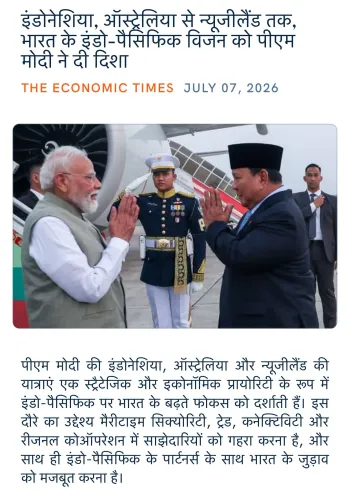
The announcement builds on a steady arc of engagement. In 2018, Prime Minister Modi visited Jakarta, addressed the Indonesian Parliament, and oversaw the elevation of bilateral ties to a Comprehensive Strategic Partnership — a framework covering defence cooperation, maritime security and economic collaboration. That visit was itself a landmark under India's Act East Policy, launched in 2014 to deepen economic, connectivity and strategic ties with East and Southeast Asia.
The 'Voice of the Global South' pillar echoes India's hosting of the Voice of the Global South Summit in 2023, where New Delhi sought to aggregate the positions of developing nations ahead of its G20 presidency. Bringing that language into a bilateral framework with Indonesia — itself a major emerging economy and ASEAN anchor — underlines both countries' intent to shape multilateral discourse.
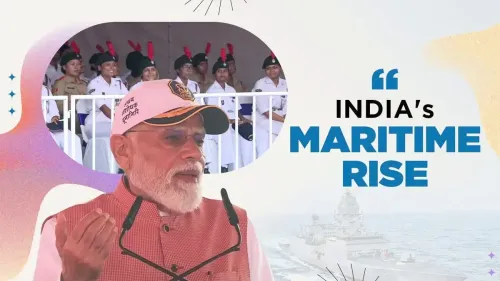
The maritime pillar carries particular strategic weight. Both nations have overlapping interests in freedom of navigation across the Indian Ocean and the South China Sea, and have conducted joint naval exercises under existing defence cooperation arrangements.
Stakeholders and Impact
Defence establishments on both sides stand to benefit from a sharper 'Security and Strategic Trust' pillar, which could translate into expanded joint patrols, intelligence sharing and defence procurement dialogues. Maritime traders and logistics operators in both countries will watch the 'Maritime Prosperity' pillar closely, given that the Malacca Strait — controlled in part by Indonesia — is a chokepoint for a significant share of India's seaborne trade.
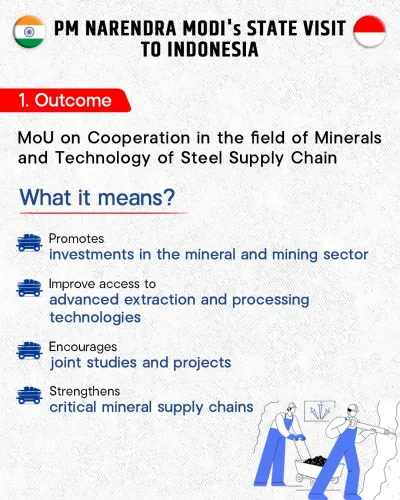
The 'Shared Development' pillar opens space for collaboration on infrastructure, digital public goods and supply-chain diversification — areas where both governments have expressed strategic interest. The 'Civilisational Connect' element may accelerate cultural exchanges, tourism corridors and academic partnerships that have historically been underdeveloped relative to the depth of historical ties.
What's Next
Observers will look for concrete implementation steps — joint statements, working-group formations or memoranda of understanding — at the next ASEAN-India Summit or East Asia Summit, where both nations are participants. Whether the Ganga-Mahakam vision is formalised into a standalone bilateral document or absorbed into existing Comprehensive Strategic Partnership mechanisms will define its operational weight.
For India's broader Indo-Pacific posture, a reinvigorated partnership with Indonesia — the world's largest archipelagic state and fourth most populous nation — would represent a material strengthening of its eastern strategic flank at a time of heightened regional competition.
Point of View
Giving it a named doctrine that mirrors the kind of bilateral frameworks India has used with partners such as Japan and Australia. By anchoring it in civilisational imagery while simultaneously invoking Global South solidarity, Modi is threading together soft-power appeal with hard strategic intent — a signature of his foreign policy communication. The maritime and security pillars signal that New Delhi views Jakarta as a load-bearing partner in its Indo-Pacific architecture, not merely a trade destination. If the five pillars are operationalised through working mechanisms, this could represent the most substantive upgrade in India-Indonesia ties since the 2018 Comprehensive Strategic Partnership.
NationPress
7 Jul 2026
Frequently Asked Questions
What is the Ganga-Mahakam vision announced by PM Modi?
The Ganga-Mahakam vision is a five-pillar framework for India-Indonesia relations announced by Prime Minister Narendra Modi on 7 July 2026, covering Civilisational Connect, Shared Development, Security and Strategic Trust, Maritime Prosperity, and Voice of the Global South.
Why is it called the Ganga-Mahakam vision?
The name combines the Ganga, a river sacred to India, and the Mahakam, a major river in Kalimantan, Indonesia, symbolising the deep historical and cultural ties between the two countries rooted in centuries of trade and maritime exchange.
What is India's current relationship status with Indonesia?
India and Indonesia have a Comprehensive Strategic Partnership, elevated during PM Modi's 2018 visit to Jakarta, covering defence, maritime security and economic cooperation. The Ganga-Mahakam vision is positioned as the next step in that partnership.
How does the Ganga-Mahakam vision relate to India's Act East Policy?
The Ganga-Mahakam vision is an extension of India's Act East Policy, launched in 2014, which prioritises deeper economic, connectivity and strategic engagement with East and Southeast Asian nations, with Indonesia as a key partner.
What does the 'Voice of the Global South' pillar mean for India-Indonesia ties?
The pillar signals that both India and Indonesia intend to coordinate their positions in multilateral forums to represent developing-country interests, building on India's Voice of the Global South Summit held in 2023 during its G20 presidency.