Historic Significance of PM Modi's Visit to Israel: Insights from India's Ambassador

Synopsis
India's Ambassador to Israel, J.P. Singh, reflects on Prime Minister Modi's landmark visit as a transformative event, marking a new era in bilateral relations with 16 agreements signed, showcasing cooperation in technology, agriculture, and trade.
Key Takeaways
Historic Visit: PM Modi's two-day visit is hailed as monumental.
Warm Reception: Israeli people celebrated the visit with enthusiasm.
16 Agreements: Significant agreements were signed across various sectors.
Strategic Partnership: Relations upgraded to a special strategic partnership.
Future Collaboration: Emphasis on AI, cyber security, and agriculture.
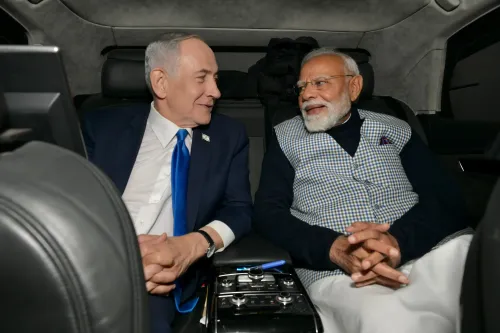
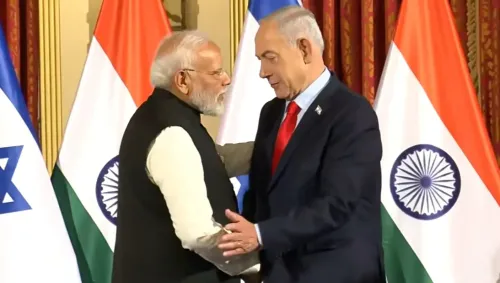
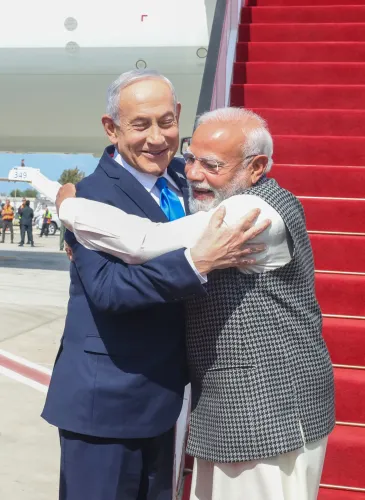
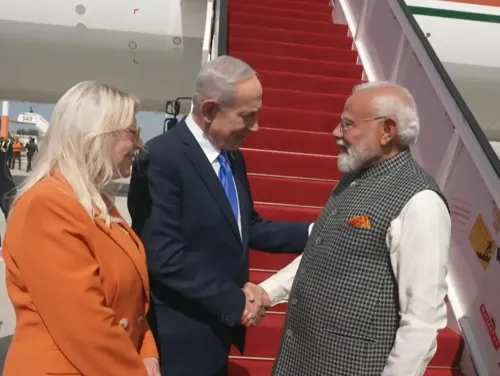
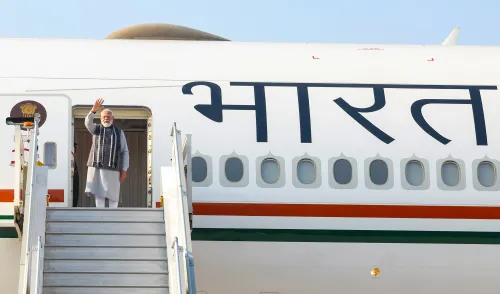
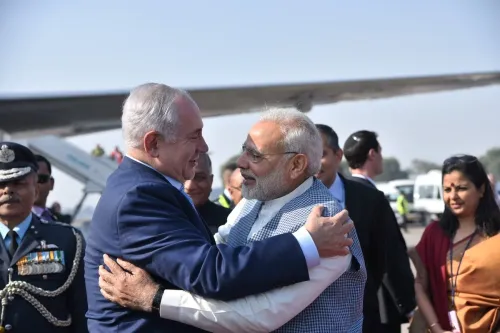
Jerusalem, Feb 28 (NationPress) J.P. Singh, India’s Ambassador to Israel, hailed Prime Minister Narendra Modi's recent two-day visit as a monumental event, noting that the Israeli populace welcomed him with great enthusiasm, celebrating the occasion akin to a festival.
In an exclusive conversation with IANS, Ambassador Singh emphasized that this visit represented a pivotal moment in the history of India-Israel relations, leading to the signing of 16 agreements across crucial sectors.
“The two-day visit of Prime Minister Narendra Modi was historic in every respect. The reception he received from the people of Israel, filled with warmth and excitement, reflects the profound respect and friendship shared between our nations. It felt like a celebration,” Singh stated.
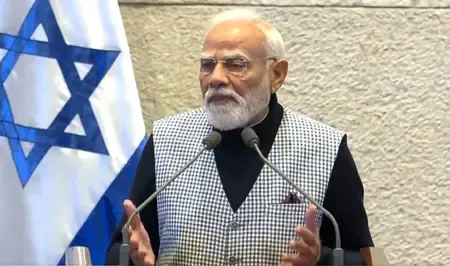
He highlighted that PM Modi’s address to the Israeli Knesset garnered significant acclaim.
“The Prime Minister’s speech at the Knesset was well-received, showcasing the common values and the strengthening partnership between India and Israel. The honor he received from the Israeli Parliament is a testament to the solid foundation of our bilateral relations,” he remarked.
According to the Ambassador, the visit resulted in a substantial enhancement of bilateral relations.
“This visit has transformed our relationship from a strategic partnership to a special strategic partnership. This is a significant advancement, reflecting the trust and mutual confidence between our nations. We have finalized 16 agreements that encompass various areas of collaboration,” he noted.
Science and technology emerged as pivotal focus areas. Singh mentioned that Artificial Intelligence (AI), cyber security, and quantum technologies were particularly emphasized.
“In the domain of Artificial Intelligence alone, we signed two agreements, one of which targets AI in education. This aligns with the Prime Minister’s vision of ensuring that technological advancements reach the common populace,” he elaborated.
Highlighting cyber security as a critical collaborative field, Singh stated, “Cyber security is a pressing global issue. We are striving to merge our strengths to effectively counter emerging threats in this area.”
He pointed out that Israel’s core competencies lie in innovation, research, development, AI, and cyber security.
“India also possesses strong capabilities in these domains. Our aim is to develop a framework that leverages the strengths of both nations for mutual benefit,” he stated.
Agriculture is another vital area of collaboration. Singh indicated that the expansion of Centres of Excellence would enhance farm productivity and support small-scale farmers.
“By uniting the agricultural strengths of India and Israel, we can boost productivity and enhance the incomes of farmers, particularly benefiting small and marginal farmers,” he explained.
Trade and economic cooperation were discussed thoroughly during the visit.
“Recently, we finalized a bilateral treaty, and both Prime Ministers have instructed that a Free Trade Agreement should be concluded at the earliest opportunity. We have also signed an agreement on UPI, which will facilitate smoother financial transactions and benefit both nations,” he added.
Regarding defense collaboration, Singh mentioned that both countries are already working closely and will expand cooperation in this sector. Cultural ties were also strengthened through new agreements established during the visit.
Describing PM Modi’s address as “visionary,” the Ambassador stated that it underscored the commonalities between the two nations and laid out a roadmap for future growth.
“The Prime Minister’s address gained widespread recognition and was appreciated by individuals in both countries. The acknowledgment he received from the Israeli Parliament is significant and highlights his efforts to bolster India-Israel relations,” Singh concluded.
Point of View
PM Modi's visit to Israel not only reinforces the historical ties between the two nations but also paves the way for strategic cooperation in technology, agriculture, and defense. The signing of 16 agreements marks a significant step towards enhancing bilateral relations.
NationPress
23 Oct 2026
Frequently Asked Questions
What were the key outcomes of PM Modi's visit to Israel?
The visit resulted in the signing of 16 agreements, enhancing cooperation in areas such as technology, agriculture, and trade, and elevating India-Israel relations to a special strategic partnership.
How did the Israeli public react to PM Modi's visit?
The Israeli populace welcomed PM Modi with warmth and enthusiasm, celebrating the occasion as a festival, reflecting the strong friendship between the two nations.
What is the significance of the agreements signed during the visit?
The agreements cover crucial sectors like AI, cyber security, and agriculture, indicating a robust framework for future collaboration and mutual benefit.
What areas are emphasized for collaboration between India and Israel?
Key areas of collaboration include science and technology, agriculture, trade, and defense cooperation.
What was highlighted in PM Modi's speech to the Knesset?
PM Modi's speech was noted for its visionary outlook, emphasizing shared values and outlining a roadmap for future growth in India-Israel relations.