After Lateef Bhat killing, ISI plans mass infiltration push across J&K sectors
Synopsis
The killing of Lateef Bhat, Lashkar-e-Taiba's last active operative in South Kashmir, has not quieted the threat — it has accelerated it. Intelligence officials warn the ISI has responded by ordering a simultaneous, multi-sector infiltration push involving over 500 militants at PoK launchpads, using a Pahalgam-style 'hide and strike' playbook and a rebuilt OGW network of untraceable first-timers, including minors.
Key Takeaways
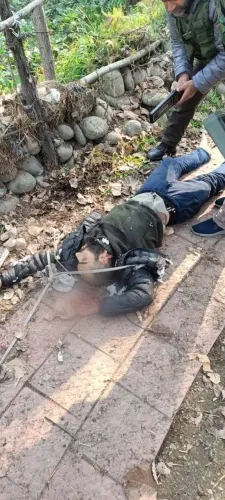
Lateef Bhat , described as the last active terrorist in South Kashmir and a Lashkar-e-Taiba operative, was killed in an encounter on 19 November 2026 .
Intelligence officials say over 500 militants from LeT , Hizbul Mujahideen , and Jaish-e-Mohammed are waiting at launchpads in Pakistan-occupied Kashmir to infiltrate.
The ISI has reportedly ordered a simultaneous multi-sector push targeting Budgam , Kupwara , Poonch , and Uri to overwhelm security forces.
The strategy mirrors the Pahalgam attack model — infiltrators would hide in forests and await strike orders, with logistics handled by overground workers.
Pakistan is reportedly recruiting school-going children as first-time OGWs to evade detection by security agencies.
Lashkar-e-Taiba is also expected to escalate misinformation and communal incitement campaigns in the Kashmir Valley .
The elimination of Lateef Bhat, described by security officials as the last active terrorist in South Kashmir and a key operative of Lashkar-e-Taiba (LeT), has triggered an immediate escalation response from Pakistan's Inter-Services Intelligence (ISI), according to intelligence inputs. Even as the encounter was under way, communication lines across the border were activated, urging militants waiting at launchpads in Pakistan-occupied Kashmir (PoK) to find infiltration windows, officials said on 19 November 2026.
Scale of the Threat
According to an Intelligence Bureau official, over 500 terrorists belonging to Lashkar-e-Taiba, Hizbul Mujahideen, and Jaish-e-Mohammed are currently waiting at launchpads in PoK to infiltrate into Jammu and Kashmir. Despite heightened security on the Indian side having frustrated many previous attempts, fresh intelligence inputs suggest these operatives are now willing to take significantly higher risks. 'This is a sign of clear desperation, and the ISI wants its terrorists on Indian soil at any cost,' the official said.
Multi-Sector Simultaneous Push
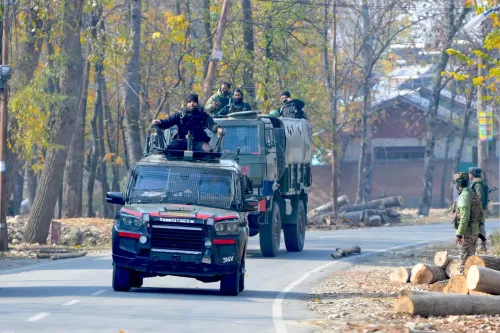
Rather than the earlier strategy of phased, staggered infiltrations, the ISI has now reportedly instructed launchpad handlers to ramp up efforts across all sectors simultaneously. Officials have specifically flagged Budgam, Kupwara, Poonch, and Uri as sectors where coordinated infiltration attempts are expected. The logic, according to officials, is to overwhelm Indian security forces and increase the probability of at least some operatives slipping through undetected.
Pahalgam-Style 'Hide and Strike' Modus Operandi
Officials warn that the infiltrating terrorists are not expected to strike immediately upon crossing the border. Instead, the plan mirrors the Pahalgam attack model — operatives would first enter India, conceal themselves in dense forests, and await specific instructions before carrying out any strike. 'Their assignment would be made known to them only when they infiltrate,' an official said, adding that accommodation, logistics, and reconnaissance would be handled entirely by overground workers (OGWs) already on Indian soil.
Rebuilding the Overground Worker Network
In a particularly concerning development, Pakistani handlers are reportedly attempting to rebuild their OGW network using 'fresh faces' — specifically targeting younger individuals, including school-going children, who are less likely to have existing police records or be on security agency watchlists. Officials note that first-time operatives with no prior criminal files are inherently harder to detect and track, complicating counter-intelligence efforts significantly.
Misinformation and Communal Incitement Campaigns
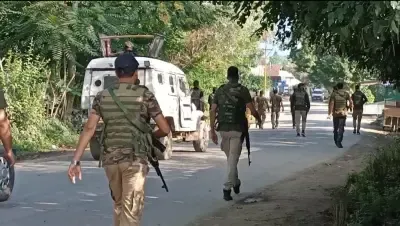
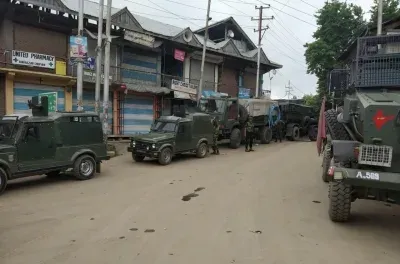
Beyond physical infiltration, intelligence agencies have also warned that Lashkar-e-Taiba, stung by the loss of Bhat, is likely to step up misinformation, fake news, and communal incitement campaigns in the Kashmir Valley. 'The Lashkar-e-Taiba would hope that the people come out on the streets and create trouble so that it provides a perfect cover for the outfit to set up operations afresh in the Valley,' an official said. Security agencies say they are now on heightened alert across both the physical and information domains as Pakistan recalibrates its proxy strategy.
Point of View
But intelligence officials' own warnings reveal its strategic limits: Pakistan's response has been to accelerate, not pause. The multi-sector simultaneous push is a deliberate attempt to exploit the bandwidth constraints of Indian security forces — a playbook that has worked before. What is genuinely new and alarming is the recruitment of minors as overground workers, which signals that the ISI is running out of experienced cadres with clean records and is now willing to weaponise children. That the Pahalgam model — months of forest concealment before a strike — is now being replicated as a template, rather than a one-off, should concentrate minds on forest-grid surveillance and OGW detection, not just border fencing.
NationPress
19 Nov 2026
Frequently Asked Questions
Who was Lateef Bhat and why does his killing matter?
Lateef Bhat was described by security officials as the last active terrorist in South Kashmir and a key operative of Lashkar-e-Taiba. His elimination is considered a significant setback for the outfit, though intelligence agencies warn it has simultaneously triggered an escalation response from Pakistan's ISI.
How many militants are waiting to infiltrate into Jammu and Kashmir?
According to an Intelligence Bureau official, over 500 militants from Lashkar-e-Taiba, Hizbul Mujahideen, and Jaish-e-Mohammed are currently positioned at launchpads in Pakistan-occupied Kashmir. Many previous infiltration attempts have been foiled due to heightened security on the Indian side.
What is the ISI's new infiltration strategy?
Rather than phased infiltrations, the ISI has reportedly instructed handlers to launch simultaneous pushes across multiple sectors — including Budgam, Kupwara, Poonch, and Uri — in an attempt to stress Indian security forces and increase the chance of operatives slipping through. Infiltrators are then expected to hide in forests and await strike orders, mirroring the Pahalgam attack model.
Why are security agencies concerned about overground workers?
Pakistani handlers are reportedly recruiting young, first-time operatives — including school-going children — as overground workers, specifically because they have no prior police records and are harder to detect. These OGWs would handle logistics, accommodation, and reconnaissance for infiltrating militants.
What non-physical threats have intelligence agencies flagged?
Beyond infiltration, agencies have warned that Lashkar-e-Taiba is likely to intensify misinformation, fake news, and communal incitement campaigns in the Kashmir Valley, hoping to provoke public unrest that could provide cover for rebuilding its operational network in the region.