Pradhan Chairs Two-Day Education Ministers' Meet on NEP 2020
Synopsis
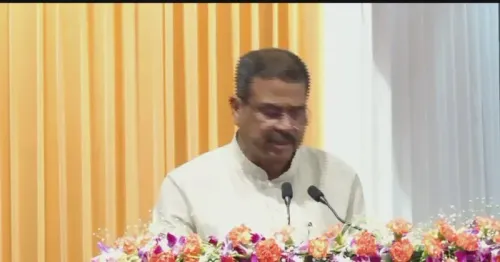
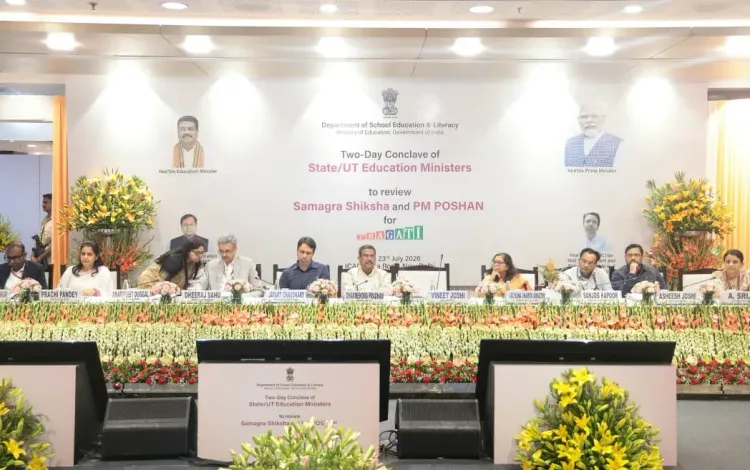
Union Education Minister Dharmendra Pradhan on 22 July 2026 addressed a two-day conference of state education ministers, reviewing progress on NEP 2020-aligned schemes including PM SHRI, PM POSHAN, NIPUN Bharat and Samagra Shiksha, and reaffirming Centre-state partnership as the foundation for educating India's 30 crore school children.
Key Takeaways
Dharmendra Pradhan addressed a two-day conference of state education ministers convened by the Ministry of Education on 22 July 2026 .
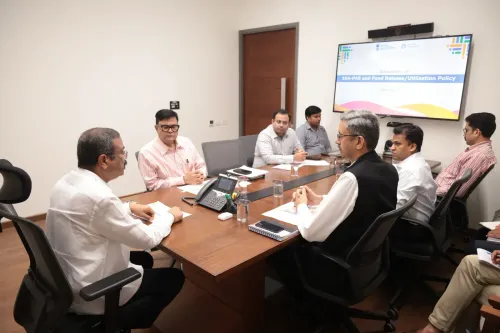
The conference reviewed progress on Samagra Shiksha , PM SHRI , PM POSHAN , and NIPUN Bharat , ahead of NEP 2020 's sixth anniversary on 29 July 2026 .
Approximately 30 crore school-going children are the primary beneficiaries of these centrally sponsored schemes.
PM SHRI targets development of over 14,500 model schools ; NIPUN Bharat aims to achieve universal foundational literacy and numeracy by 2026-27 .
School education was framed as the most critical pillar of PM Modi 's ' Viksit Bharat 2047 ' development vision.
State experiences and innovations are to be incorporated into an updated NEP 2020 action plan going forward.
Union Education Minister Dharmendra Pradhan on Wednesday, 22 July 2026, addressed a two-day national conference of state education ministers convened by the Ministry of Education, focusing on the progress of centrally sponsored school education schemes and the roadmap ahead as the National Education Policy (NEP) 2020 approaches its sixth anniversary on 29 July 2026.
Addressing the gathering, Pradhan said the conference reviewed progress on Samagra Shiksha, PM SHRI, PM POSHAN, and NIPUN Bharat, and discussed suggestions received from states along with the action plan going forward. 'केंद्र और राज्यों की साझेदारी ही इन पहलों के प्रभावी क्रियान्वयन का सबसे मजबूत आधार है' ['The partnership between the Centre and states is the strongest foundation for the effective implementation of these initiatives'], he said.
Context
The conference comes days before the sixth anniversary of NEP 2020, which was approved by the Union Cabinet on 29 July 2020, replacing a policy framework that had been in place since 1986. The minister framed school education as the most critical pillar of Prime Minister Narendra Modi's 'Viksit Bharat 2047' vision — a long-term national development goal targeting a developed India by the centenary of independence.
Pradhan noted that the country's approximately 30 crore school-going children are at the centre of this effort, with emphasis on Foundational Literacy and Numeracy (FLN), mother-tongue-based instruction, skill development, sports, innovation, scientific thinking, and community participation in schools — all aligned with NEP 2020 priorities.
Policy Backdrop
Samagra Shiksha Abhiyan, launched in 2018-19 by merging three earlier schemes — Sarva Shiksha Abhiyan, Rashtriya Madhyamik Shiksha Abhiyan, and Teacher Education — serves as the primary financial and administrative vehicle for school education reform. NIPUN Bharat, launched in 2021, targets universal foundational literacy and numeracy by 2026-27, making the current juncture a critical assessment point.
PM SHRI (Pradhan Mantri Schools for Rising India) aims to develop over 14,500 model schools that demonstrate NEP 2020 practices, while PM POSHAN — the renamed mid-day meal programme — supports school attendance through nutritional coverage. Atal Tinkering Labs, introduced in 2016 under the Atal Innovation Mission, are also being expanded as part of the innovation push in school education.
Stakeholders and Impact
State education departments are central to this exercise, as centrally sponsored schemes require state co-funding and administrative delivery. Pradhan underscored that the conference was not merely a review platform but, in his words, 'विकसित भारत के लिए साझा संकल्प का महत्वपूर्ण माध्यम' ['an important medium of shared resolve for a Viksit Bharat'].
The direct beneficiaries are the approximately 30 crore students enrolled in Indian schools, whose foundational learning outcomes, nutritional support, and access to innovation infrastructure are shaped by the schemes under review. Community participation in school governance is also being strengthened as a structural priority under NEP 2020.
What's Next
The 29 July 2026 sixth anniversary of NEP 2020 is expected to serve as a formal milestone for progress reporting on implementation across states. The ministry is likely to accelerate state-level action on PM SHRI school expansion and push for measurable FLN outcomes ahead of the NIPUN Bharat target year of 2026-27.
Going forward, the experiences, innovations, and working models shared by states at this conference are expected to feed into a revised action plan, with the Centre-state partnership model remaining the primary implementation mechanism for delivering quality, inclusive, and future-oriented education to every child.
Point of View
Pradhan is anchoring a long-term political vision to measurable near-term targets such as NIPUN Bharat's 2026-27 deadline. The emphasis on Centre-state partnership is also a strategic posture, acknowledging that opposition-governed states control significant portions of the school system and their cooperation is non-negotiable for outcomes. The conference format — gathering ministers from 'various states' — serves as both a coordination mechanism and a political signal that NEP 2020 implementation is a national, not merely a central-government, enterprise.
NationPress
23 Jul 2026
Frequently Asked Questions
What is the NEP 2020 sixth anniversary significance?
NEP 2020 was approved by the Union Cabinet on 29 July 2020 , making 29 July 2026 its sixth anniversary — a milestone the Education Ministry is using to review implementation progress and set the next phase of the action plan.
What is PM SHRI scheme?
PM SHRI (Pradhan Mantri Schools for Rising India) is a centrally sponsored scheme to develop over 14,500 model schools across India that demonstrate and deliver NEP 2020 practices in teaching, learning, and school management.
What is NIPUN Bharat?
NIPUN Bharat is a national mission launched in 2021 to ensure that children achieve foundational literacy and numeracy by the end of Grade 3 by the year 2026-27 .
How many children does India's school education system cover?
India's school education system covers approximately 30 crore (300 million) children , making it one of the largest in the world and the primary target group for NEP 2020-aligned reforms.
What is Samagra Shiksha Abhiyan?
Samagra Shiksha Abhiyan is an integrated centrally sponsored scheme launched in 2018-19 by merging Sarva Shiksha Abhiyan, Rashtriya Madhyamik Shiksha Abhiyan, and Teacher Education, serving as the main funding and administrative framework for school education reform.