Pradhan Highlights India's Highway Growth Under PM Modi
Synopsis
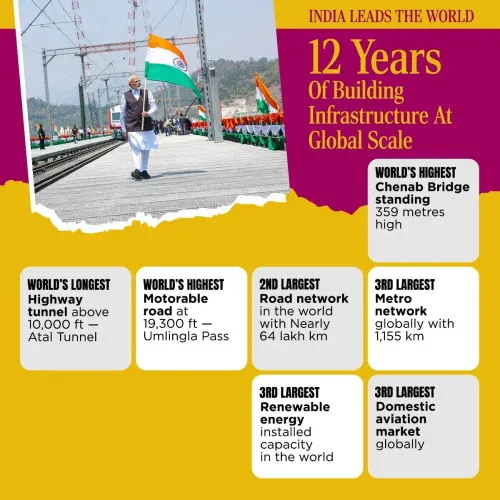
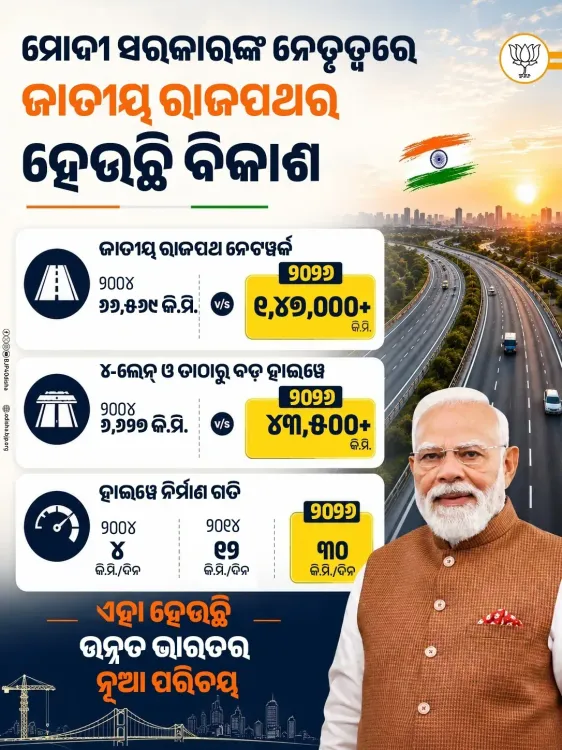
Union Education Minister Dharmendra Pradhan on 28 May 2026 highlighted India's accelerating national highway construction under PM Modi's leadership, posting in Odia to credit the government's infrastructure push with setting new national milestones.
Key Takeaways
Union Education Minister Dharmendra Pradhan posted on X on 28 May 2026 praising India's highway infrastructure growth under PM Narendra Modi .
The post was written in Odia , targeting Pradhan's regional audience in Odisha .
The Bharatmala Pariyojana , approved in 2015 , targets construction of 34,800 km of national highways and expressways.
The National Infrastructure Pipeline launched in 2019 targets Rs 111 lakh crore in cross-sector infrastructure investment.
NHAI is the primary executing body for national highway development under the Ministry of Road Transport and Highways.
BJP leaders have consistently highlighted highway construction milestones as a core governance achievement since 2014 .
Union Education Minister Dharmendra Pradhan on Thursday, 28 May 2026, took to X to highlight the rapid expansion of national highway infrastructure under Prime Minister Narendra Modi, stating that India is setting new records in highway construction and that the country's infrastructure is being strengthened under Modi's leadership.
Writing in Odia, Pradhan said: 'ଆଜି ଭାରତର ଭିତ୍ତିଭୂମି ସୁଦୃଢ଼ ହେଉଛି' ('Today, India's infrastructure is being strengthened'), adding that the nation has been establishing new milestones in national highway construction in recent years.
Context
Pradhan, a senior BJP leader from Odisha, addressed his regional audience directly in Odia — a consistent practice among BJP leaders who frame national policy achievements in the language of their home states. The post credits Prime Minister Modi's leadership as the driving force behind the infrastructure push, framing highway development as a signature governance achievement of the current central government.
Policy Backdrop
The central government's highway expansion drive has been anchored by flagship programmes such as the Bharatmala Pariyojana, approved by the Union Cabinet in 2015, which targets the construction and upgrade of 34,800 km of national highways and expressways. The National Infrastructure Pipeline, launched in 2019, set an ambitious target of Rs 111 lakh crore in investment across infrastructure sectors, with roads forming a central component.
The National Highways Authority of India (NHAI), the autonomous body responsible for highway development under the Ministry of Road Transport and Highways, has been the primary executing agency for these programmes. Since 2014, the central government has significantly accelerated national highway construction through centralised planning and increased budgetary outlays, a trajectory that has been highlighted repeatedly by ruling party leaders as a marker of governance performance.
Stakeholders and Impact
The expansion of national highways directly affects logistics firms and highway contractors, who benefit from increased project pipelines and improved freight movement corridors. Improved highway connectivity is also cited by the government as a driver of regional economic development, particularly for states like Odisha that have historically sought better integration with national transport networks.
The broader connectivity push extends beyond roads to include dedicated freight corridors and port modernisation, forming an integrated infrastructure strategy that the BJP has made a central part of its governance narrative ahead of state and national electoral cycles.
What's Next
NHAI's annual construction targets and the funding allocations for highway development in the next Union Budget will be closely watched as indicators of whether the pace of expansion is sustained. Parliamentary questions on highway project completion rates and cost overruns are expected to keep the sector under legislative scrutiny. Pradhan's post signals continued political emphasis on infrastructure as a BJP talking point, particularly in Odia-speaking constituencies.
Point of View
The post reinforces the BJP's centralised brand strategy where individual ministers amplify the prime ministerial image rather than their own portfolios. The infrastructure-as-achievement frame has been a durable BJP talking point since 2014, and its continued deployment suggests the party views highway construction data as electorally persuasive with regional audiences. The choice to post in Odia rather than Hindi or English also signals a targeted grassroots outreach calculus.
NationPress
11 Oct 2026
Frequently Asked Questions
What did Dharmendra Pradhan say about India's highways?
Dharmendra Pradhan said that India's infrastructure is being strengthened under PM Modi's leadership and that the country is setting new milestones in national highway construction.
What is the Bharatmala Pariyojana?
Bharatmala Pariyojana is a central government highway development programme approved in 2015 that targets the construction and upgrade of 34,800 km of national highways and expressways across India.
Why did Pradhan post in Odia?
Pradhan, a senior BJP leader from Odisha, regularly posts in Odia to communicate with his regional audience, framing national policy achievements in his home state's language.
What is the National Infrastructure Pipeline?
The National Infrastructure Pipeline is a government initiative launched in 2019 that targets Rs 111 lakh crore in investment across infrastructure sectors including roads, freight corridors, and ports.