Pradhan marks 12 years of Make in India's manufacturing push
Synopsis
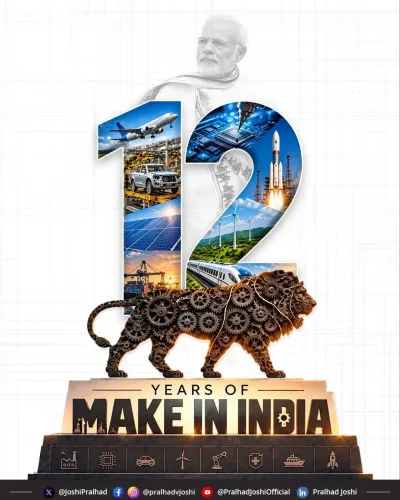
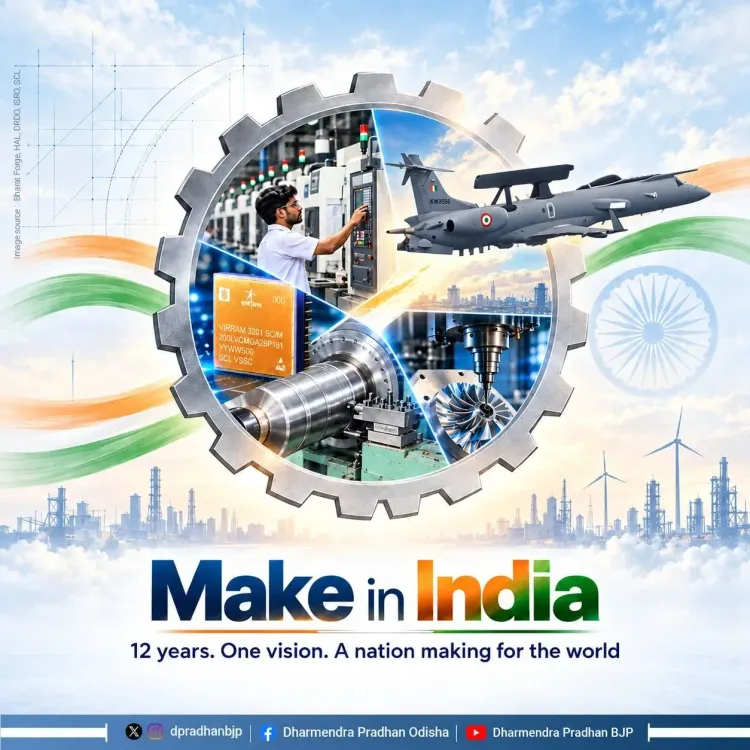
Union Education Minister Dharmendra Pradhan marked the 12th anniversary of Make in India on 25 September 2026, highlighting expansion across electronics, defence, automobiles and renewables, and linking the initiative to India's Viksit Bharat 2047 vision.
Key Takeaways
Make in India was launched by Prime Minister Narendra Modi on 25 September 2014 and completes 12 years in 2026.
The initiative spans sectors including mobile phones, electronics, automobiles, defence equipment and renewable energy .
Atmanirbhar Bharat , announced in May 2020 , complemented Make in India by pushing domestic supply-chain development and reducing import dependence.
Pradhan highlighted the role of millions of entrepreneurs, workers, engineers and innovators as co-authors of the manufacturing story.
The long-term goal framing the initiative is Viksit Bharat — India's ambition to become a developed nation by 2047 .
Key metrics to watch include PLI scheme performance in electronics and renewables, and upcoming FDI inflow figures .
Twelve years ago, a single initiative set out to rewire how India makes things — and on 25 September 2026, Union Education Minister Dharmendra Pradhan marked that anniversary with a sweeping tribute to the initiative's reach, from assembly lines to export markets.
From a 2014 pledge to a cross-sector reality
Make in India was launched by Prime Minister Narendra Modi on 25 September 2014 — a date now etched into India's economic calendar. The ambition was pointed: raise manufacturing's share of GDP, attract foreign direct investment, and put India on the global industrial map. Pradhan's post captures what twelve years of that bet look like — 'mobile phones and electronics to automobiles, defence equipment and renewable energy,' sectors that once leaned heavily on imports and now carry a 'Made in India' stamp into global markets. The initiative did not arrive alone. Atmanirbhar Bharat, announced in May 2020, deepened the logic — shifting the frame from simply attracting investment to actively reducing import dependence and building domestic supply chains capable of plugging into global networks. Together, the two pillars have shaped India's industrial posture for the better part of a decade.Millions of makers behind the milestone
Pradhan's tribute lands not on a single factory or a flagship deal, but on the people. 'Millions of entrepreneurs, workers, engineers and innovators have been part of this journey,' he wrote — a deliberate framing that distributes ownership of the milestone across the workforce rather than concentrating it in policy corridors. It is a signal that the government sees manufacturing growth as a mass participation story, not a top-down achievement. The sectors he names are not incidental. Electronics and mobile phones reflect India's dramatic pivot from being almost entirely import-dependent to becoming a significant assembler and, increasingly, a component manufacturer. Defence equipment points to a sector where indigenisation has become an explicit national security priority. Renewable energy ties manufacturing ambition to the green transition — solar panels, wind turbines, and battery storage as the next frontier for 'Made in India' goods.Viksit Bharat as the finishing line
Pradhan closes his post on Viksit Bharat — the government's headline goal of transforming India into a developed nation by 2047. The framing is deliberate: Make in India is not presented as an end in itself, but as the manufacturing engine of a longer civilisational project. 'Made in India is reaching more markets, creating new opportunities and strengthening our path towards a Viksit Bharat,' he wrote. The next concrete markers to watch are the performance figures from the Production-Linked Incentive (PLI) scheme — particularly in electronics and renewables — and the next FDI inflow data, which will either confirm or test the optimism embedded in today's anniversary message. Twelve years in, the scoreboard is still being written — and the sectors India chose to bet on in 2014 are now the same ones the world is scrambling to secure.Point of View
Keeping the BJP's economic story cohesive heading into the next phase of industrial policy. The explicit mention of defence and renewable energy — both sectors with acute geopolitical salience — signals where the government wants the Make in India brand to travel next. By centering workers and entrepreneurs rather than ministers or schemes, the messaging attempts to broaden ownership of the milestone beyond party credit. The post is ultimately a soft-power move: reminding domestic and international audiences that India's manufacturing ambitions are now twelve years deep, institutionally embedded, and pointing toward 2047.
NationPress
25 Sept 2026
Frequently Asked Questions
When was Make in India launched?
Make in India was launched by Prime Minister Narendra Modi on 25 September 2014 , making 2026 its 12th anniversary.
What sectors does Make in India cover?
The initiative spans a wide range of sectors including mobile phones, electronics, automobiles, defence equipment and renewable energy , among others.
What is Viksit Bharat and how does it relate to Make in India?
Viksit Bharat is the Indian government's vision to transform India into a developed nation by 2047 . Make in India's manufacturing expansion is positioned as a key pillar of achieving that goal.
What is Atmanirbhar Bharat and how does it differ from Make in India?
Atmanirbhar Bharat , announced in May 2020 , built on Make in India by emphasising domestic supply-chain resilience and reducing import dependence, complementing the earlier initiative's investment-attraction focus.
What is the Production-Linked Incentive scheme and why does it matter for Make in India?
The Production-Linked Incentive (PLI) scheme offers financial incentives to manufacturers in sectors such as electronics and renewables, and its performance figures are a key benchmark for measuring Make in India's real-world impact.