Pradhan pays tribute to Ashok Singhal on birth anniversary
Synopsis
Union Education Minister Dharmendra Pradhan on 27 September 2026 paid homage to Ashok Singhal, former VHP international president and Ram Janmabhoomi movement pioneer, on his birth anniversary, calling his contributions to the nation and dharma an enduring inspiration.
Key Takeaways
Union Education Minister Dharmendra Pradhan posted a Hindi tribute to Ashok Singhal on his birth anniversary on 27 September 2026 .
Singhal served as the former international president of the Vishva Hindu Parishad (VHP) , founded in 1964 .
He was the leading figure of the Shri Ram Janmabhoomi movement , which sought construction of a temple at Ayodhya.
The movement culminated in the Supreme Court's 2019 verdict paving the way for temple construction at Ayodhya.
Pradhan's tribute reflects the BJP's consistent practice of publicly honouring architects of the Ayodhya campaign on key anniversaries.
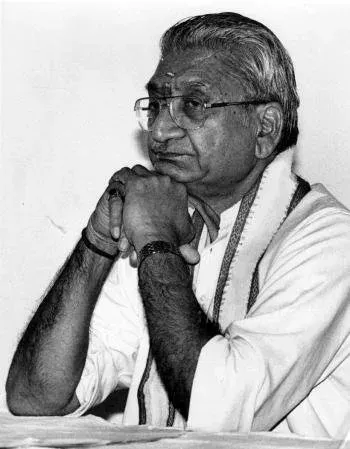
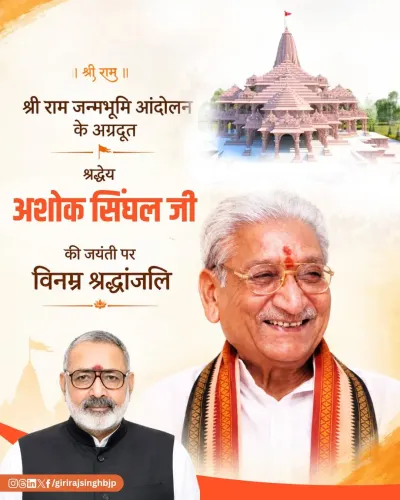
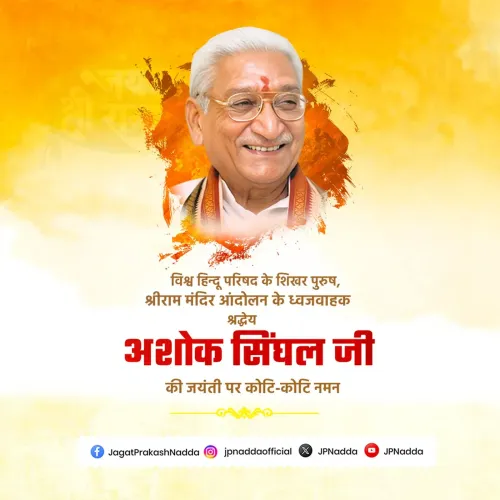
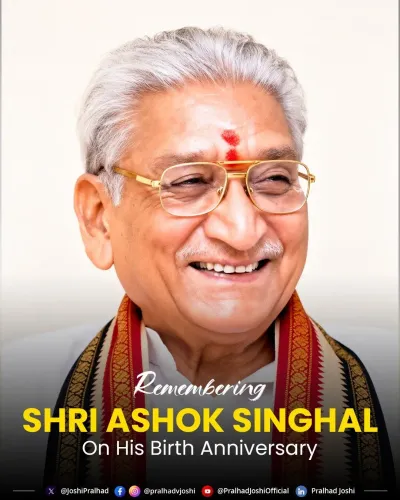
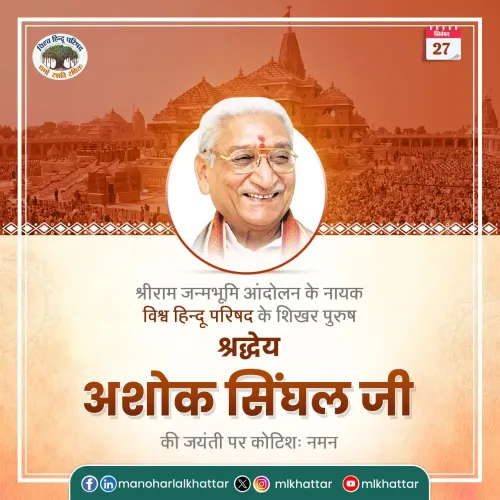
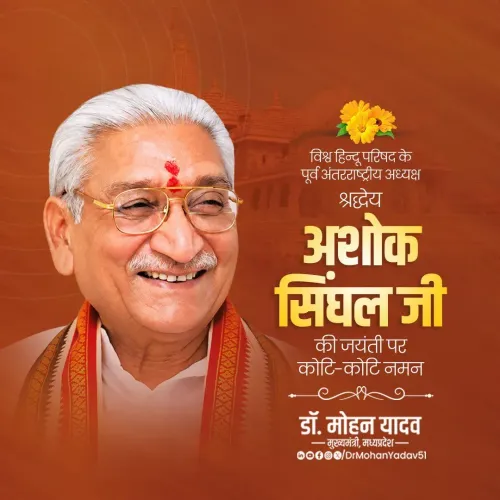
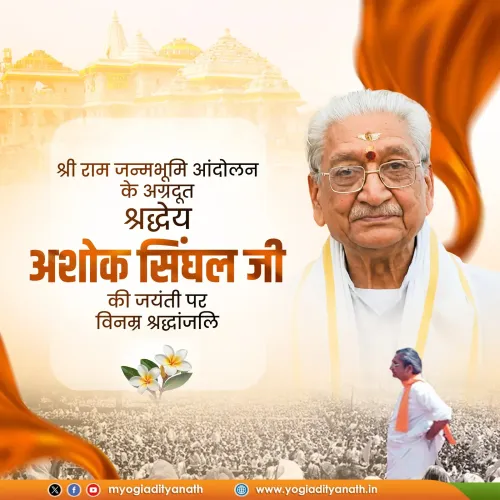
On the birth anniversary of Ashok Singhal, the towering figure of the Shri Ram Janmabhoomi movement, Union Education Minister Dharmendra Pradhan offered his homage on Sunday, 27 September 2026 — calling Singhal's contributions to nation and dharma an enduring source of inspiration for every Indian.
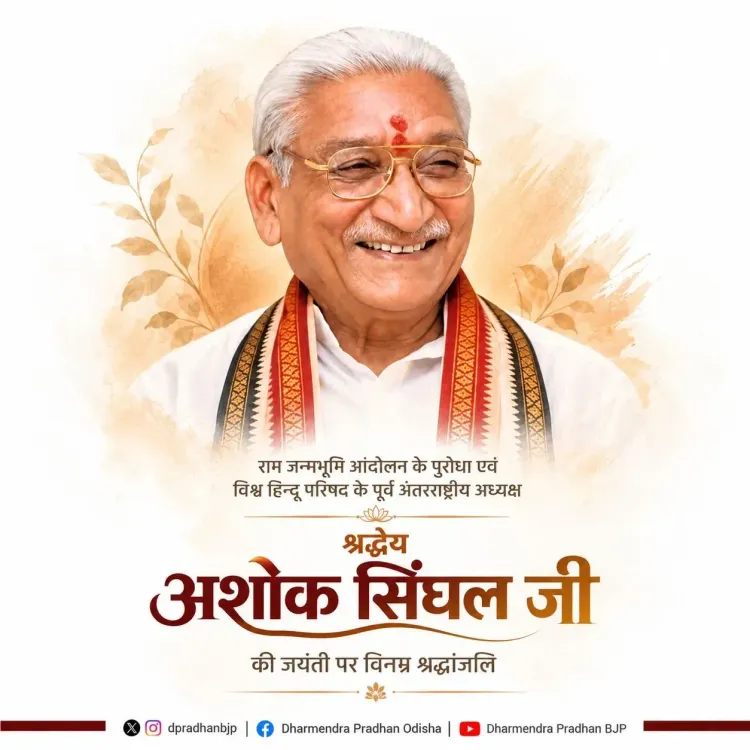
Posting in Hindi on X, Pradhan wrote: 'Shri Ram Janmabhoomi andolan ke purohda evam Vishva Hindu Parishad ke poorv antarrashtriya adhyaksh shraddhey Ashok Singhal ji ki jayanti par unhe naman karta hoon.' — 'On the birth anniversary of the pioneer of the Shri Ram Janmabhoomi movement and former international president of the Vishva Hindu Parishad, revered Ashok Singhal ji, I bow to him.' He added that Singhal's invaluable contributions to the nation and to dharma would 'continue to inspire the people of this country ceaselessly.'
Who was Ashok Singhal — and why the movement remembers him
Ashok Singhal served as the international president of the Vishva Hindu Parishad (VHP), the Hindu nationalist organisation founded in 1964 that made the Ram temple cause its defining mission. He was the movement's most recognisable face for decades, channelling a mass agitation that drew millions across India and kept the Ayodhya question at the centre of the country's political life. His sustained leadership was widely credited with sustaining momentum through long legal battles and political shifts.
The movement he championed finally reached its legal resolution with the Supreme Court's landmark verdict in 2019, which cleared the way for temple construction at Ayodhya. The Ram Mandir's consecration subsequently became one of India's most watched public events — a closure that Singhal's decades of work had made possible, even though he did not live to see it.
BJP's consistent pattern of honouring the Ayodhya movement's ideological architects
Pradhan's tribute fits a well-established rhythm. Senior BJP leaders regularly mark the birth and death anniversaries of figures associated with the Ram Janmabhoomi agitation, publicly acknowledging the ideological lineage that links the party to the Ayodhya campaign. For the BJP, these commemorations are both a mark of respect and a statement of continuity — connecting today's government to the grassroots movement that reshaped Indian politics from the late 1980s onward.
That a Cabinet minister of Pradhan's seniority — a former Union Petroleum Minister now heading the Education Ministry — chose to mark Singhal's anniversary publicly underlines how central the Ayodhya narrative remains to the party's identity, even years after the temple's consecration.
Singhal's legacy endures not just as religious history but as a political milestone — one that continues to shape the vocabulary of Indian public life long after the foundation stones were laid.
Point of View
Commemorating Singhal keeps the emotional and cultural arc of that movement alive in public discourse. For the BJP, these are not mere courtesies; they are reminders of a decades-long ideological investment that the party regards as foundational to its identity and electoral coalition.
NationPress
27 Sept 2026
Frequently Asked Questions
Who was Ashok Singhal?
Ashok Singhal was the former international president of the Vishva Hindu Parishad (VHP) and the most prominent leader of the Shri Ram Janmabhoomi movement, which campaigned for the construction of a Ram temple at Ayodhya.
What is the Vishva Hindu Parishad (VHP)?
The Vishva Hindu Parishad is a Hindu nationalist organisation founded in 1964, known for its work on Hindu religious and cultural issues and its central role in the Ram Janmabhoomi agitation.
What was the outcome of the Ram Janmabhoomi movement?
The movement concluded legally with the Supreme Court's landmark verdict in 2019, which cleared the way for the construction of a Ram temple at Ayodhya.
Why did Dharmendra Pradhan post a tribute to Ashok Singhal?
Pradhan posted the tribute on Singhal's birth anniversary, honouring his contributions to the nation and to dharma, consistent with BJP leaders' practice of marking anniversaries of Ayodhya movement figures.
What portfolio does Dharmendra Pradhan currently hold?
Dharmendra Pradhan is the Union Minister of Education and a senior BJP leader. He previously served as Union Petroleum Minister.