Pralhad Joshi: DBT saved India over ₹4 lakh crore
Synopsis
Union Minister Pralhad Joshi highlighted India's Direct Benefit Transfer programme on the eve of Independence Day 2026, citing savings of over ₹4 lakh crore achieved by routing welfare payments directly to beneficiaries via the JAM trinity, calling it a global digital governance success story.
Key Takeaways
Union Minister Pralhad Joshi posted on 14 August 2026 crediting DBT with savings of over ₹4 lakh crore to date.
The Direct Benefit Transfer system was formally rolled out from 2013 and scaled aggressively after 2014 using the JAM trinity — Jan Dhan, Aadhaar, Mobile.
DBT has been integrated into major schemes including LPG subsidies , food security transfers , and MGNREGA wages .
The Digital India programme, launched in 2015 , provided the infrastructure backbone enabling DBT's expansion.
Joshi framed India's DBT model as a global digital success story being studied by other developing economies.
The next comprehensive accounting is expected in the Ministry of Finance's annual DBT savings report .
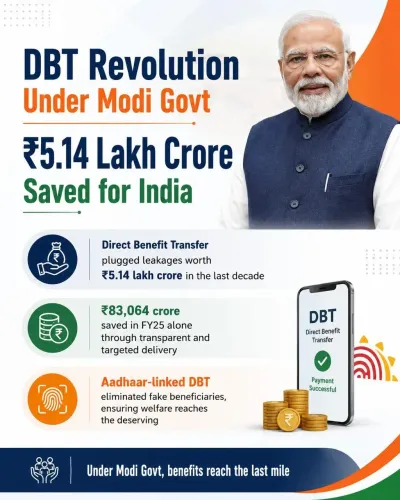
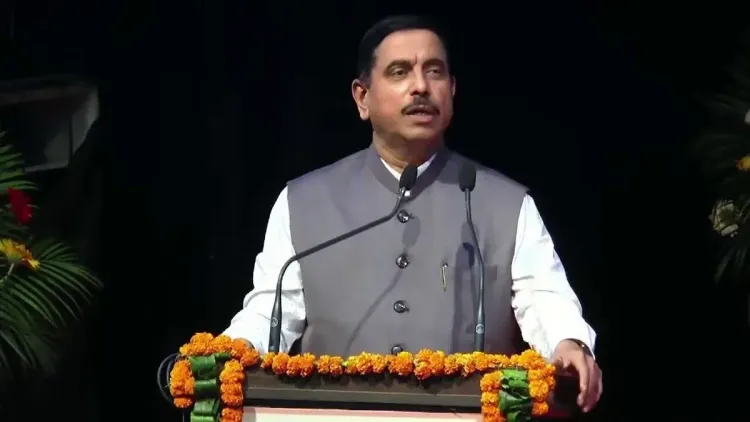
A welfare system once written off as a pipe dream has quietly become one of the most consequential fiscal reforms in independent India's history. On Friday, 14 August 2026, Union Consumer Affairs Minister Pralhad Joshi invoked the Direct Benefit Transfer programme's record to make that case — crediting it with cumulative savings of over ₹4 lakh crore and positioning India as a global benchmark for technology-driven governance.
Joshi wrote that DBT has made welfare delivery 'more transparent, efficient and accountable,' adding that what was once dismissed as 'impossible' has today become a 'global digital success story.' The post, timed a day before Independence Day, framed the achievement as a marker of national transformation under Prime Minister Narendra Modi.
How DBT rewired India's subsidy plumbing
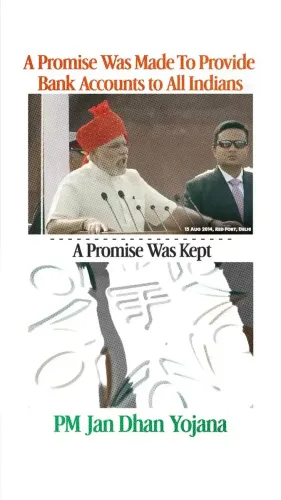
The Direct Benefit Transfer architecture rests on what policymakers call the JAM trinity — Jan Dhan bank accounts, Aadhaar biometric identifiers, and Mobile connectivity. When the system was formally rolled out beginning in 2013, the ambition was straightforward: cut out the middlemen who had long siphoned off funds meant for the poor, and wire money directly into verified accounts. From 2014 onwards, the Modi government accelerated DBT integration across flagship schemes — LPG cooking-gas subsidies, food security transfers, and MGNREGA wage payments among them. Aadhaar authentication allowed the government to detect and eliminate ghost beneficiaries and duplicate entries at scale, with each de-duplication translating directly into fiscal savings.₹4 lakh crore and what that number represents
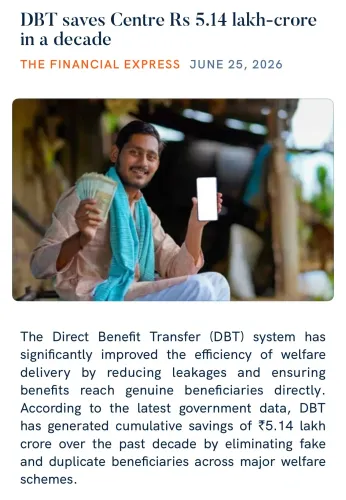
The figure Joshi cited — savings of over ₹4 lakh crore (approximately $48 billion) — is the government's running tally of funds that would otherwise have leaked through the old, intermediary-heavy distribution chain. Successive government statements have presented this cumulative figure as evidence of improved fiscal efficiency, and it has become a centrepiece of the Digital India narrative. The Digital India programme, launched in 2015, provided the broader infrastructure scaffolding — expanding broadband reach, pushing e-governance platforms, and integrating payment rails — that made DBT's scale possible. India's UPI-led digital payments ecosystem, now processing billions of transactions a month, grew in parallel and reinforced the same underlying logic: reduce friction, reduce leakage, increase accountability.A global model, claimed on the eve of Independence Day
Joshi's framing is pointed: India did not just fix its own welfare problem, it built something the world is now studying. Several developing economies have looked at the JAM-DBT model as a template for their own social transfer systems, and multilateral institutions have cited India's direct-transfer architecture in discussions on inclusive digital finance. Posting on the eve of Independence Day 2026, the minister's message was as much about national pride as policy record — a reminder that the distance between 'impossible' and 'global success story' was covered, in large part, by unglamorous back-end plumbing: bank accounts, biometrics, and bandwidth. The next definitive accounting of DBT's cumulative impact is expected in the Ministry of Finance's annual savings report — a number that, if the trajectory holds, will only grow.Point of View
Anchoring the BJP's decade-long governance record to a single, legible number — ₹4 lakh crore in savings — that converts abstract reform into tangible fiscal proof. The DBT narrative has become central to the party's 'good governance' pitch, serving as a counterpoint to opposition arguments about welfare delivery failures. By invoking the 'impossible to possible' arc, Joshi is also reinforcing a broader ideological claim: that technology, not expanded bureaucracy, is the right instrument for social equity. The timing, a day before Independence Day, signals that DBT is being positioned not merely as a scheme milestone but as a symbol of sovereign capability on par with India's space or defence achievements.
NationPress
14 Aug 2026
Frequently Asked Questions
What is Direct Benefit Transfer (DBT) in India?
Direct Benefit Transfer is a government system that routes subsidies and welfare payments directly into beneficiaries' Aadhaar-linked bank accounts, bypassing intermediaries to reduce leakage and duplication. It was formally launched in 2013 and scaled rapidly from 2014 using the JAM trinity of Jan Dhan accounts, Aadhaar, and Mobile connectivity.
How much has India saved through DBT?
The government claims cumulative savings of over ₹4 lakh crore through DBT by eliminating ghost beneficiaries, duplicate entries, and diversion of funds. Union Minister Pralhad Joshi cited this figure on 14 August 2026.
Which schemes use Direct Benefit Transfer in India?
DBT has been integrated into major schemes including LPG cooking-gas subsidies, food security transfers under the National Food Security Act, and MGNREGA wage payments, among others.
What is the JAM trinity and how does it relate to DBT?
JAM stands for Jan Dhan bank accounts, Aadhaar biometric IDs, and Mobile connectivity. Together they form the technological backbone of DBT, enabling verified, real-time transfers directly to beneficiaries while filtering out ineligible or duplicate claimants.
Why is India's DBT model considered a global success?
India's DBT architecture — combining mass financial inclusion, biometric authentication, and digital payment rails — has drawn attention from developing economies and multilateral institutions as a scalable model for inclusive social transfers. The scale of leakage reduction and the speed of rollout are cited as distinguishing factors.