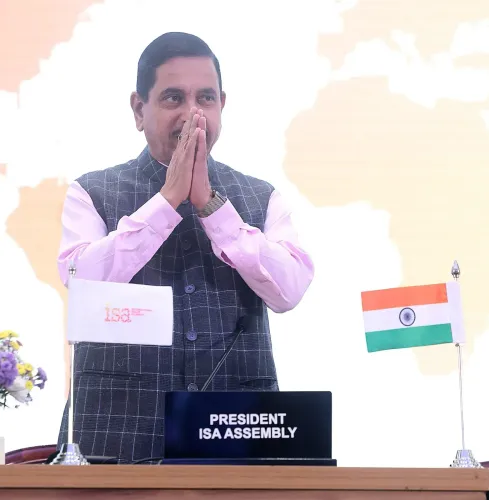
Pralhad Joshi Highlights India's Third ISA Presidency, Africa Solar Funds
Synopsis
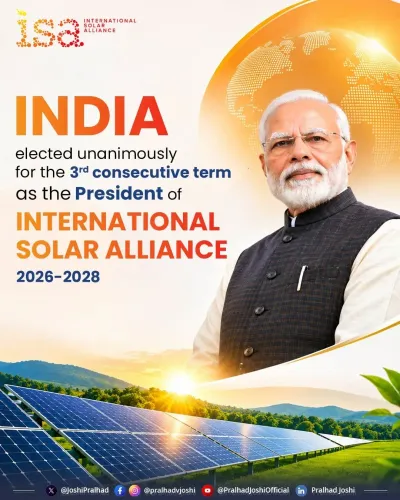
At the Ninth ISA Assembly, Union Minister Pralhad Joshi announced India's election as ISA President for a third consecutive term (2026–2028), a USD 200 million African Solar Facility with India's USD 25 million pledge, and a USD 300 million Nigeria Fund to expand affordable solar access across Africa.
Key Takeaways
India elected ISA President for the 2026–2028 term — its third consecutive presidency.
The USD 200 million African Solar Facility includes a direct USD 25 million commitment from India .
A separate USD 300 million Nigeria Fund was announced to accelerate solar deployment in Africa's largest economy.
The International Solar Alliance was co-launched by India and France at COP21 in 2015 to scale solar in tropical nations.
India's strategy links financial commitments to the 'One Sun, One World, One Grid' cross-border renewable energy vision.
Key next steps include rollout timelines for both Africa funds and follow-up investment pledges from other ISA members.
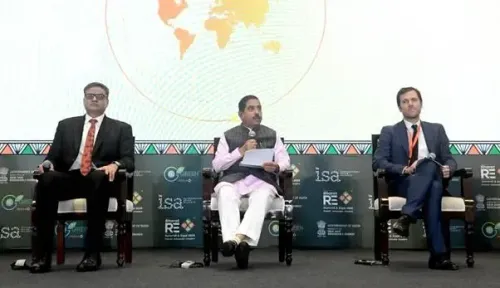
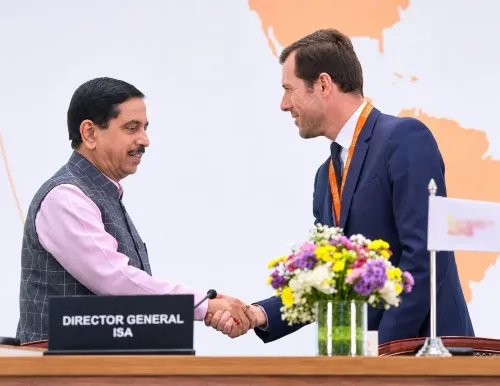
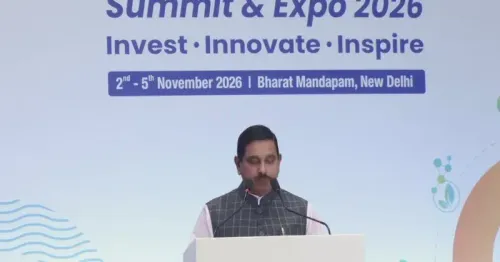
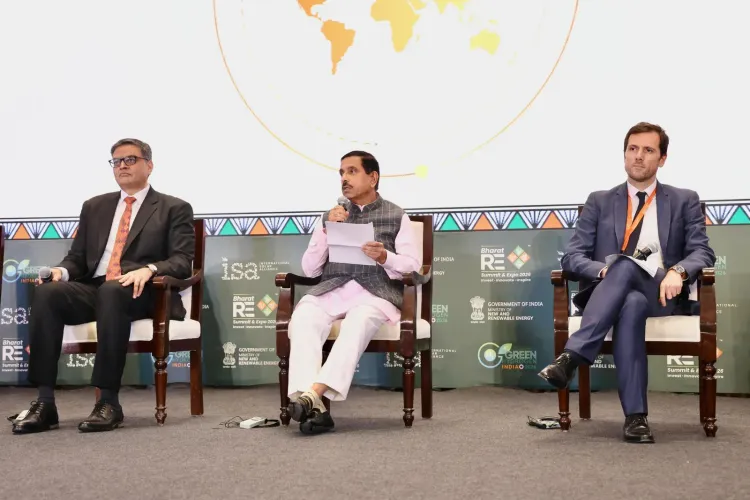
India has secured the presidency of the International Solar Alliance for a third consecutive term — and it arrived with a price tag. Union Minister of New and Renewable Energy Pralhad Joshi addressed a press conference at the Ninth Session of the ISA Assembly on Tuesday, November 3, 2026, announcing multi-hundred-million-dollar solar commitments targeting Africa and reaffirming India's role as the gravitational centre of global clean energy diplomacy.
India elected ISA President for 2026–2028 — for the third straight time
Member countries of the ISA voted to elect India as President for the 2026–2028 term, continuing an unbroken run at the helm of the multilateral body. Joshi expressed gratitude to all member nations, calling the election a signal of collective confidence in India's solar leadership. The International Solar Alliance was jointly launched by India and France at COP21 in Paris in 2015, designed specifically to mobilise solar deployment across tropical countries that receive abundant sunlight but lack capital and infrastructure to harness it.
The USD 200 million African Solar Facility and Nigeria's USD 300 million Fund
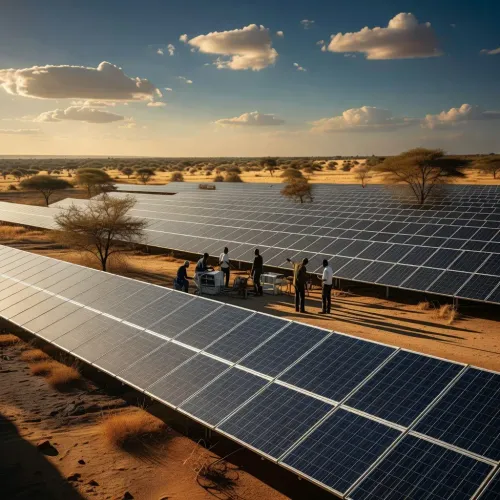
The headline financial announcement was the USD 200 million African Solar Facility, with India committing USD 25 million of that total — a direct contribution to expanding affordable solar access across the continent. Alongside it, Joshi highlighted the USD 300 million Nigeria Fund, a targeted instrument aimed at accelerating solar deployment in Africa's most populous nation. Together, these two vehicles represent a significant southward push of clean energy capital, translating diplomatic ambition into project-ready finance.
'One Sun, One World, One Grid' — India's vision meets multilateral muscle
Joshi framed India's commitments through two philosophical anchors: the 'One Sun, One World, One Grid' initiative — India's proposal for a cross-border solar grid enabling countries to trade renewable electricity across time zones — and the Sanskrit principle of Vasudhaiva Kutumbakam ('the world is one family'). Both have become recurring motifs in Prime Minister Narendra Modi's climate diplomacy, and their invocation here signals continuity of doctrine rather than a one-off gesture.
India's consistent use of ISA as a platform for South-South cooperation reflects a deliberate foreign policy calculus: lead multilateral institutions, attach financial commitments that are meaningful but calibrated, and frame it within a civilisational worldview that resonates with the Global South. The African Solar Facility and Nigeria Fund are the latest test of whether that architecture translates into megawatts on the ground.
What the next ISA phase must deliver
The watch items are now concrete: rollout timelines and project selection under both Africa-focused funds, the structure of India's bilateral engagement with Nigeria, and whether the presidency mandate translates into binding investment pledges from other ISA member states. A third presidency term is a diplomatic win. The grid — literal and figurative — still has to be built.
Point of View
Targeting the continent's largest economy, suggests India is moving from broad-brush Africa engagement to country-specific solar deals — a maturation of strategy. The recurring invocation of 'Vasudhaiva Kutumbakam' alongside hard financial numbers reflects a deliberate effort to frame transactional diplomacy within a civilisational narrative that differentiates India from both Western aid donors and Chinese infrastructure lending.
NationPress
3 Nov 2026
Frequently Asked Questions
What is India's role in the International Solar Alliance?
India is a founding member and current president of the ISA, which it co-launched with France at COP21 in Paris in 2015. India has now been elected ISA President for a third consecutive term covering 2026–2028.
What is the African Solar Facility announced at the ISA Assembly?
The African Solar Facility is a USD 200 million fund aimed at expanding affordable solar access across Africa. India has committed USD 25 million to the facility, as announced by Minister Pralhad Joshi at the Ninth ISA Assembly.
What is the Nigeria Fund announced at the ISA Ninth Assembly?
The Nigeria Fund is a USD 300 million instrument announced at the ISA Ninth Assembly to accelerate solar energy deployment in Nigeria, Africa's most populous country.
What is 'One Sun, One World, One Grid'?
'One Sun, One World, One Grid' is an Indian-proposed initiative to create a global solar power grid enabling cross-border renewable electricity trade, allowing countries to export surplus solar power across time zones.
What does Vasudhaiva Kutumbakam mean in the context of India's energy diplomacy?
Vasudhaiva Kutumbakam is a Sanskrit phrase meaning 'the world is one family.' India invokes it in climate diplomacy to frame its solar cooperation commitments as a universal, inclusive obligation rather than a bilateral or transactional arrangement.