Pralhad Joshi Pushes Kerala to Scale Floating Solar
Synopsis
Union Minister Pralhad Joshi met Kerala's Electricity Minister Sunny Joseph on 11 August 2026, urging accelerated renewable energy adoption with a focus on floating solar projects, and assured MNRE's full support for Kerala's clean energy transition.
Key Takeaways
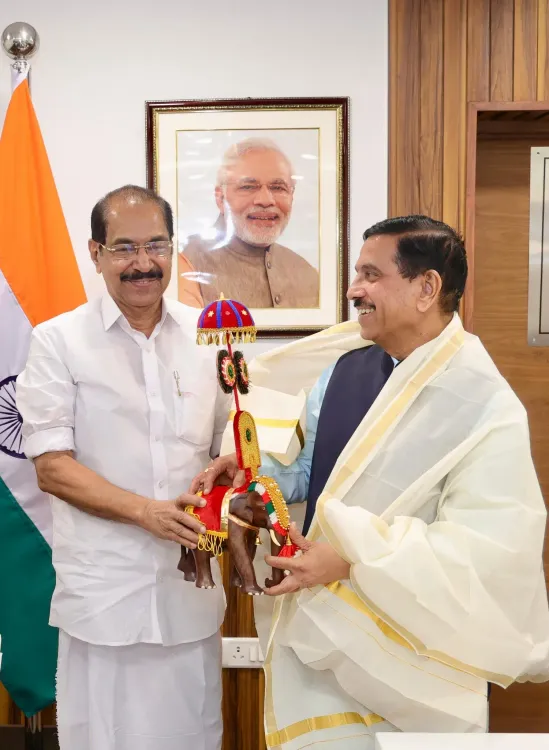
Pralhad Joshi met Kerala Electricity Minister Sunny Joseph at his residence on 11 August 2026 .
Joshi urged Kerala to accelerate renewable energy adoption, specifically highlighting floating solar projects .
MNRE assured full central support for Kerala's clean energy transition initiatives.
Floating solar is particularly suited to Kerala's geography — water-rich but land-scarce.
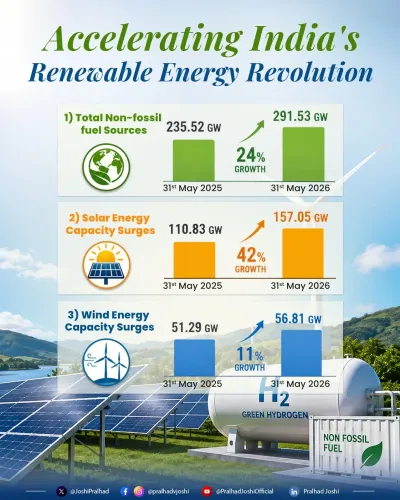
The meeting aligns with India's 500 GW non-fossil fuel capacity target by 2030 , pledged at COP26, Glasgow, 2021 .
ANERT , Kerala's renewable energy agency, is the state-level vehicle for implementing such projects.
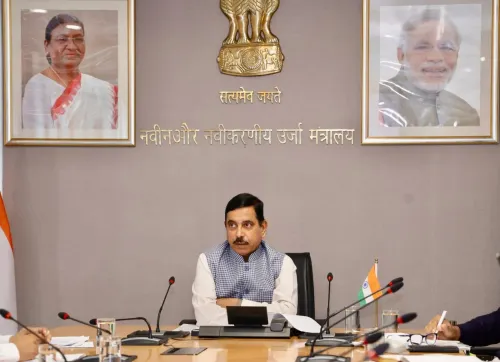
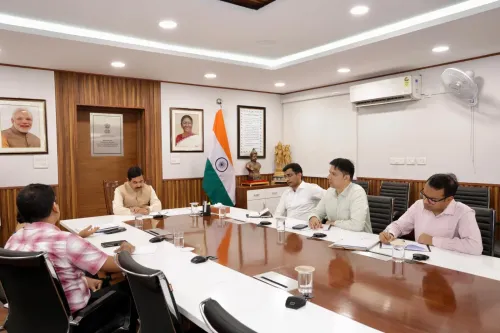
Cross-party, cross-capital — and pointed. Union Minister for New and Renewable Energy Pralhad Joshi sat down with Kerala's Electricity and Environment Minister Sunny Joseph at his residence on Tuesday, 11 August 2026, and used the meeting to press the southern state to move faster and bolder on clean energy — specifically floating solar.
What Joshi asked of Kerala
Joshi urged Joseph to 'further accelerate renewable energy adoption in Kerala, with a focus on enhancing renewable energy penetration and harnessing the potential of floating solar projects.' The ask was direct: not just more solar, but a specific technology pivot suited to Kerala's geography — a state rich in reservoirs and backwaters but chronically short on flat, buildable land.
The Ministry of New and Renewable Energy (MNRE), Joshi confirmed, stands ready to back Kerala's ambitions. He 'assured him of MNRE's full support in taking these initiatives forward and further strengthening Kerala's clean energy transition.'
Why floating solar fits Kerala's terrain
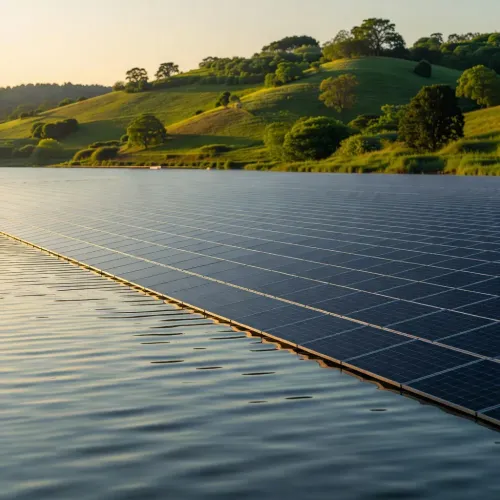
Kerala's renewable energy story has long been dominated by hydro. But hydro is weather-dependent, and the state's dense population leaves little room for conventional ground-mounted solar farms. Floating solar — panels anchored on reservoirs and water bodies — sidesteps the land problem entirely, while the water beneath the panels reduces heat and boosts efficiency.
The National Solar Mission, revised in 2015, explicitly included floating solar provisions for land-scarce states. ANERT, Kerala's own Agency for New and Renewable Energy Research and Technology, has been the state-level vehicle for piloting such projects. The centre-state coordination framework Joshi invoked on Tuesday has been intensifying since 2021–22, backed by viability gap funding and MNRE technical support.
India's 500 GW clock is ticking
The meeting is not happening in a vacuum. At COP26 in Glasgow in 2021, India committed to 500 GW of non-fossil fuel capacity by 2030. With four years left, every large state — including Kerala — must pull its weight. A BJP minister sitting down with an INC state minister to align on renewables signals that the national target is bigger than the political divide. The optics matter: this is coordination, not confrontation.
Kerala's role is modest in raw megawatts compared to Rajasthan or Gujarat, but its water-body density makes it a natural showcase for floating solar at scale — a template other humid, land-scarce states could replicate.
Next moves to watch
The meeting produced no announced project figures or signed agreements — those details remain to be formalised. What to track: follow-up project proposals from Kerala to MNRE for floating solar parks, any state budget or tender announcements on renewable capacity, and whether ANERT fast-tracks a larger reservoir-based pilot.
If Kerala moves, it will not just add megawatts — it will prove a model. That is precisely the kind of result a minister with a national target on the clock is looking for.
Point of View
Water-rich states. MNRE's explicit assurance of support signals that central viability gap funding and technical backing are on the table, which could meaningfully de-risk Kerala's next project cycle. The broader arc here is one of accelerating subnational delivery as India's 2030 clock tightens.
NationPress
12 Aug 2026
Frequently Asked Questions
Why did Pralhad Joshi meet Kerala's Electricity Minister Sunny Joseph?
Joshi met Joseph on 11 August 2026 to urge Kerala to accelerate renewable energy adoption, particularly floating solar projects, and to assure the state of MNRE's full support.
What are floating solar projects and why are they important for Kerala?
Floating solar panels are installed on reservoirs and water bodies instead of land. Kerala's dense population and limited flat land make floating solar an ideal solution, while the water beneath panels also improves their efficiency.
What is ANERT and what role does it play?
ANERT is the Agency for New and Renewable Energy Research and Technology under the Kerala government, and serves as the state-level body for piloting and implementing new and renewable energy projects.
How does this meeting connect to India's national renewable energy targets?
India committed to 500 GW of non-fossil fuel capacity by 2030 at COP26 in Glasgow in 2021. Meetings like this between central and state ministers are part of the coordination effort to ensure states contribute to that national goal.
What should we watch for after this Joshi–Joseph meeting?
Key follow-ups include project proposals from Kerala to MNRE for floating solar parks, state budget or tender announcements on renewable capacity, and any accelerated pilots by ANERT on Kerala's reservoirs.