President Murmu at Bastar Dussehra: Ram's Forest Path Lives On
Synopsis
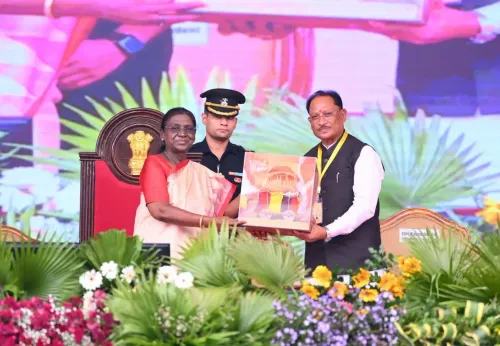
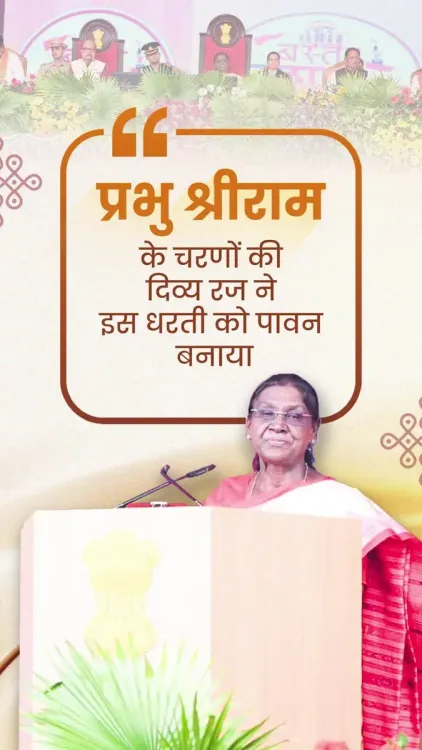
President Draupadi Murmu addressed the Bastar Dussehra 2026 festival at Lalbag Maidan, Jagdalpur, invoking Lord Ram's forest exile and calling preservation of Bastar's tribal and spiritual heritage a collective responsibility for future generations.
Key Takeaways
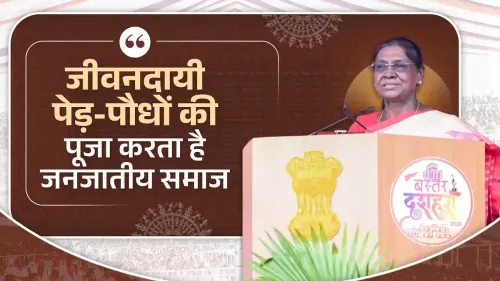
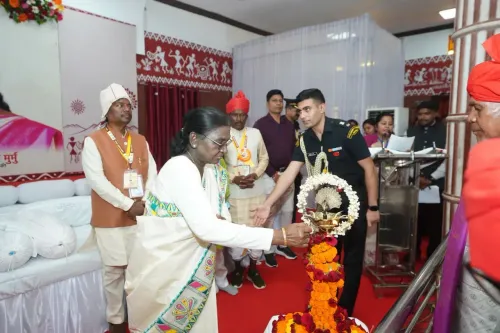
President Draupadi Murmu attended and addressed Bastar Dussehra 2026 at Lalbag Maidan, Jagdalpur on 23 October 2026 .
She invoked the belief that Lord Ram's exile footsteps touched Bastar's land, framing it as a source of sacred and cultural distinction.
Murmu called preserving Bastar's heritage a 'collective responsibility' to be passed on to future generations.
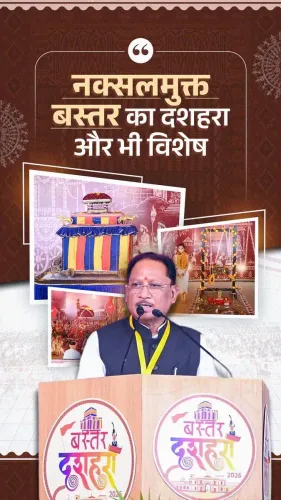
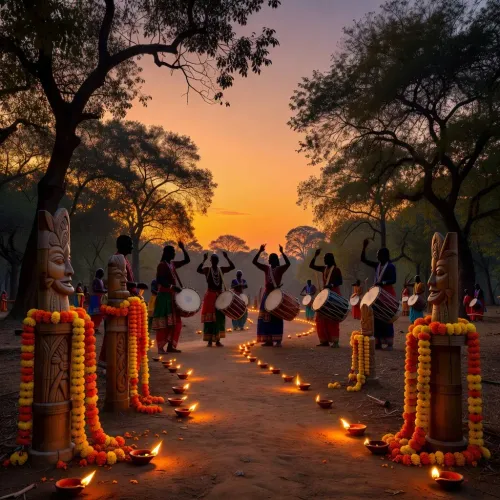
Bastar Dussehra is a multi-week festival combining tribal rituals, goddess Danteshwari worship, and folk traditions — distinct from the North Indian Dussehra format.
President Murmu is the first person from a tribal community to hold India's highest office, lending added significance to her presence at the festival.
The event aligns with the Centre's annual Janjatiya Gaurav Divas policy frame, running since 2021 , which highlights tribal cultural contributions.
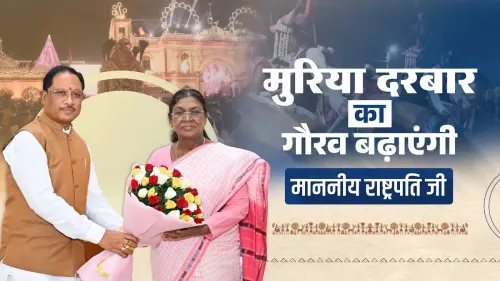
At Lalbag Maidan, Jagdalpur, on 23 October 2026, President Draupadi Murmu stood before one of India's oldest living festivals and reminded the country why Bastar is not merely a geography — it is a memory. The Chief Minister's Office of Chhattisgarh shared her words from the Bastar Dussehra 2026 ceremony, placing the nation's highest constitutional office at the heart of tribal India's grandest celebration.
The sacred geography President Murmu invoked
Speaking at the festival, President Murmu drew on the region's deepest spiritual identity: 'Bastar ki paavan dharti ka sambandh Prabhu Shriram ke vanvaas kaal ki smritiyon se juda hai' — 'The sacred land of Bastar is linked to the memories of Lord Shriram's period of exile.' The belief that Lord Ram's footsteps once touched this forest tract fuses the Ramayana's pan-Indian narrative with Bastar's own ancient tribal traditions, giving the region a dual sanctity that few places in India can claim.
Her message was clear and deliberate: this heritage, she said, belongs not to one community or one government, but to all — a 'collective responsibility' to safeguard it so that Bastar's sacred identity reaches the next generation intact.
Why Bastar Dussehra is unlike any other Dussehra in India
Bastar Dussehra is among the longest-running festivals in the country, stretching across several weeks in Jagdalpur, the district headquarters of Bastar. Unlike the North Indian tradition centred on the burning of Ravana's effigy, this festival weaves local tribal rituals, goddess Danteshwari's worship, and folk performances into its fabric — making it a living museum of Gondwana civilisation. The tribal communities of Bastar, who form the demographic backbone of this southern Chhattisgarh district, are not spectators here; they are the custodians and protagonists.
The presence of President Murmu — herself the first person from a tribal community to hold India's highest office since she assumed the presidency in 2022 — amplifies the symbolism several times over. Her attendance is not protocol; it is a statement about whose heritage the Republic chooses to honour.
Janjatiya Gaurav and the national policy frame
The event sits within a wider policy current. Since 2021, the Ministry of Tribal Affairs has observed Janjatiya Gaurav Divas annually to spotlight tribal contributions to India's history and culture. Bastar Dussehra has consistently featured as a flagship symbol in that conversation, supported across successive state administrations in Chhattisgarh. The hashtags accompanying the CMO's post — #JanJatiyaGaurav, #TribalPride, #TribalHeritage — signal that this year's edition is being consciously positioned within that national narrative of inclusive cultural preservation.
What follows the festival will matter as much as the ceremony itself. Observers will watch whether the 2026 edition translates into fresh budget commitments for Bastar's cultural infrastructure — museums, heritage trails, artist stipends — or whether the high-level attendance remains, as it sometimes does, a powerful symbol that stops short of structural investment.
For now, though, Jagdalpur offered something rare: the President of India, a woman from a tribal family, standing on soil the Ramayana sanctified, asking every Indian to become the guardian of what this land holds. That is the kind of moment a festival remembers for generations.
Point of View
However, is whether this visible endorsement catalyses concrete investment in Bastar's cultural infrastructure or remains symbolic capital. With Chhattisgarh's tribal districts still navigating development deficits, the gap between ceremonial affirmation and budgetary follow-through will define how the Janjatiya Gaurav frame is ultimately judged.
NationPress
23 Oct 2026
Frequently Asked Questions
What is Bastar Dussehra and how is it different from regular Dussehra?
Bastar Dussehra is a weeks-long festival held in Jagdalpur, Chhattisgarh, centred on the worship of goddess Danteshwari and rooted in local Gondi tribal rituals. Unlike the mainstream North Indian Dussehra, it does not focus on burning Ravana's effigy but instead celebrates the distinct cultural and spiritual traditions of Bastar's tribal communities.
Why did President Draupadi Murmu attend Bastar Dussehra 2026?
President Murmu attended Bastar Dussehra 2026 at Lalbag Maidan, Jagdalpur, as a mark of the Republic's recognition of tribal heritage. As the first tribal-community President of India, her presence carried both ceremonial and symbolic weight, reinforcing the national Janjatiya Gaurav narrative.
What is the connection between Lord Ram and Bastar?
Local tradition and belief hold that Lord Shriram's path during his years of forest exile passed through the Bastar region, imbuing the land with spiritual sanctity. President Murmu cited this belief in her address at Bastar Dussehra 2026 to highlight the region's deep cultural and religious significance.
What is Janjatiya Gaurav Divas?
Janjatiya Gaurav Divas is an annual observance introduced by the Ministry of Tribal Affairs in 2021 to recognise the contributions and heritage of India's tribal communities. It is typically marked by events across central and eastern India, with major tribal festivals like Bastar Dussehra serving as flagship symbols.
Who is Draupadi Murmu and what is her significance as President?
Draupadi Murmu became President of India in 2022 and is the first person from a tribal community to hold the office. Her background makes her presence at tribal cultural festivals like Bastar Dussehra particularly resonant for tribal communities across the country.