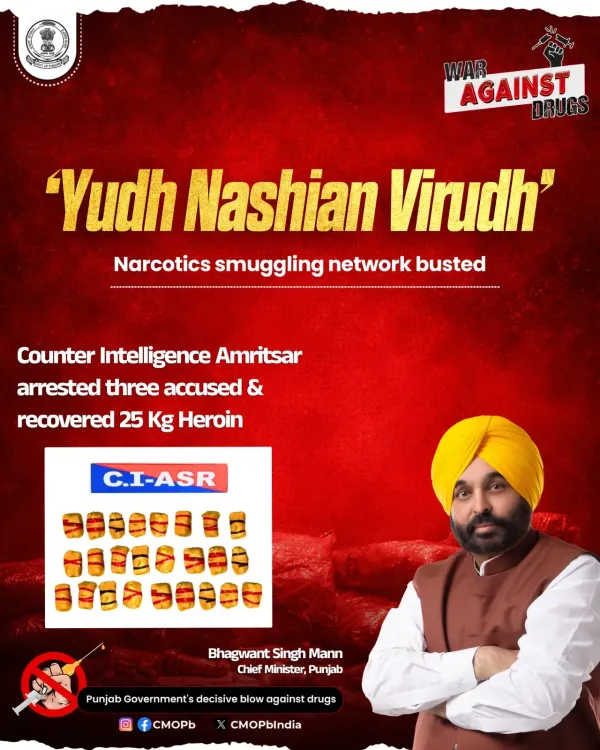
Punjab CI Amritsar Busts Drug Network, Seizes 25 Kg Heroin
Synopsis
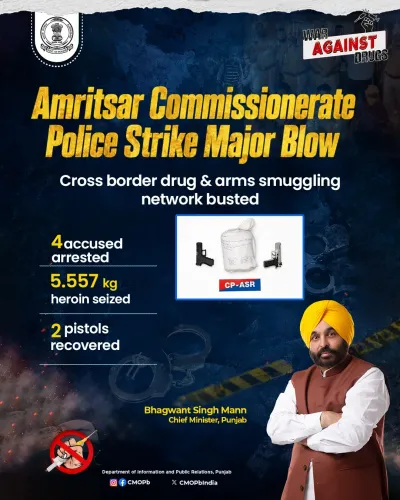
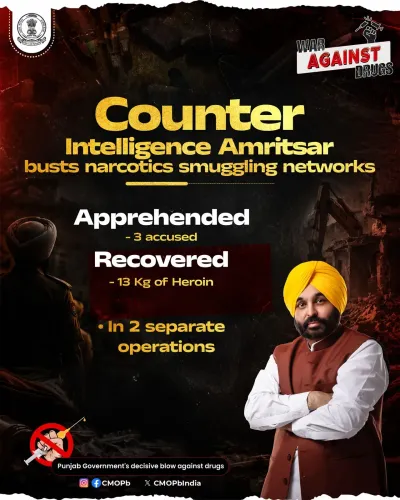
Counter Intelligence, Amritsar busted a narcotics smuggling network on July 8, 2026, arresting three people and seizing 25 kg of heroin. The operation is part of Punjab's ongoing Yudh Nashian Virudh anti-drug campaign under Chief Minister Bhagwant Mann, targeting the Golden Crescent trafficking corridor.
Key Takeaways
Counter Intelligence, Amritsar arrested three accused in a narcotics smuggling network bust on July 8, 2026 .
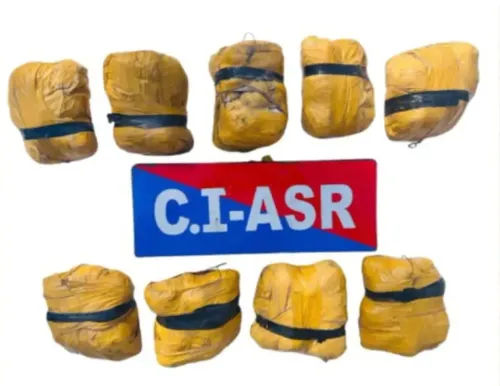
25 kg of heroin was recovered in the operation, described by the CMO as a breakthrough.
The operation falls under the Yudh Nashian Virudh campaign launched by the Punjab government in 2022 .
Amritsar is a key entry point for heroin trafficked through the Golden Crescent corridor via the India-Pakistan border.
The Punjab government has prioritised intelligence-led policing through specialised Counter Intelligence units to disrupt drug supply chains.
Conviction rates and asset-seizure outcomes from such operations remain key metrics for assessing long-term campaign effectiveness.
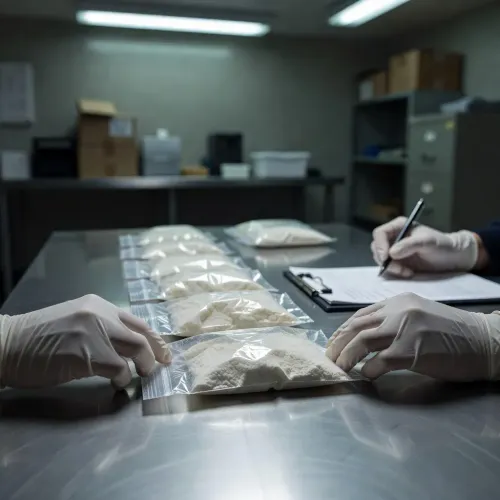
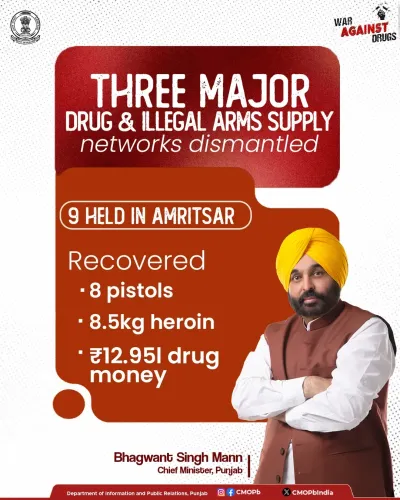
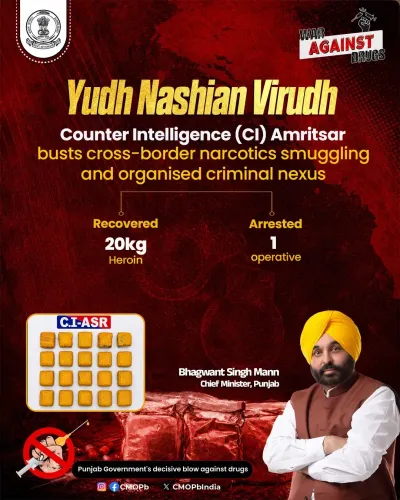
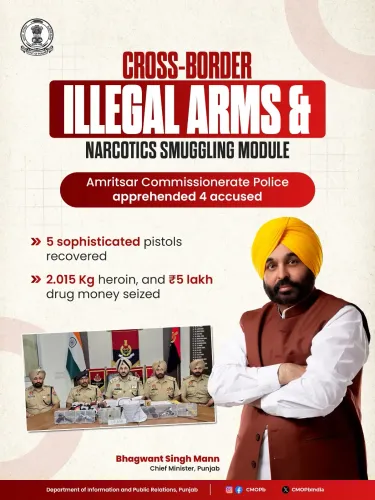
The Chief Minister's Office of Punjab announced on Wednesday, July 8, 2026, that Counter Intelligence, Amritsar has busted a narcotics smuggling network, arrested three accused, and recovered 25 kg of heroin in what officials described as a breakthrough operation under the state's ongoing security drive.
Context
The operation was carried out by Counter Intelligence, Amritsar, a specialised Punjab Police unit that handles intelligence-led operations against narcotics networks and cross-border threats in the border district. The CMO's post, shared under the hashtags #YudhNashianVirudh (War Against Drugs) and #WarAgainstDrugs, framed the bust as part of the state's broader mission to make Punjab 'a safe and secure state.' The seizure of 25 kg of heroin is significant given the commodity's street value and the scale of trafficking networks it typically implies.
Policy Backdrop
The operation falls under the Yudh Nashian Virudh campaign, formally launched by the Punjab government under Chief Minister Bhagwant Mann in 2022. The campaign combines enforcement, public awareness, and de-addiction measures across the state, with dedicated funds and police targets for drug-network busts. Amritsar, which shares a border with Pakistan, has historically been a primary entry point for heroin trafficked through the Golden Crescent corridor — a route that has driven large seizures in the region for over a decade.
Successive state administrations have treated narcotics control as a core governance and security priority. The current government has leaned heavily on Counter Intelligence units and intelligence-led policing to disrupt supply chains at the source rather than relying solely on street-level enforcement.
Stakeholders and Impact
The bust directly impacts communities in Punjab's border districts, where heroin availability has been linked to high rates of addiction, particularly among youth. Punjab's youth population has long been identified as the most vulnerable demographic in the state's drug crisis, making enforcement operations of this scale politically and socially significant. Families of those affected by addiction, local civil society groups, and border-area residents are among the primary stakeholders watching the pace and outcome of such operations.
The arrest of three accused also signals that Counter Intelligence is targeting network operatives rather than isolated carriers, a strategy intended to disrupt distribution chains more durably. However, the long-term effectiveness of such operations depends on successful prosecution and asset attachment — areas where conviction data remains closely watched by policy observers.
What's Next
Analysts and civil society groups will watch for the release of conviction data and asset-seizure figures from this and related ongoing cases, which serve as a more durable metric of anti-drug campaign effectiveness than arrests alone. The Punjab government is also expected to face scrutiny over rehabilitation infrastructure, which has lagged behind enforcement-side investments. Any new border-technology or fencing proposals in the next state budget session could further shape the anti-smuggling architecture in Amritsar and adjacent districts.
Point of View
Particularly ahead of electoral cycles and in response to longstanding public concern about Punjab's drug crisis. Framing the operation under the branded 'Yudh Nashian Virudh' campaign reinforces the administration's effort to present narcotics control as a mission-mode priority rather than routine policing. However, the broader policy arc reveals a persistent gap: enforcement numbers have grown, but rehabilitation infrastructure and conviction rates have not kept pace, raising questions about whether supply-side pressure alone can reverse deep-rooted addiction patterns in border communities. The real test for the Bhagwant Mann government will be translating headline seizures into verifiable, court-backed outcomes.
NationPress
6 Oct 2026
Frequently Asked Questions
How much heroin was seized by Counter Intelligence Amritsar in the July 2026 operation?
25 kg of heroin was recovered by Counter Intelligence, Amritsar in the operation announced on July 8, 2026 , along with the arrest of three accused members of a narcotics smuggling network.
What is Yudh Nashian Virudh?
Yudh Nashian Virudh (meaning 'War Against Drugs') is an anti-drug campaign launched by the Punjab government under Chief Minister Bhagwant Mann in 2022 . It combines enforcement, public awareness, and de-addiction measures, with dedicated funds and targets for busting drug networks across the state.
Why is Amritsar a key area for drug smuggling in Punjab?
Amritsar shares a border with Pakistan and lies along the Golden Crescent trafficking corridor, making it a historically significant entry point for heroin smuggled into India. The district has recorded repeated large seizures for over a decade due to its geographic location.
Which unit carried out the heroin bust in Amritsar?
The operation was conducted by Counter Intelligence, Amritsar , a specialised unit of the Punjab Police that focuses on intelligence-led operations against narcotics networks and cross-border security threats.
How many people were arrested in the Punjab drug bust on July 8, 2026?
Three accused were arrested by Counter Intelligence, Amritsar in the operation that also led to the recovery of 25 kg of heroin , as announced by the Chief Minister's Office of Punjab on July 8, 2026 .