Punjab Police's 'Yudh Nashian Virudh' hits 449 days, 65,417 arrests
Synopsis
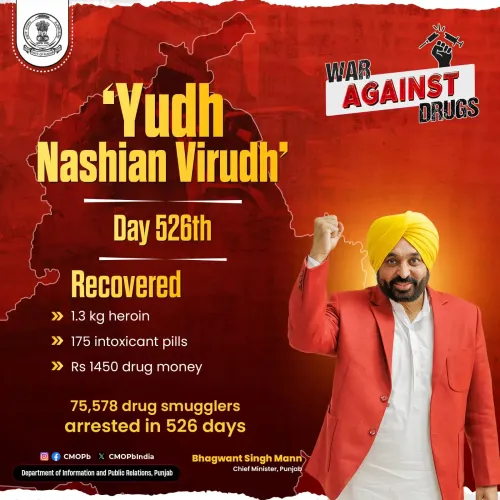
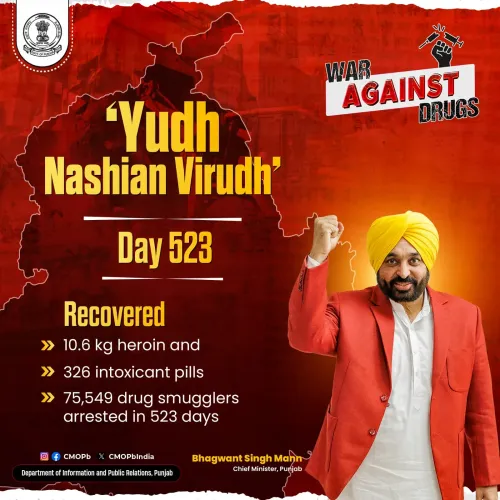
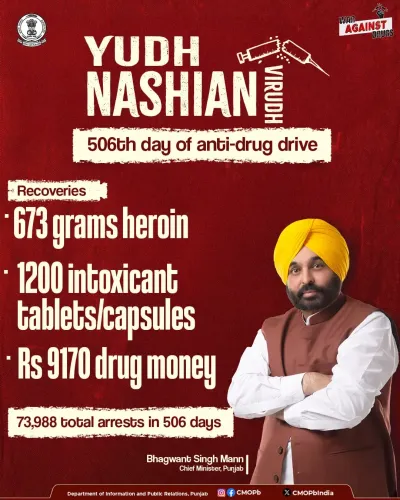
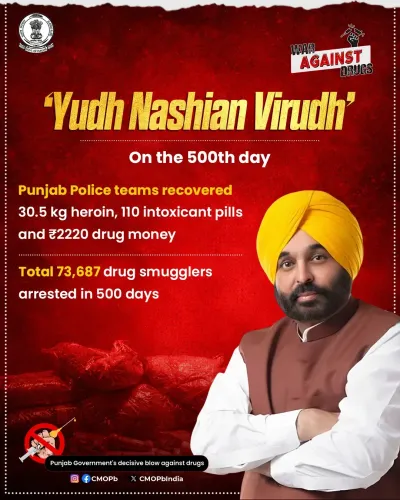
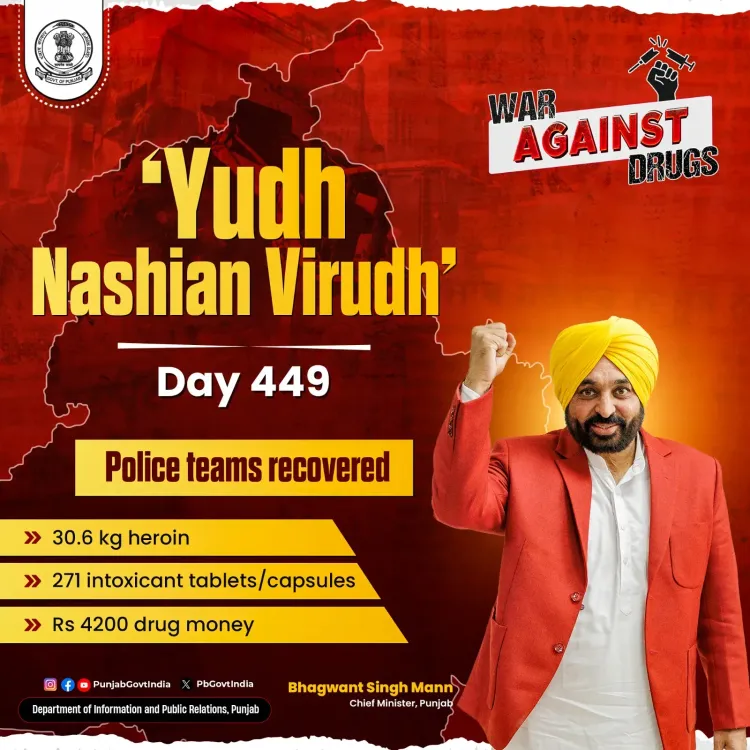
Punjab Police's 'Yudh Nashian Virudh' anti-drug drive completed 449 days on May 24, 2026, with cumulative arrests hitting 65,417. The latest operation netted 30.6 kg heroin, 271 intoxicant tablets, and Rs 4,200 in drug money, as the CMO publicised the daily enforcement count.
Key Takeaways
449 consecutive days of the 'Yudh Nashian Virudh' anti-drug drive as of May 24, 2026 .
Cumulative arrests of drug smugglers have reached 65,417 since the campaign's launch.
Latest seizure includes 30.6 kg of heroin , 271 intoxicant tablets/capsules , and Rs 4,200 in drug money .
The drive is a flagship enforcement initiative of Chief Minister Bhagwant Mann 's AAP government, launched after taking office in March 2022 .
Punjab 's location along the Indo-Pakistan border makes it a key conduit for cross-border heroin and synthetic drug trafficking.
Observers are watching for linked budget allocations for rehabilitation centres and coordination with central agencies such as the NCB and BSF .
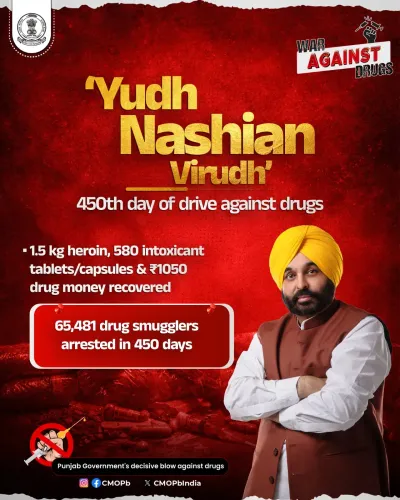
The Chief Minister's Office of Punjab on Sunday, May 24, 2026, announced that Punjab Police has continued its anti-drug drive 'Yudh Nashian Virudh' into its 449th consecutive day, with cumulative arrests of drug smugglers now reaching 65,417 across the state.
What the latest seizure shows
In the most recent operational push, police teams recovered 30.6 kg of heroin, 271 intoxicant tablets and capsules, and Rs 4,200 in drug money from arrested smugglers. The CMO's post noted the haul was made following the arrest of multiple drug smugglers, consistent with the daily enforcement rhythm the drive has maintained since its launch.Context: A border state's chronic challenge
Punjab shares a long border with Pakistan and has faced persistent cross-border heroin and synthetic drug trafficking since the 1980s. Established smuggling corridors and the proximity of international narcotics supply chains have made the state one of India's most acutely affected regions for drug abuse. Successive state governments, including the Congress administration under Captain Amarinder Singh between 2017 and 2022, ran parallel anti-drug operations and rehabilitation schemes, though the problem remained unresolved at the time of the Aam Aadmi Party's electoral victory in March 2022.Policy backdrop: AAP's flagship enforcement drive
Chief Minister Bhagwant Mann and the AAP government formally launched 'Yudh Nashian Virudh' — translating from Punjabi as 'War Against Drugs' — shortly after taking office in 2022 as a centrepiece of its law-and-order agenda. The campaign targets smugglers, street-level peddlers, and the broader supply network operating across the state. The daily cadence of public reporting on seizures and arrests has been a deliberate feature of the drive, positioning enforcement statistics as a measure of administrative accountability. The total of 65,417 arrests in 449 days represents an average of roughly 145 arrests per day over the campaign's duration.Stakeholders and impact
The drive's primary beneficiaries are Punjab's youth, border communities, and families affected by addiction — demographics that have borne the heaviest social cost of the state's drug crisis. Civil society groups and addiction counsellors have long argued that enforcement must be paired with robust de-addiction and rehabilitation infrastructure to produce lasting results. The National Narcotics Control Bureau (NCB) and the Border Security Force (BSF) remain key federal partners in interdicting cross-border supply chains, though the current announcement focuses on state-level police action.What's next
Attention will now turn to whether the state government accompanies its enforcement milestones with proportionate investment in rehabilitation. Budget allocations for de-addiction centres and any formal coordination announcements with central agencies such as the NCB or BSF on border interdiction are expected to be watched closely in the next state budget session. With the drive now well past its 400th day, the government faces growing scrutiny over whether arrest numbers translate into a measurable reduction in drug availability and addiction rates on the ground.Point of View
Quantifiable governance in a state where drug abuse has historically defined electoral narratives. Reaching 65,417 arrests in 449 days is a significant enforcement figure, but it also raises the question of whether the supply chain is being disrupted at scale or whether street-level arrests dominate the numbers. The absence of parallel data on de-addiction enrolments and drug availability indices leaves the full picture incomplete. How the government balances punitive enforcement with rehabilitation investment will increasingly define the drive's legacy ahead of the next electoral cycle.
NationPress
20 Sept 2026
Frequently Asked Questions
What is 'Yudh Nashian Virudh' in Punjab?
'Yudh Nashian Virudh' is a statewide anti-drug enforcement campaign launched by the Aam Aadmi Party government of Punjab under Chief Minister Bhagwant Mann after it took office in March 2022. The Punjabi phrase translates to 'War Against Drugs.' Punjab Police conducts daily raids targeting drug smugglers, peddlers, and supply networks, with the CMO publicly reporting arrest and seizure figures each day.
How many drug smugglers have been arrested in Punjab's anti-drug drive?
As of the 449th day of the 'Yudh Nashian Virudh' drive, the total number of drug smugglers arrested has reached 65,417, according to an announcement by the Chief Minister's Office of Punjab on May 24, 2026.
How much heroin was seized in the latest Punjab Police drug operation?
In the most recent operation reported on May 24, 2026, Punjab Police recovered 30.6 kg of heroin along with 271 intoxicant tablets and capsules and Rs 4,200 in drug money from arrested smugglers.
Why is Punjab particularly affected by drug trafficking?
Punjab shares a long international border with Pakistan and has been a major conduit for cross-border heroin and synthetic drug smuggling since the 1980s. Established trafficking routes, proximity to supply chains originating in Afghanistan, and socioeconomic vulnerabilities in border communities have made drug abuse a persistent governance challenge for successive state governments.
What happens after drug arrests in Punjab — is there a rehabilitation programme?
While 'Yudh Nashian Virudh' focuses on enforcement and arrests, the broader policy debate centres on whether adequate rehabilitation and de-addiction infrastructure accompanies the policing drive. Observers and civil society groups have called for proportionate investment in de-addiction centres. Coordination with central agencies such as the NCB and BSF on supply-side interdiction is also being watched.