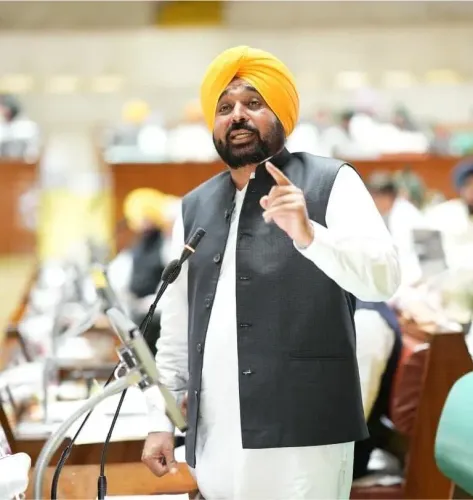
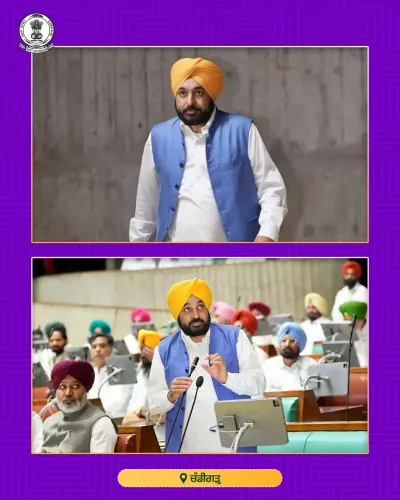
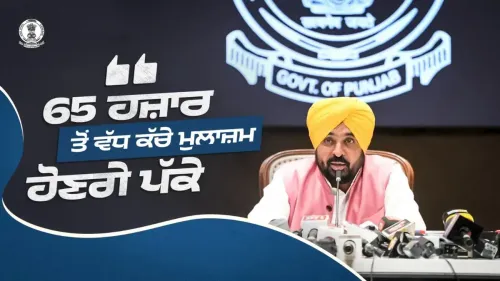
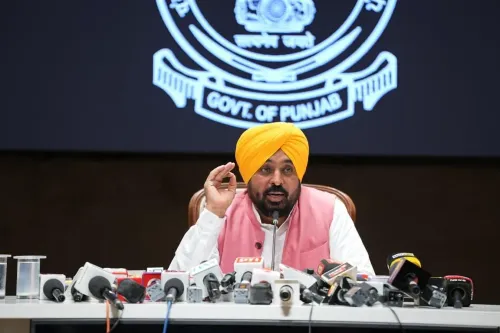
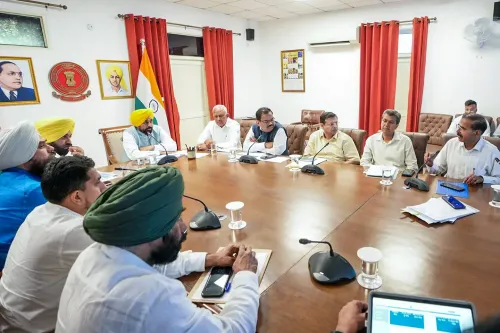
Punjab CM Bhagwant Mann tables bill to protect outsourced govt workers
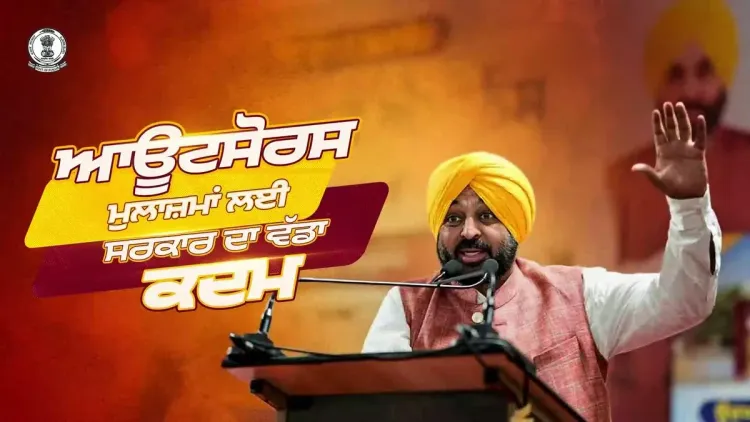
Synopsis
The Bhagwant Mann-led Punjab government has introduced a bill in the Punjab Vidhan Sabha to eliminate contractor middlemen, establish direct state-to-employee relationships, and curb exploitation of outsourced government workers — a significant labour reform move for the AAP administration.
Key Takeaways
The Punjab government introduced a new bill in the Punjab Vidhan Sabha on 11 August 2026 targeting the rights of outsourced employees.
CM Bhagwant Mann is leading the initiative, which aims to cut out contractor middlemen from the employment chain.
The bill proposes a direct relationship between the state government and outsourced workers, ensuring entitled facilities reach them without contractor interference.
Provisions to curb exploitation of outsourced employees are included in the proposed legislation.
The bill must clear debate, amendments, and a floor vote in the Vidhan Sabha before it can be notified into law.
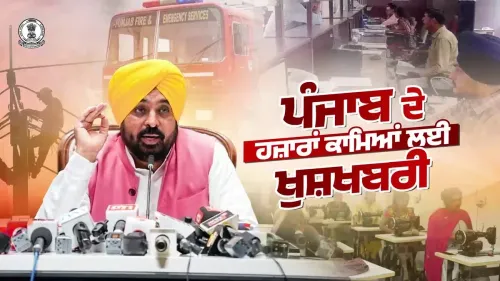
Tens of thousands of outsourced workers inside Punjab's government machinery have long operated in a legal grey zone — hired through contractors, denied direct access to state benefits, and left with little recourse against exploitation. That changes now. The Chief Minister's Office of Punjab announced on Tuesday, 11 August 2026 that the Bhagwant Mann-led government has introduced a new bill in the Punjab Vidhan Sabha to strengthen the rights of outsourced employees.
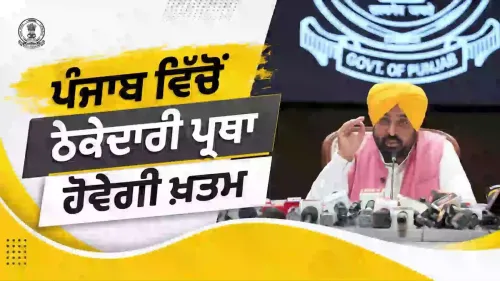
The post, shared by the official CMO Punjab account, states: 'Under the leadership of Chief Minister Bhagwant Mann, the Punjab Government has brought a new bill to strengthen the rights of outsourced employees. Through this, employees will receive their entitled government facilities. The middleman role of contractors will be eliminated, a direct relationship with employees will be established, and provisions will be put in place to curb exploitation.'
The contractor middleman problem — and why it persists
Across Indian states, outsourced government workers — security guards, sanitation staff, data-entry operators, drivers — are typically engaged through private contractors who hold government contracts. The arrangement creates a buffer: the state pays the contractor, the contractor pays the worker, and in that gap, wages get delayed, benefits disappear, and grievance mechanisms stall. Punjab is no exception to this structural problem.
The new bill directly targets this buffer. By establishing a direct relationship between the state and outsourced employees, the government aims to ensure that entitled facilities — wages, social security, leave entitlements — reach workers without being filtered through a contractor's ledger. Provisions to curb exploitation are also built into the proposed legislation.
Inside the Punjab Vidhan Sabha: what happens next
The bill's introduction in the Punjab Vidhan Sabha — the state's unicameral legislature — is the first formal step. It must clear debate, possible amendments, and a floor vote before becoming law. Even after passage, implementation rules must be notified for the protections to take effect on the ground.
For the Aam Aadmi Party government, which came to power in March 2022 on a platform of governance reform and worker welfare, the bill represents a concrete legislative move on a promise that resonates with a large, politically active constituency of contractual public-sector workers.
If the bill passes and is enforced, Punjab could set a template that pressures other states to follow — turning a long-standing administrative convenience into a regulated, accountable employment relationship.
Point of View
Which has consistently framed itself as a champion of the salaried and working class. Eliminating contractor intermediaries addresses a structural grievance that has persisted across party lines in Punjab for decades, giving Mann a genuine governance credential ahead of future electoral cycles. If implemented effectively, it could also shift the accountability burden directly onto the state — raising the stakes for delivery. The broader pattern of Indian states legislating to formalise contractual public employment is accelerating, and Punjab's move could add pressure on rival governments to act.
NationPress
11 Aug 2026
Frequently Asked Questions
What is the Punjab outsourced employees bill 2026?
It is a new bill introduced in the Punjab Vidhan Sabha by the Bhagwant Mann government that seeks to eliminate contractor middlemen, establish a direct employment relationship between the state and outsourced workers, and put provisions in place to stop exploitation of such employees.
Who are outsourced employees in Punjab government?
Outsourced employees are workers — such as security guards, sanitation staff, data-entry operators, and drivers — engaged in government functions through private contractors rather than through direct state employment.
How will the Punjab bill help outsourced workers?
The bill aims to ensure outsourced employees receive their entitled government facilities directly from the state, bypassing contractors who have historically delayed wages or withheld benefits.
Has the Punjab outsourced workers bill been passed?
As of its announcement on 11 August 2026, the bill has been introduced in the Punjab Vidhan Sabha. It still needs to pass debate, amendments, and a floor vote before being enacted into law.
What is Bhagwant Mann doing for contractual workers in Punjab?
CM Bhagwant Mann's government has introduced legislation to formalise the employment relationship for outsourced government workers, cutting out contractor intermediaries and adding legal protections against exploitation.