Punjab Police Arrests 38,738 in Five-Month 'Gangsteran Te Vaar' Drive
Synopsis
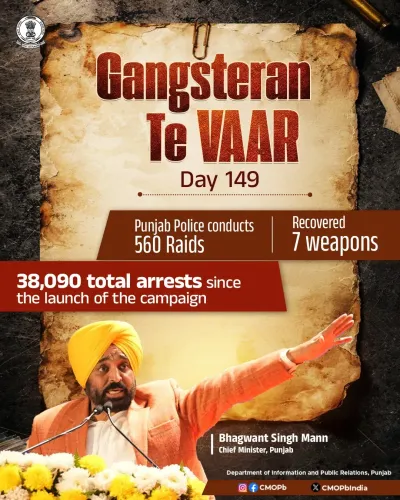
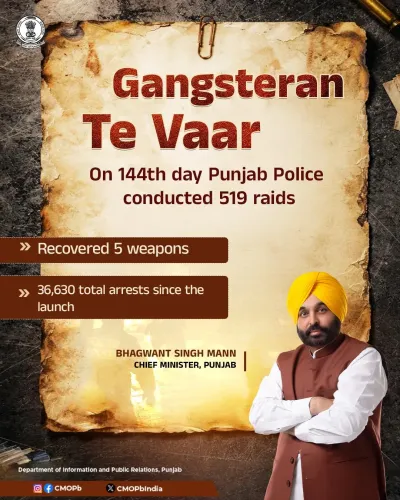
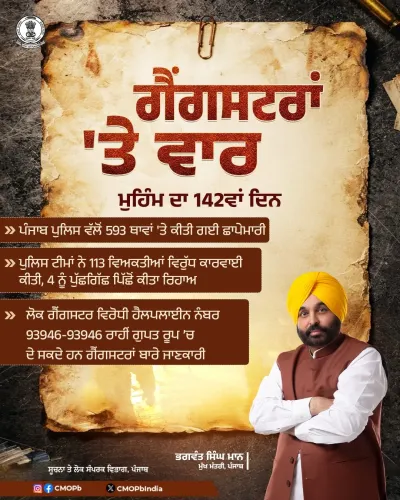
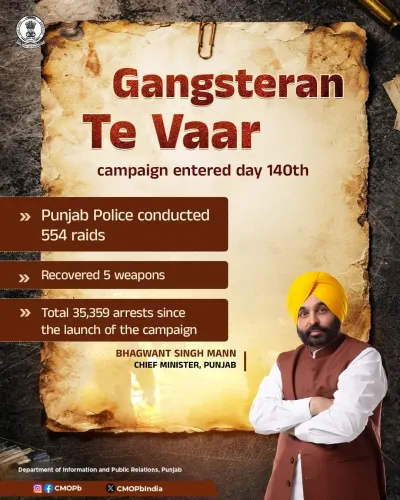
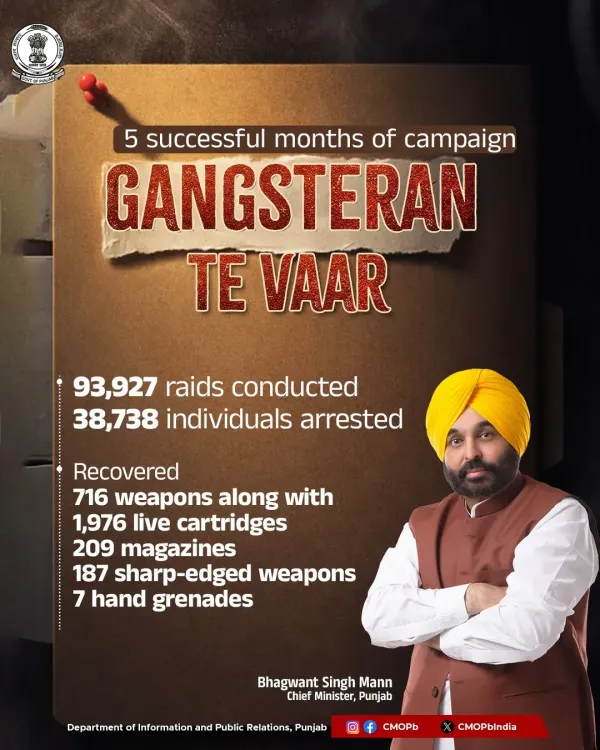
Punjab Police's 'Gangsteran Te Vaar' campaign has arrested 38,738 individuals and conducted nearly 94,000 raids in five months, recovering 716 weapons, 7 hand grenades, and 1,976 live cartridges, the Chief Minister's Office announced on June 21, 2026.
Key Takeaways
38,738 individuals arrested — including gangsters and their associates — in five months under the Gangsteran Te Vaar campaign.
Punjab Police conducted 93,927 raids across the state since the campaign's launch.
716 weapons , 1,976 live cartridges , 209 magazines , and 187 sharp-edged weapons recovered from arrested individuals.
Seven hand grenades seized, indicating links to sophisticated arms-supply networks.
Special DGP (Law and Order) Praveen Sinha presented the five-month operational data publicly.
The campaign is a flagship initiative of the AAP government under Chief Minister Bhagwant Mann , who prioritised anti-crime action after the 2022 state elections.
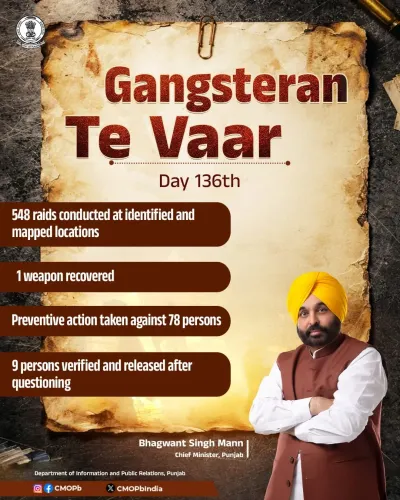
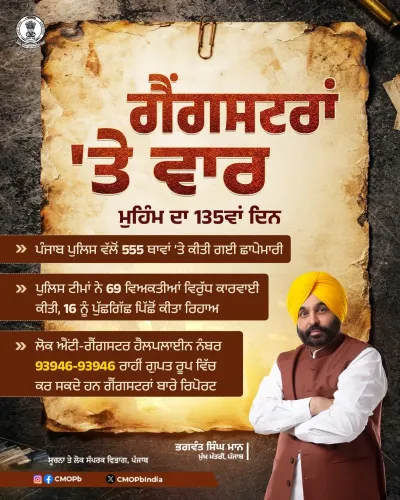
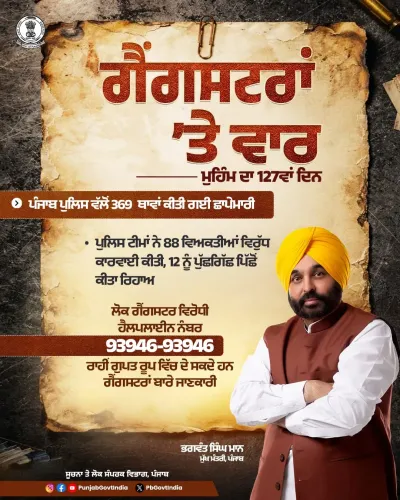
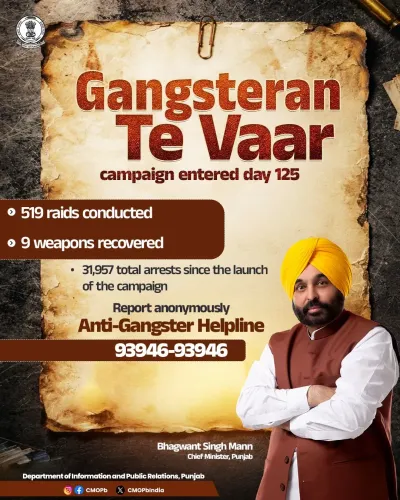
The Chief Minister's Office of Punjab announced on Sunday, June 21, 2026, that Punjab Police's decisive anti-gangster campaign Gangsteran Te Vaar (loosely, 'Strike Against Gangsters') has completed five months, resulting in the arrest of 38,738 individuals — including gangsters and their associates — following 93,927 raids conducted across the state.
What the Campaign Has Yielded
Special DGP (Law and Order) Praveen Sinha stated that police teams have recovered 716 weapons, 1,976 live cartridges, and 209 magazines from the possession of arrested individuals. Officers additionally seized 187 sharp-edged weapons and seven hand grenades, underscoring the scale of armament found within the targeted networks.
The campaign, branded under the hashtag #GangsteranTeVaar, has been positioned by the state government as a flagship law-and-order initiative. The volume of raids — nearly 94,000 in five months — translates to roughly 600 raids per day on average across Punjab's districts.
Context
Punjab, a northern border state sharing a boundary with Pakistan, has contended with organised crime for over a decade, with gangster networks often intertwined with drug trafficking and cross-border smuggling routes. Successive state governments have launched crackdowns, but the challenge has persisted owing to the complexity of local syndicates and transnational supply chains.
The Aam Aadmi Party (AAP) government led by Chief Minister Bhagwant Mann, which came to power in 2022, made anti-crime and anti-drug action a central governance commitment. The Gangsteran Te Vaar campaign represents the most numerically significant enforcement push publicly reported under that mandate.
Policy Backdrop
Large-scale raid-and-arrest operations of this nature are typically coordinated across district police units, with intelligence inputs from state-level agencies. The recovery of hand grenades — a category of ordnance not commonly found in routine criminal possession — points to links between local gangs and more sophisticated arms-supply networks, a concern that has previously drawn the attention of central agencies including the National Investigation Agency (NIA).
The campaign's metrics — arrests, raids, and recoveries — reflect a quantitative approach to accountability that the AAP government has used to communicate governance outcomes to the public, particularly ahead of future electoral cycles.
Stakeholders and Impact
For ordinary Punjab residents, especially in districts historically affected by gang violence such as Amritsar, Ludhiana, and Bathinda, the campaign's stated outcomes represent a significant shift in policing tempo. Families of victims of gang-related extortion and violence have long demanded sustained enforcement action rather than episodic crackdowns.
Criminal networks, by contrast, face disrupted operational capacity if the weapon seizures and arrests have genuinely degraded their command structures. However, analysts note that conviction rates and long-term dismantling of syndicates — rather than arrest tallies alone — will determine the campaign's lasting effect.
What's Next
The five-month milestone marks a point at which the state government is expected to face scrutiny over the judicial processing of the 38,738 arrested individuals — including bail rates, chargesheet filings, and eventual conviction outcomes. Coordination with central agencies on cross-border arms and narcotics trails remains a critical next step. Whether the campaign sustains its operational intensity into the second half of 2026, or transitions into a phase focused on prosecution and intelligence consolidation, will define its ultimate legacy for law and order in Punjab.
Point of View
000 raids and 38,738 arrests in five months — is politically significant for the AAP government, which has staked its Punjab credibility on visible law-and-order delivery. The recovery of hand grenades elevates the campaign beyond routine policing into national-security territory, potentially inviting central agency involvement and raising the stakes for follow-through. However, arrest-centric metrics have historically been a double-edged sword in Indian policing: high numbers signal intent but invite questions about due process, bail rates, and whether the underlying syndicate structures have been genuinely disrupted. The campaign's true measure will come when prosecution data and conviction rates enter the public domain.
NationPress
21 Jun 2026
Frequently Asked Questions
What is the Gangsteran Te Vaar campaign in Punjab?
'Gangsteran Te Vaar' is an anti-gangster police campaign launched by the Punjab government under Chief Minister Bhagwant Mann. As of its five-month mark on June 21, 2026, it had resulted in 38,738 arrests and 93,927 raids across the state.
How many people has Punjab Police arrested in the anti-gangster drive?
Punjab Police has arrested 38,738 individuals , including gangsters and their associates, in the five months since the Gangsteran Te Vaar campaign was launched.
What weapons were recovered in the Punjab anti-gangster campaign?
Police recovered 716 weapons, 1,976 live cartridges, 209 magazines, 187 sharp-edged weapons, and seven hand grenades from individuals arrested during the campaign.
Who is leading Punjab's anti-gangster operation?
The campaign is led by Punjab Police under the AAP state government headed by Chief Minister Bhagwant Mann. Special DGP (Law and Order) Praveen Sinha has been the official spokesperson for operational data.
How many raids did Punjab Police conduct under Gangsteran Te Vaar?
Punjab Police conducted 93,927 raids across Punjab in the five months since the launch of the Gangsteran Te Vaar campaign, averaging roughly 600 raids per day.