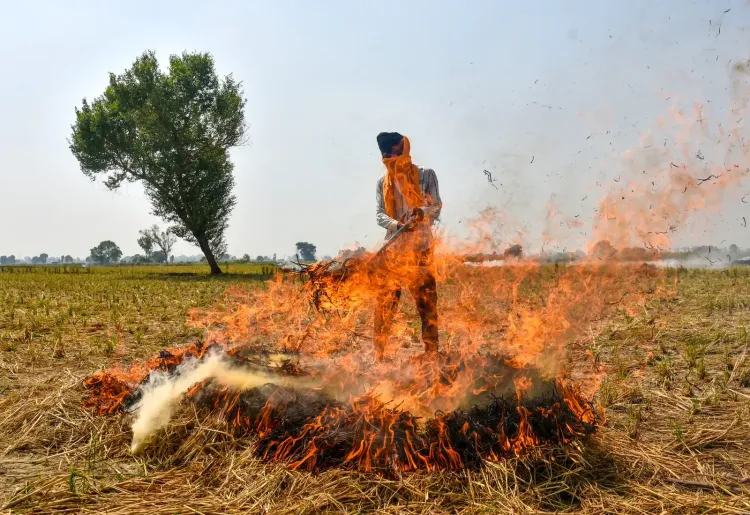
Punjab stubble burning: 717 incidents recorded, 24 FIRs filed in Amritsar
Synopsis
Punjab's stubble burning tally has crossed 700 incidents with the harvest season still ongoing — and the numbers tell a sharper story than the headline. Tarn Taran alone accounts for nearly half of all confirmed fires, yet has recovered less than a third of the environmental compensation imposed. The gap between penalties levied and penalties collected may be the real measure of how far enforcement has to go.
Key Takeaways
The Punjab Pollution Control Board (PPCB) recorded 717 stubble burning incidents across the state as of 27 October 2026 .
Burning was confirmed at 313 sites after inspections at 664 locations .
Tarn Taran leads all districts with 318 incidents and 64 FIRs ; environmental compensation of ₹7.80 lakh imposed, only ₹2.65 lakh recovered.
Amritsar recorded 154 incidents , 24 FIRs , and 186 warning notices ; compensation recovery rate stands at roughly 85% .
The Sanjha Mittar Farmer Support Centre has launched helpline +91 79737 27514 (9 am–5 pm) to provide alternatives to stubble burning.
Northern India's air quality, including Delhi's , is directly affected by Punjab farm fires during October–November.
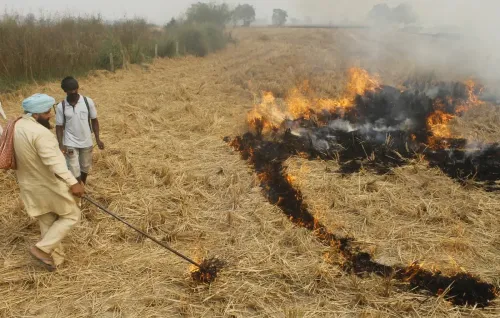
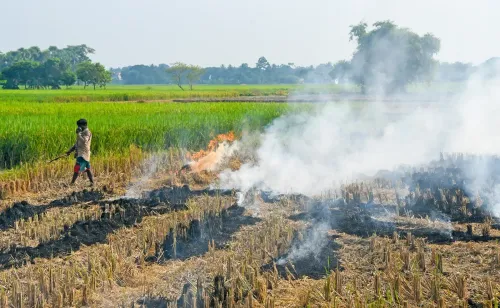
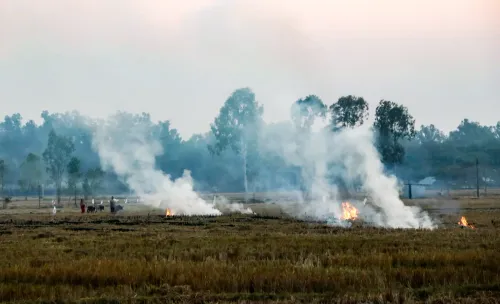
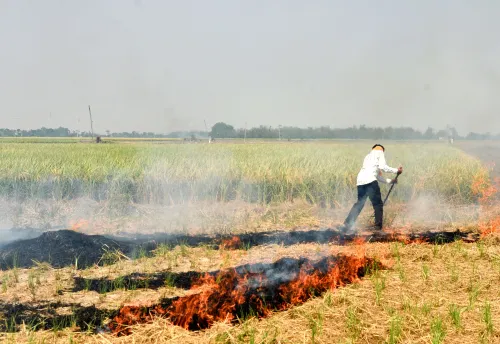
The Punjab Pollution Control Board (PPCB) has recorded 717 incidents of stubble burning across the state as of 27 October 2026, with officials confirming active burning at 313 sites following inspections at 664 locations. Authorities have registered 24 FIRs in Amritsar alone, as enforcement efforts intensify during the paddy harvesting season.
District-wise Breakdown
Tarn Taran leads the state with 318 incidents — the highest of any district. Inspectors visited 299 locations, confirming burning at 152 sites. Environmental compensation was imposed in 152 cases, with a total levy of ₹7.80 lakh, of which ₹2.65 lakh has been recovered. Officials also registered 64 FIRs and issued 'red entries' — official adverse records — against 152 fields in the district.
Amritsar recorded 154 incidents; of 150 locations inspected, stubble burning was confirmed at 75 sites. Environmental compensation was imposed in 70 cases, totalling ₹3.35 lakh, of which ₹2.85 lakh has been recovered. The district accounts for 24 FIRs, 57 red entries, and 186 warning notices.
Other affected districts include Gurdaspur (47 incidents, burning confirmed at 17 sites), Kapurthala (46 incidents, confirmed at 15 sites), and Ferozepur (42 incidents, confirmed at 20 sites).
Enforcement and Penalties
'Monitoring and enforcement actions are underway to curb incidents of stubble burning,' officials said, according to the PPCB report. The combination of FIRs, red entries, and environmental compensation is part of a multi-pronged strategy that has been in place since at least 2019, when Punjab first mandated penalties for farm fires under the Air (Prevention and Control of Pollution) Act. This year's tally — though still rising — follows a broader national pattern where enforcement has intensified but complete elimination of the practice remains elusive.
Notably, the recovery rate on environmental compensation varies significantly across districts: Amritsar has recovered ₹2.85 lakh of a ₹3.35 lakh levy, a recovery rate of roughly 85%, while Tarn Taran has recovered ₹2.65 lakh out of ₹7.80 lakh imposed — just under 34% — suggesting enforcement gaps persist in the worst-affected district.
Farmer Helpline Launched
With concerns over stubble burning rising during the harvest window, the Sanjha Mittar Farmer Support Centre — an initiative linked to Clean Air Punjab, AirCare Centre, and Saanjh Punjab — has launched a dedicated telephone helpline at +91 79737 27514. The helpline operates from 9 am to 5 pm and is designed to help farmers identify timely and affordable alternatives to burning paddy straw, including options such as crop residue management machines and bio-decomposer solutions.
Why It Matters
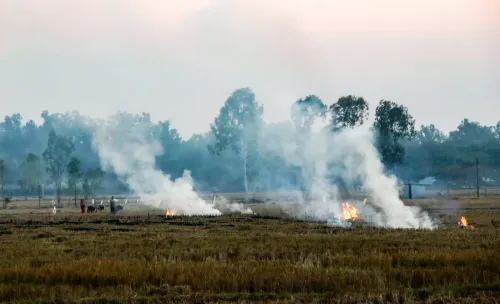
Stubble burning in Punjab and neighbouring Haryana is a major seasonal contributor to air pollution across northern India, including Delhi, where Air Quality Index levels typically spike sharply in late October and November. Satellite fire counts from Punjab during this window have historically contributed to some of the worst smog episodes in the Indo-Gangetic Plain. This comes amid mounting pressure from the Supreme Court and the Commission for Air Quality Management in NCR and Adjoining Areas (CAQM) on state governments to demonstrate credible enforcement.
With the harvesting season continuing through mid-November, the incident count is expected to rise further before enforcement efforts begin to show results.
Point of View
The worst-affected district, has the lowest compensation recovery rate — under 34% — even as it racks up the most FIRs and red entries. Volume of action is not the same as effectiveness of action. The launch of a farmer helpline is welcome, but structural alternatives to stubble burning — subsidised happy seeders, bio-decomposer rollouts, guaranteed procurement of paddy straw — have historically moved too slowly to keep pace with harvest timelines. Until the economics of alternatives are unambiguously cheaper than burning for a marginal farmer in Tarn Taran, the incident count will keep resetting every October.
NationPress
28 Oct 2026
Frequently Asked Questions
How many stubble burning incidents have been recorded in Punjab in 2026?
The Punjab Pollution Control Board recorded 717 stubble burning incidents across the state as of 27 October 2026. Officials inspected 664 locations and confirmed active burning at 313 sites.
Which district has the most stubble burning cases in Punjab?
Tarn Taran leads all districts with 318 reported incidents, of which burning was confirmed at 152 sites. The district also accounts for 64 FIRs and red entries against 152 fields.
What penalties have been imposed for stubble burning in Punjab?
Environmental compensation has been levied across multiple districts. In Tarn Taran, ₹7.80 lakh was imposed, with ₹2.65 lakh recovered; in Amritsar, ₹3.35 lakh was imposed, with ₹2.85 lakh recovered. Authorities have also registered FIRs and issued 'red entries' against offending fields.
Is there a helpline for Punjab farmers to find alternatives to stubble burning?
Yes. The Sanjha Mittar Farmer Support Centre, linked to Clean Air Punjab, AirCare Centre, and Saanjh Punjab, has launched a helpline at +91 79737 27514, operating from 9 am to 5 pm. It helps farmers identify affordable and timely alternatives to burning paddy straw.
Why does Punjab stubble burning affect Delhi's air quality?
Farm fires in Punjab and Haryana release large quantities of particulate matter and smoke that travel downwind across the Indo-Gangetic Plain, significantly worsening air quality in Delhi and neighbouring regions during late October and November. Satellite fire counts from Punjab have historically coincided with some of the worst smog episodes in northern India.