Puri: Domestic LPG Under ₹950, Ujjwala Families Pay Under ₹650
Synopsis
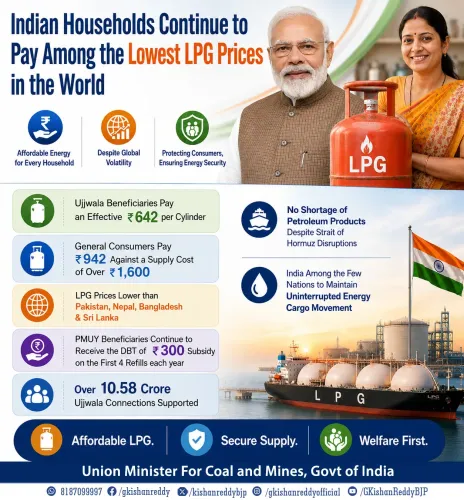
Union Petroleum Minister Hardeep Singh Puri says domestic LPG cylinders remain priced below ₹950 and Ujjwala beneficiaries pay under ₹650, even as actual costs touch ₹1,600 — highlighting the Modi government's sustained subsidy commitment to household energy access.
Key Takeaways
The actual market cost of a domestic LPG cylinder has reached ₹1,600 , according to Minister Puri's post dated 10 July 2026 .
General domestic consumers continue to pay under ₹950 per cylinder, implying a subsidy of over ₹650 per unit.
Pradhan Mantri Ujjwala Yojana beneficiaries receive cylinders at under ₹650 , reflecting a subsidy exceeding ₹950 per cylinder.
PMUY, launched in May 2016 , targets women from below-poverty-line households with subsidised clean cooking fuel access.
The PAHAL DBT scheme routes LPG subsidies directly to beneficiaries' bank accounts, enabling targeted support without blanket price controls.
Upcoming FY27 Union Budget allocations and oil marketing company pricing reviews will determine the sustainability of current subsidy levels.
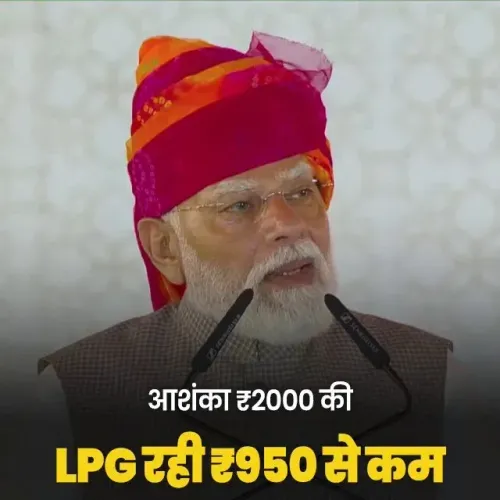
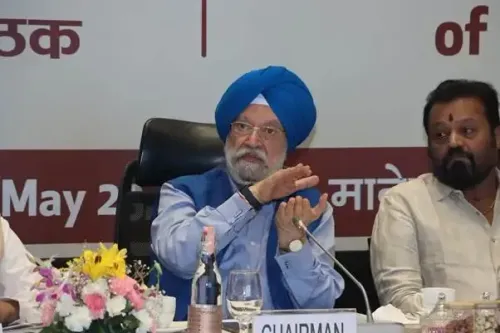
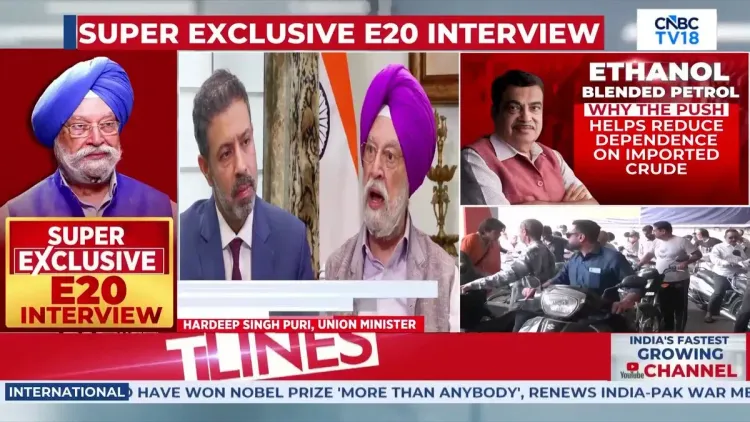
Union Petroleum Minister Hardeep Singh Puri on Friday, 10 July 2026, highlighted that domestic LPG cylinder prices remain below ₹950 for ordinary households and below ₹650 for Pradhan Mantri Ujjwala Yojana beneficiaries, even as the actual cost of a cylinder has climbed to ₹1,600 — attributing the gap to the policies of Prime Minister Narendra Modi.
Context
Puri posted in Hindi, stating: 'घरेलू LPG सिलेंडर की वास्तविक लागत ₹1,600 तक पहुँच चुकी थी' ('The actual cost of a domestic LPG cylinder had reached ₹1,600'). He added that under the 'visionary leadership' of Prime Minister Modi, consumers today still receive the cylinder for under ₹950, while Ujjwala families receive it for under ₹650. The post underscores a subsidy gap of over ₹950 per cylinder for Ujjwala households — a significant fiscal commitment by the central government.
The figures illustrate the scale of the price support being extended at a time when global crude and LPG commodity prices remain elevated. The minister's framing positions the price differential as a deliberate policy choice rather than a market outcome.
Policy Backdrop
Pradhan Mantri Ujjwala Yojana (PMUY), launched in May 2016, was designed to provide free LPG connections to women from below-poverty-line households, accelerating the shift away from biomass and solid fuels toward cleaner cooking energy. The scheme is widely regarded as one of the flagship welfare initiatives of the Modi government's energy access agenda.
Alongside PMUY, the PAHAL Direct Benefit Transfer (DBT) scheme — rolled out nationally from 2015 after a 2013 pilot — routes LPG subsidies directly into beneficiaries' bank accounts. This architecture allows the government to calibrate subsidy levels without altering the pump price across all consumer categories simultaneously. India's approach to LPG pricing has consistently sought to balance household affordability, fiscal prudence, and energy security against the backdrop of volatile international commodity markets.
Stakeholders and Impact
The two primary beneficiary groups are general domestic LPG consumers and Ujjwala households — the latter being among India's most economically vulnerable families. With the actual cost at ₹1,600, the effective subsidy per cylinder for an Ujjwala family exceeds ₹950, representing a direct transfer of purchasing power to low-income women who are the primary cooks in these households.
Oil marketing companies — which procure, bottle, and distribute LPG — absorb the difference between market cost and consumer price, with the government compensating them through budget allocations. The scale of this support has direct implications for the Union Budget's subsidy outgo and the financial health of state-run energy firms.
What's Next
Attention will now turn to Union Budget subsidy allocations for FY27 and any quarterly pricing reviews by oil marketing companies, which will determine whether current consumer prices are sustainable as global energy markets evolve. Any upward revision in LPG prices — or a rollback of Ujjwala-specific support — would directly affect millions of households currently benefiting from the subsidised rate.
The minister's public communication on LPG pricing signals that the government intends to keep household energy affordability front and centre as a political and policy priority ahead of the budget cycle.
Point of View
Particularly ahead of budget cycles when subsidy allocations face scrutiny. The specific call-out of Ujjwala families at a lower price band reinforces the scheme's identity as a targeted instrument for the rural poor, not a universal handout. How long these price points can be held against global commodity pressures will be the real test of the policy's durability.
NationPress
10 Jul 2026
Frequently Asked Questions
What is the current price of a domestic LPG cylinder in India in 2026?
According to Union Petroleum Minister Hardeep Singh Puri, domestic LPG cylinders are currently priced below ₹950 for general consumers, even though the actual cost has reached ₹1,600 .
How much do Ujjwala Yojana beneficiaries pay for an LPG cylinder?
Pradhan Mantri Ujjwala Yojana beneficiaries pay under ₹650 per cylinder, as per the minister's statement, reflecting a subsidy of over ₹950 per unit.
What is Pradhan Mantri Ujjwala Yojana?
Pradhan Mantri Ujjwala Yojana (PMUY) is a central government scheme launched in May 2016 that provides free LPG connections to women from below-poverty-line households to promote clean cooking fuel access.
Why is the LPG cylinder price lower than its actual cost in India?
The Indian government subsidises LPG cylinders through budgetary support and the PAHAL Direct Benefit Transfer scheme, directing funds to oil marketing companies and beneficiaries to keep consumer prices below market cost.
What did Hardeep Singh Puri say about LPG prices today?
On 10 July 2026 , Minister Hardeep Singh Puri posted that despite the actual LPG cylinder cost reaching ₹1,600, consumers pay under ₹950 and Ujjwala families pay under ₹650, crediting PM Modi's leadership for the sustained subsidy.