Puri credits Modi govt for 12-year farm income surge
Synopsis
Union Petroleum Minister Hardeep Singh Puri has highlighted seven flagship schemes under PM Modi's government — from PM-KISAN transfers of over Rs 4.3 lakh crore to a Rs 1.62 lakh crore ethanol income boost — marking 12 years of agricultural transformation under the #12YearsOfKisanSamriddhi campaign.
Key Takeaways
Union Petroleum Minister Hardeep Singh Puri posted on June 11, 2026 under #12YearsOfKisanSamriddhi , crediting PM Modi's government with transforming Indian agriculture over 12 years.
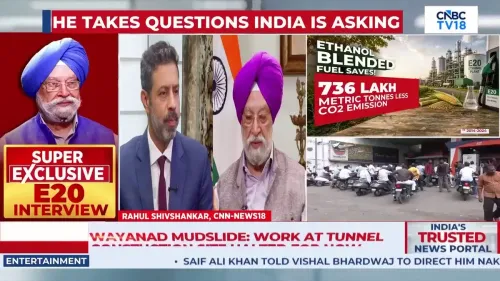
The Ethanol Programme is stated to have generated over Rs 1.62 lakh crore in additional income for farmers by linking farm produce to the fuel supply chain.
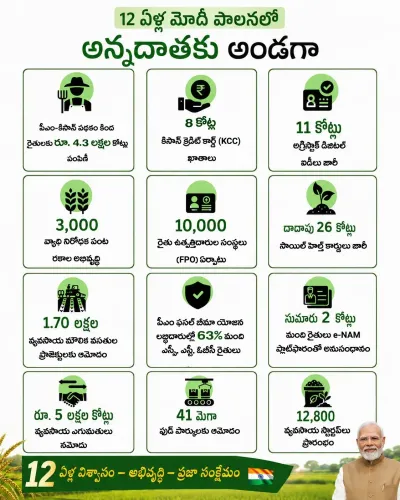
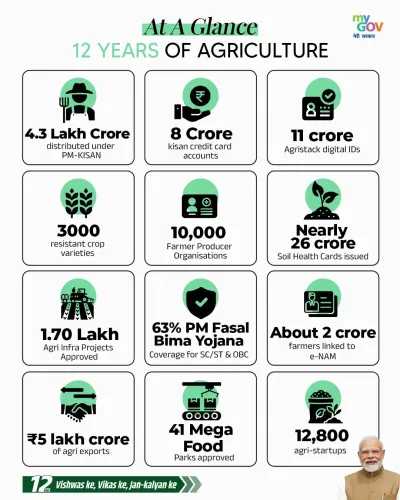
PM-KISAN has transferred over Rs 4.3 lakh crore directly into farmers' bank accounts since its February 2019 launch.
MSP-based procurement has exceeded Rs 26 lakh crore , while 8 crore Kisan Credit Cards and 26 crore Soil Health Cards have been issued.
PM Fasal Bima Yojana and e-NAM are cited as complementary pillars providing crop insurance cover and digital market access respectively.
Puri frames the farmer as both 'annadaata' (food provider) and 'urjadaata' (energy provider), reflecting the petroleum ministry's stake in agricultural ethanol output.
Union Petroleum Minister Hardeep Singh Puri on Thursday, June 11, 2026, posted a detailed account on X crediting Prime Minister Narendra Modi's government with transforming India's agricultural sector over the past 12 years, highlighting a series of flagship schemes and the financial gains they have delivered to farmers across the country.
Context
Puri's post, shared under the hashtag #12YearsOfKisanSamriddhi, opens with a poetic tribute to farmers: 'किसानों का पसीना जब मिट्टी में मिलता है तो अन्न बनकर देशवासियों के जीवन को संबल देता है' ('When the sweat of farmers meets the soil, it becomes grain that sustains the lives of the nation's people'). He argues that the farmer, traditionally the nation's food provider, has now also become an energy provider — a reference to the government's expanding ethanol blending programme that sources feedstock from agricultural produce.
The post comes as part of a broader ruling-party communication push marking what the Bharatiya Janata Party is calling twelve years of agricultural transformation under PM Modi's leadership, which began in May 2014.
Policy Backdrop
Puri lists seven specific policy outcomes in his post. He states that the Ethanol Programme has generated more than Rs 1.62 lakh crore in additional income for farmers, while the PM-KISAN scheme has transferred over Rs 4.3 lakh crore directly into farmers' bank accounts since its launch in February 2019. Procurement at Minimum Support Price (MSP) has crossed Rs 26 lakh crore, he adds.
Beyond income support, Puri cites 8 crore Kisan Credit Cards issued to provide farmers with subsidised short-term credit, and 26 crore Soil Health Cards distributed to guide balanced fertiliser use — a scheme that dates to 2015. The PM Fasal Bima Yojana crop insurance scheme and the e-NAM electronic agricultural marketplace, launched in April 2016, are also cited as pillars of the government's farm-to-market strategy.
The National Policy on Biofuels, notified in 2018, raised ethanol blending targets and expanded the range of permissible feedstocks, directly linking farm output to the country's fuel supply chain. This dual role — food security and energy security — is central to Puri's framing, fitting his portfolio as Petroleum Minister.
Stakeholders and Impact
The schemes cited touch virtually every category of Indian farmer. PM-KISAN provides an annual direct cash transfer of Rs 6,000 to eligible landholding farmers, while Kisan Credit Cards extend institutional credit to smallholders who previously relied on informal moneylenders. e-NAM connects farmers digitally to buyers across state lines, aiming to reduce dependence on intermediaries and improve price discovery.
The ethanol programme is particularly significant for sugarcane farmers in states such as Uttar Pradesh and Maharashtra, as distilleries purchase their produce for blending with petrol — a demand that has grown as blending targets have been progressively raised. For the petroleum sector, higher domestic ethanol supply reduces crude oil import dependence, aligning farm policy with energy security goals.
What's Next
Analysts will watch whether the government announces enhanced ethanol blending milestones or revised MSP procurement targets in the forthcoming Union Budget or any mid-year agricultural policy review. The political significance of the #12YearsOfKisanSamriddhi campaign suggests the ruling party intends to consolidate its farmer-welfare narrative ahead of upcoming state elections. The convergence of agricultural and energy policy — with Puri, a petroleum minister, championing farm income — signals that this cross-sectoral framing will remain a key government communication theme.
Point of View
The government signals that its energy transition agenda and agrarian support are mutually reinforcing, not competing priorities. The scale of figures cited — spanning direct transfers, MSP procurement, credit, insurance, and market access — is designed to present a comprehensive, multi-front policy record ahead of likely electoral cycles. The cross-ministerial framing also suggests a coordinated party effort to consolidate the farmer-welfare narrative at the national level.
NationPress
22 Sept 2026
Frequently Asked Questions
What is the #12YearsOfKisanSamriddhi campaign about?
The #12YearsOfKisanSamriddhi campaign is a BJP communication initiative marking 12 years of the Modi government's agricultural policies since 2014, highlighting schemes such as PM-KISAN, the Ethanol Programme, MSP procurement, and e-NAM.
How much money has PM-KISAN transferred to farmers?
According to Union Minister Hardeep Singh Puri's post on June 11, 2026, over Rs 4.3 lakh crore has been transferred directly into farmers' bank accounts through the PM-KISAN scheme since its launch in February 2019.
How has the ethanol programme benefited Indian farmers?
The Ethanol Blending Programme, which sources sugarcane and other agricultural produce for mixing with petrol, has reportedly generated more than Rs 1.62 lakh crore in additional income for farmers, according to the figures cited by Minister Puri.
What is the e-NAM scheme and how does it help farmers?
e-NAM, or the Electronic National Agriculture Market, is an online trading portal launched in April 2016 that connects farmers directly to buyers across states, improving price discovery and reducing dependence on intermediaries.
Why is a petroleum minister talking about farmer welfare?
Hardeep Singh Puri's petroleum portfolio directly intersects with farm income because the government's ethanol blending programme purchases agricultural produce — particularly sugarcane — for use as a fuel additive, making farmers key suppliers to the energy sector.