CM Office: Purnagiri Temple Ropeway Work Progressing Fast
Synopsis
The Uttarakhand Chief Minister's Office has confirmed that construction of the ropeway at Purnagiri Temple in Champawat district is progressing rapidly. The project aims to ease access for pilgrims to the hilltop Shakti Peeth, continuing the state's broader push to develop aerial connectivity at religious sites across the Himalayas.
Key Takeaways
The Uttarakhand CM's Office confirmed on 7 July 2026 that ropeway construction at Purnagiri Temple is advancing rapidly.
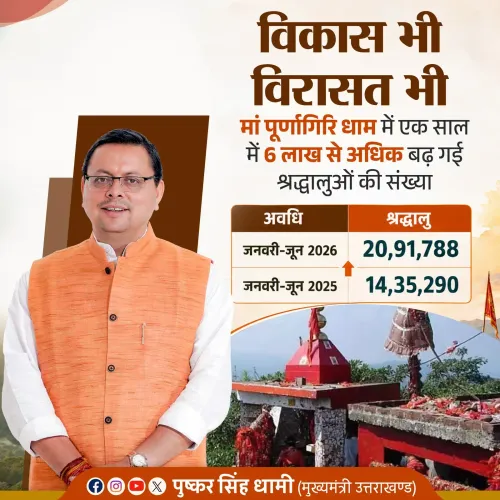
Purnagiri Temple is a major Shakti Peeth in Champawat district , close to the Indo-Nepal border , drawing large pilgrim numbers annually.
The ropeway will replace a steep trek, making the hilltop temple accessible to elderly, differently-abled, and first-time pilgrims.
Uttarakhand has been building ropeways at pilgrimage sites under public-private partnership models since at least 2018 .
No official inauguration date or construction cost has been announced in this update.
Local tourism businesses and the broader Champawat economy are expected to benefit from increased year-round pilgrim footfall.
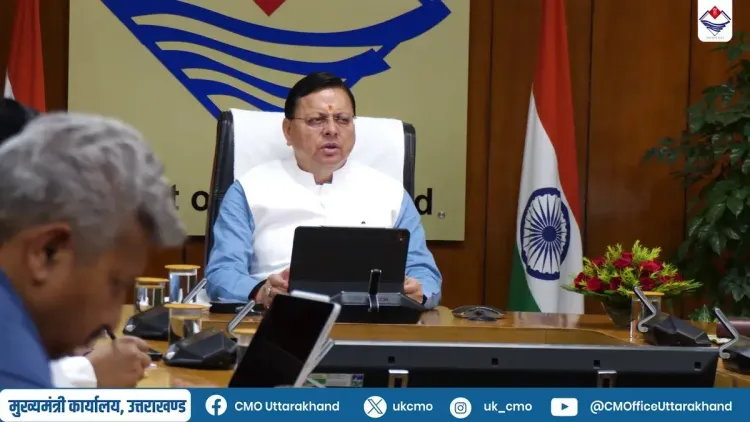
The Chief Minister's Office of Uttarakhand announced on Tuesday, 7 July 2026 that construction of the ropeway at the renowned Purnagiri Temple in Champawat district is advancing at a rapid pace, signalling a significant boost to pilgrim connectivity at one of the state's most revered Shakti Peeths.
The post, shared in Hindi, states: 'Champawat jile mein sthit prasiddh Purnagiri mandir mein ropeway ka nirman tvrit gati se chal raha hai' — 'Construction of the ropeway at the famous Purnagiri Temple located in Champawat district is progressing rapidly.'
Context
Purnagiri Temple is a prominent Shakti Peeth situated in the Kumaon region of Uttarakhand, close to the Indo-Nepal border. The hilltop shrine draws hundreds of thousands of pilgrims annually, particularly during the spring fair season, but the steep trek to the temple has long been a physical challenge for elderly and differently-abled devotees.
An aerial ropeway at the site is designed to dramatically cut travel time to the hilltop, replacing a demanding uphill walk with a faster, safer aerial crossing. Once operational, it is expected to make the temple accessible to a much wider cross-section of visitors year-round.
Policy Backdrop
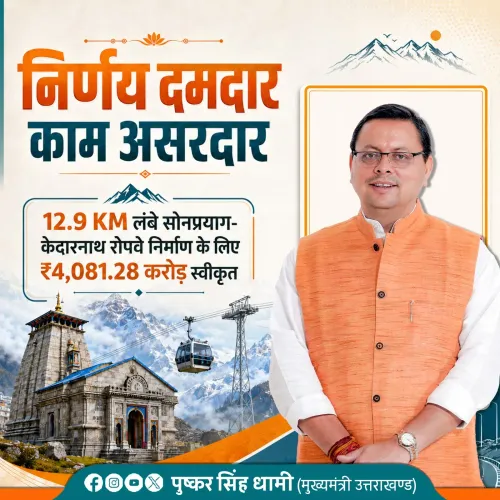
Uttarakhand has been systematically developing ropeway infrastructure at pilgrimage and tourist destinations since at least 2018, primarily through public-private partnership models. The approach is a direct response to the Himalayan terrain, where conventional road construction is costly, slow, and environmentally sensitive.
The Purnagiri ropeway project fits squarely within this broader state strategy of using aerial connectivity to overcome topographic barriers and extend the religious tourism season. Similar ropeway expansions have been pursued at other high-altitude shrines across Himalayan states, reflecting a region-wide recognition that aerial access is often the most practical solution in difficult mountain terrain.
Stakeholders and Impact
The primary beneficiaries are the large numbers of pilgrims — including elderly devotees and families with young children — who currently find the trek to Purnagiri Temple physically demanding. Faster, easier access is expected to increase footfall, directly benefiting local tourism businesses including hotels, eateries, and transport operators in Champawat.
The project also carries significance for the broader Champawat district economy, which relies heavily on seasonal religious tourism. A functional ropeway could extend the effective tourism window and attract visitors who might otherwise skip the site due to access constraints.
What's Next
The government has not announced a specific inauguration date in this update. Observers will watch for an official project completion timeline and any formal inauguration ceremony, which would likely draw senior state leadership given the religious and political significance of Purnagiri.
Longer term, the impact on annual pilgrim footfall and local revenue generation will be a key measure of whether the state's ropeway-led connectivity model is delivering on its promise for Champawat and similar districts along the Himalayan frontier.
Point of View
Long-running effort to convert the state's religious geography into a year-round economic asset. By prioritising aerial connectivity at high-footfall pilgrimage sites, the administration is addressing a structural constraint — difficult Himalayan terrain — that has historically capped tourism revenue. The timing of the announcement, ahead of the peak monsoon and post-monsoon pilgrimage window, suggests an intent to signal progress to both devotees and investors. If delivered on schedule, the project could become a template for the dozen-odd other Uttarakhand shrines still awaiting similar infrastructure.
NationPress
5 Oct 2026
Frequently Asked Questions
What is the Purnagiri Temple ropeway project?
The Purnagiri Temple ropeway is an aerial passenger ropeway being built in Champawat district of Uttarakhand to provide faster and easier access to the hilltop Purnagiri Shakti Peeth, reducing the need for a steep trek for pilgrims.
Where is Purnagiri Temple located?
Purnagiri Temple is located in Champawat district in the Kumaon region of Uttarakhand, near the Indo-Nepal border. It is one of the prominent Shakti Peeths in northern India.
When will the Purnagiri ropeway be completed?
As of the 7 July 2026 update from the Uttarakhand CM's Office, no specific completion or inauguration date has been announced. The government confirmed construction is progressing rapidly.
Who will benefit from the Purnagiri ropeway?
Pilgrims — especially elderly devotees, families, and differently-abled visitors — will benefit most directly. Local tourism businesses, hotels, and transport operators in Champawat district are also expected to see increased revenue.
Does Uttarakhand have other ropeway projects at pilgrimage sites?
Yes. Uttarakhand has been developing ropeways at multiple religious and tourist destinations since at least 2018, primarily through public-private partnership models, as part of a broader strategy to improve connectivity in difficult Himalayan terrain.