Rahul Gandhi backs students who questioned CBSE, Modi govt
Synopsis
Congress leader Rahul Gandhi pinned a video conversation with student Vedant and peers who had questioned CBSE and the Modi government, sarcastically reclaiming the 'anti-national Soros agent' label and pledging to secure their futures.
Key Takeaways
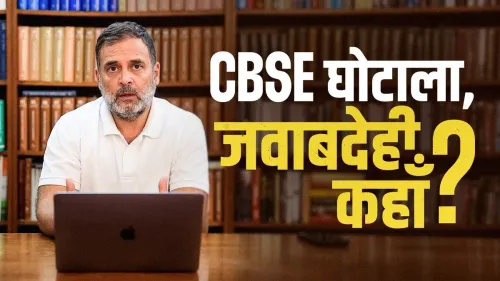
Rahul Gandhi pinned a video on 31 May 2026 featuring a conversation with young Indians, including a student named Vedant , who raised questions at CBSE and the Modi government .
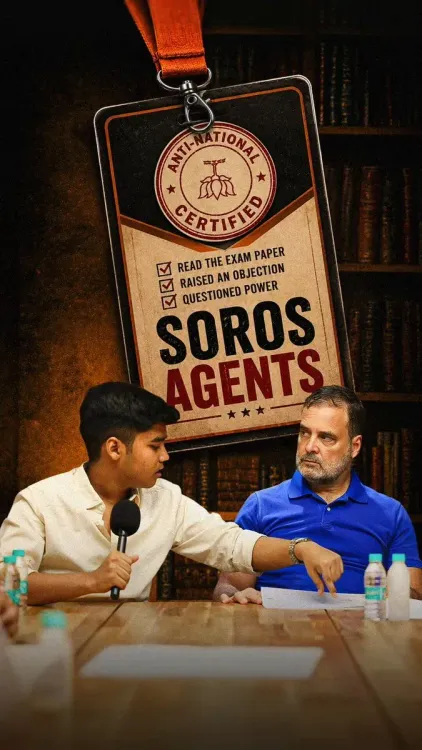
Gandhi used sarcasm to reclaim the phrase 'anti-national Soros agents' — a label BJP leaders have used against critics — applying it to himself and the students.
The students reportedly received insults rather than substantive answers to their questions, according to Gandhi's framing.
CBSE operates under the Ministry of Education and has undergone significant reforms since the National Education Policy 2020 .
Gandhi pledged that Congress would ensure the students receive 'a bright and secure future.' The Ministry of Education had not responded publicly to the post at the time of publication.
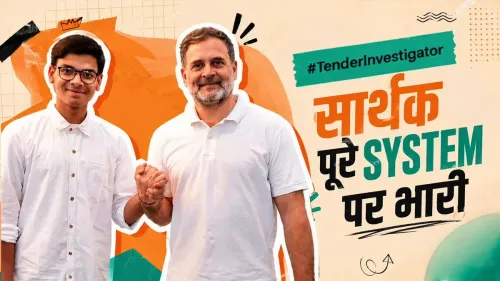
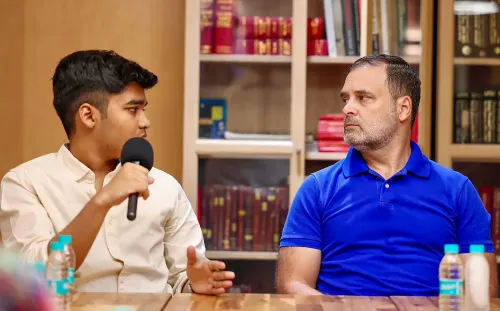
Congress leader Rahul Gandhi on Sunday, 31 May 2026, shared a video conversation with a group of young Indians, including a student named Vedant, who had raised questions directed at CBSE and the Modi government — and received insults in return, according to Gandhi. The post, pinned to his profile, frames the students as victims of political name-calling rather than recipients of substantive answers.
Context
Gandhi's post opens with pointed sarcasm, referring to himself and the students as 'anti-national Soros agents' — a label frequently deployed by BJP leaders against critics they associate with foreign-funded interference. By reclaiming the phrase, Gandhi signals solidarity with those targeted by such rhetoric. The reference to George Soros, the Hungarian-American philanthropist whose Open Society Foundations have been repeatedly cited by ruling-party figures as backing alleged anti-India activities, has become a charged shorthand in Indian political discourse.
The students in the conversation are described by Gandhi as 'brilliant, brave young Indians' who asked 'simple questions' of CBSE and the government. The specific nature of those questions has not been independently established from public record.
Policy Backdrop
CBSE, the Central Board of Secondary Education, operates under the Ministry of Education and has been at the centre of several policy changes since 2020. The National Education Policy 2020 introduced sweeping structural changes to school curricula and assessment frameworks. From 2021, CBSE rolled out competency-based question papers as part of post-pandemic evaluation reforms — changes that have drawn scrutiny from educators, parents, and students alike.
Opposition leaders, including Gandhi, have repeatedly criticised the government's handling of student grievances and examination-related concerns, arguing that institutional responses have been dismissive rather than deliberative.
Stakeholders and Impact
At the centre of this episode are CBSE students and young citizens who engage with public institutions through questions and petitions. Gandhi's framing positions these students as emblematic of a broader pattern: youth raising legitimate policy concerns being met with political labelling rather than official engagement.
The use of the 'anti-national' and 'Soros agent' labels against students — if that is indeed what occurred — would represent a significant escalation in the rhetorical targeting of young voices. Gandhi's post amplifies their concerns to a national audience, adding political weight to what may otherwise have been a localised grievance.
Congress has consistently sought to position itself as a defender of youth expression, particularly in contexts where students or activists face institutional pushback. This post reinforces that positioning ahead of the monsoon session of Parliament.
What's Next
The Ministry of Education has not publicly responded to Gandhi's post or to the students' reported questions as of the time of publication. Parliamentary questions on CBSE functioning are expected to feature during the upcoming monsoon session, where the Opposition is likely to raise the matter formally. Whether Vedant and the other students pursue a formal complaint or petition to CBSE or the Ministry remains to be seen. Gandhi's promise — 'We will make sure they get it' — suggests Congress intends to keep the issue alive in the political and legislative arena.
Point of View
He simultaneously humanises the students and exposes what the Opposition frames as the government's reflex to discredit rather than engage with criticism. The move fits a well-established Congress playbook of positioning the party as the institutional guardian of youth voice against a ruling establishment it portrays as intolerant of dissent. With the monsoon session approaching, the post likely serves as a preview of the education-and-dissent narrative Congress intends to press in Parliament. The broader arc here is a contest over who controls the definition of patriotism in India's student discourse — a battle that has intensified since the mid-2010s.
NationPress
14 Oct 2026
Frequently Asked Questions
Why did Rahul Gandhi call himself an 'anti-national Soros agent'?
Gandhi used the phrase sarcastically to mock BJP leaders who routinely label critics as 'anti-national Soros agents.' By applying the term to himself and a group of students who questioned CBSE, he sought to highlight what he sees as the government's tendency to insult rather than answer legitimate questions.
Who is Vedant in Rahul Gandhi's post?
Vedant is a young Indian student who, along with friends, reportedly asked questions of CBSE and the Modi government and received insults instead of answers, according to Gandhi's post. His full identity and the specific questions raised have not been independently verified from public record.
What is the connection between George Soros and Indian politics?
George Soros is a Hungarian-American philanthropist whose Open Society Foundations have been repeatedly cited by BJP leaders as funding alleged anti-national activities in India. The 'Soros agent' label has become a common rhetorical tool used against opposition figures and activists.
What changes has CBSE made under the Modi government?
Under the National Education Policy 2020, CBSE introduced structural changes to school curricula and assessment patterns. From 2021, it rolled out competency-based question papers as part of post-pandemic evaluation reforms, changes that have been debated by educators, students, and parents.
Will Congress raise CBSE student concerns in Parliament?
Congress is expected to raise questions about CBSE functioning and the treatment of student grievances during the upcoming monsoon session of Parliament. Gandhi's post pledging to secure the students' futures suggests the party intends to keep the issue in the legislative spotlight.