Rahul Gandhi Slams Modi Govt Over Student Crackdown, Paper Leaks
Synopsis
Congress leader Rahul Gandhi pinned a post on July 25, 2026, accusing the Modi government of shutting metros, roads, internet, and food supply to suppress student protesters — while failing to prevent competitive examination paper leaks. The attack sharpens opposition pressure on education governance and the National Testing Agency.
Key Takeaways
Rahul Gandhi pinned a post on July 25, 2026 , accusing the Modi government of deploying multiple shutdown measures against students protesting exam irregularities.
Gandhi alleged authorities suspended metro services, blocked roads, shut shops, cut internet, and disrupted food supply to suppress the agitation.
He contrasted the government's enforcement capacity with its failure to prevent paper leaks in competitive examinations.
Paper leak controversies have plagued national exams since at least 2024 , when the NEET leak triggered nationwide student protests.
The National Testing Agency (NTA) remains at the centre of opposition demands for structural reform and stronger anti-leak legislation.
Gandhi's post, pinned to his profile, signals the Congress party's intent to sustain political pressure on education governance in Parliament.
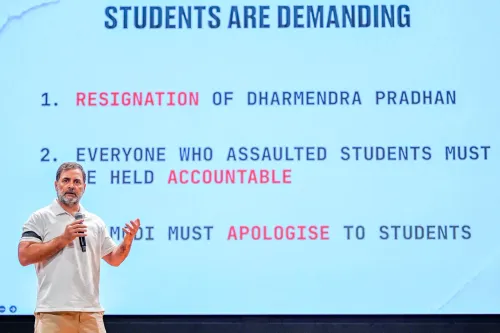
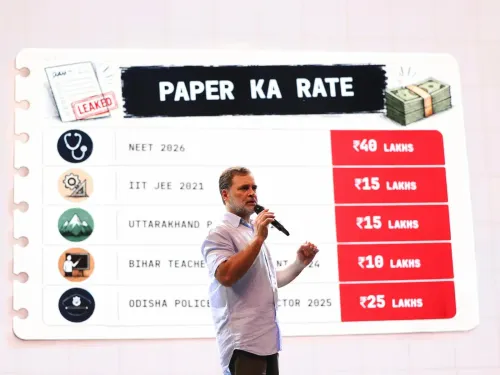
Congress leader Rahul Gandhi on Saturday, July 25, 2026, sharply criticised the Narendra Modi-led central government, accusing it of deploying harsh measures against students demanding their rights — while failing to prevent paper leaks in competitive examinations.
In a pinned post on X, Gandhi wrote in Hindi: 'मेट्रो बंद करो। रास्ते बंद करो। दुकानें बंद करो। Internet बंद करो। खाना बंद करो।' — translating to: 'Shut down the metro. Block the roads. Close the shops. Cut the internet. Stop the food.' He alleged these were the 'cruel steps' the government took against students who were merely asserting their rights. The post ended with a pointed jibe: 'There was just one thing you could not shut down, Modi ji — the paper leak.'
Context
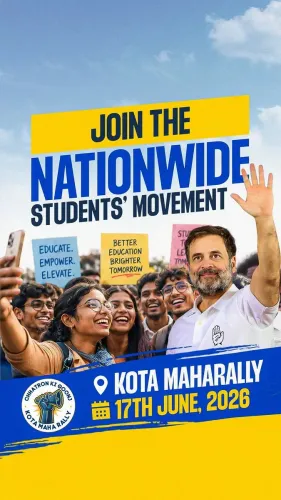
Gandhi's remarks come amid what he characterised as a state crackdown on student demonstrators protesting examination irregularities. The post, which he pinned to the top of his profile, alleges that authorities resorted to suspending metro services, blocking roads, shutting commercial establishments, imposing internet restrictions, and disrupting food supply to suppress the agitation.
The Leader of the Opposition framed these alleged measures as disproportionate, contrasting the government's capacity for enforcement with its inability — or unwillingness — to secure the integrity of competitive examinations.
Policy Backdrop
Concerns over paper leaks in national-level examinations have been a recurring flashpoint in Indian education policy. In 2024, allegations of a paper leak in the NEET medical entrance examination triggered nationwide protests by aspirants and drew intense scrutiny of the National Testing Agency (NTA), the body responsible for conducting major competitive exams.
Opposition parties, including the Indian National Congress, have consistently argued that the government's response to exam-related protests prioritised law-and-order management over systemic reform. Parliamentary debates on restructuring the NTA and introducing stronger anti-leak legislation have remained unresolved in subsequent sessions.
Stakeholders and Impact
At the centre of the controversy are exam aspirants — millions of students across India who depend on the integrity of competitive examinations for admission to medical colleges, engineering institutes, and government jobs. Any disruption to these processes, whether through paper leaks or administrative failures, has direct consequences for their academic and professional futures.
Gandhi's post amplifies the political salience of student grievances ahead of what observers expect to be continued parliamentary pressure on education governance. The framing — pitting state coercion against student rights — is consistent with the broader opposition strategy of positioning the government as hostile to youth mobilisation.
What's Next
Attention will now turn to Parliament, where opposition lawmakers are expected to press the government on the status of proposed reforms to the National Testing Agency and any new legislative framework to criminalise and prevent paper leaks. The government's response to Gandhi's allegations — and to the underlying student protests — is likely to shape the political narrative around education accountability in the coming weeks.
Point of View
Memorable contrast: state power deployed against students, yet powerless against paper leaks. By listing shutdown measures in staccato Hindi, he builds a rhetorical case of disproportionality that resonates with a young, exam-going electorate. The post fits a sustained opposition pattern of framing education failures as a law-and-order versus accountability binary, keeping the NTA reform debate alive between parliamentary sessions. Whether the government responds with legislative action or counter-messaging will determine whether this line of attack gains further traction.
NationPress
23 Oct 2026
Frequently Asked Questions
What did Rahul Gandhi say about paper leaks and student protests?
Rahul Gandhi alleged on July 25, 2026, that the Modi government shut down metros, roads, shops, internet, and food supply to suppress students protesting examination irregularities — but could not prevent paper leaks in competitive exams.
What is the NEET paper leak controversy?
In 2024, allegations emerged that the question paper for the NEET medical entrance exam was leaked before the test, triggering nationwide student protests and demands for accountability from the National Testing Agency.
What is the National Testing Agency and why is it under scrutiny?
The National Testing Agency (NTA) is the central body responsible for conducting major competitive examinations in India, including NEET and JEE. It has faced repeated criticism over alleged paper leaks and administrative lapses.
Has the government introduced any reforms to prevent exam paper leaks?
Parliamentary discussions on restructuring the NTA and introducing stronger anti-leak legislation have been ongoing, but as of mid-2026 comprehensive reform legislation remains pending.
Why did Rahul Gandhi pin this post on his X profile?
Pinning the post signals that the Congress party considers the issue of student protests and paper leaks a priority political message, keeping it visible to followers and amplifying pressure on the government.