Rajasthan CM Office: Daytime Power Now Reaches Farmers in 26 Districts
Synopsis
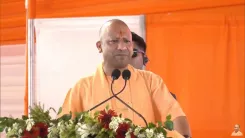
Rajasthan's Chief Minister's Office announced on 30 July 2026 that daytime electricity is now being supplied to farmers in 26 districts of the state, a shift tied to feeder separation infrastructure and the state's broader rural modernisation drive under CM Bhajan Lal Sharma.
Key Takeaways
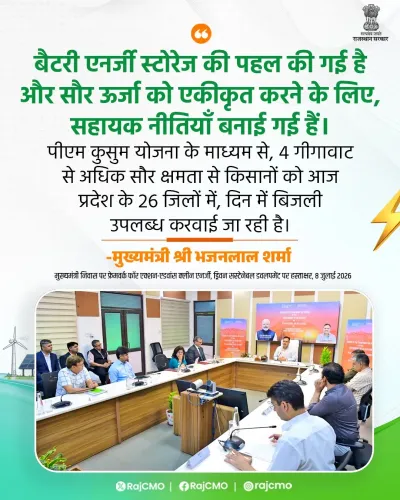
The Chief Minister's Office of Rajasthan announced on 30 July 2026 that daytime electricity is being supplied to farmers in 26 districts .
The move ends the long-standing practice of scheduling agricultural power supply at night or odd hours, forcing farmers to irrigate in the dark.
Feeder separation programmes enabling dedicated agricultural supply have been pursued in Rajasthan since the 2010s under central schemes including DDUGJY .
Rajasthan's high solar potential makes daytime farm power a natural fit, aligning peak renewable generation with peak irrigation demand.
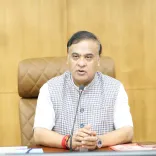
The announcement was made under CM Bhajan Lal Sharma , who took office in December 2023 , as part of the state's #आपणो_अग्रणी_राजस्थान development drive.
Official data on district-level coverage and farmer uptake has not yet been published; expansion beyond the 26 districts is the key metric to watch.
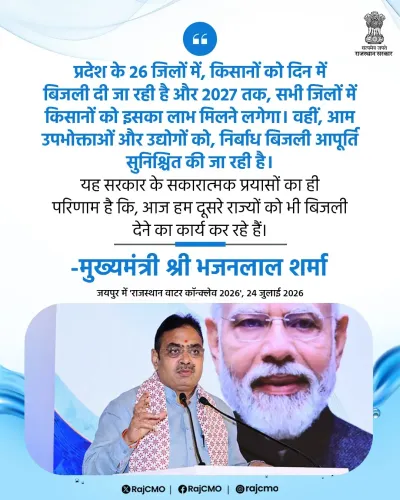
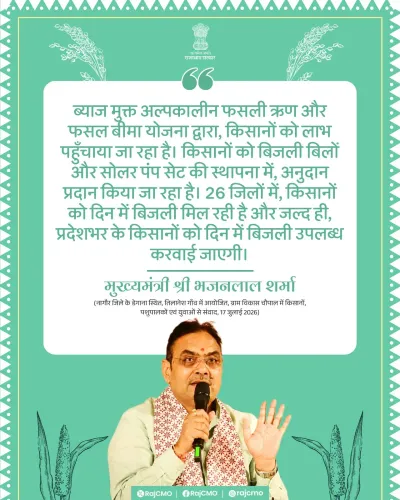
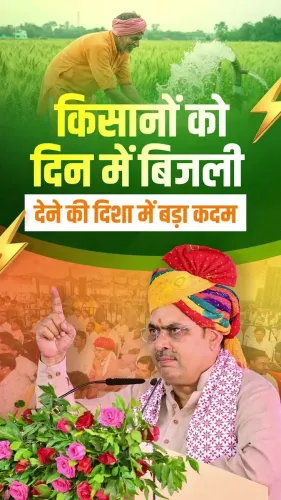
Rajasthan's farmers are getting something they have long waited for — sunlight and electricity at the same time. The Chief Minister's Office of Rajasthan announced on Thursday, 30 July 2026, that daytime electricity supply is now being provided to farmers across 26 districts of the state, a shift that directly transforms how and when fields get irrigated.
The post, attributed to the office of Chief Minister Bhajan Lal Sharma and tagged with the hashtag #आपणो_अग्रणी_राजस्थान ('Our Leading Rajasthan'), is brief but pointed: 'प्रदेश के 26 जिलों में किसानों को, दिन में बिजली उपलब्ध करवाई जा रही है' — 'In 26 districts of the state, electricity is being made available to farmers during the day.'
Why daytime power changes everything for a Rajasthan farmer
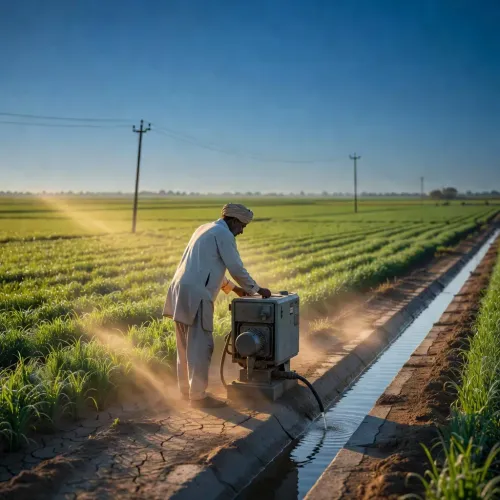
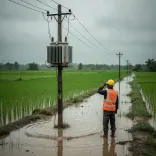
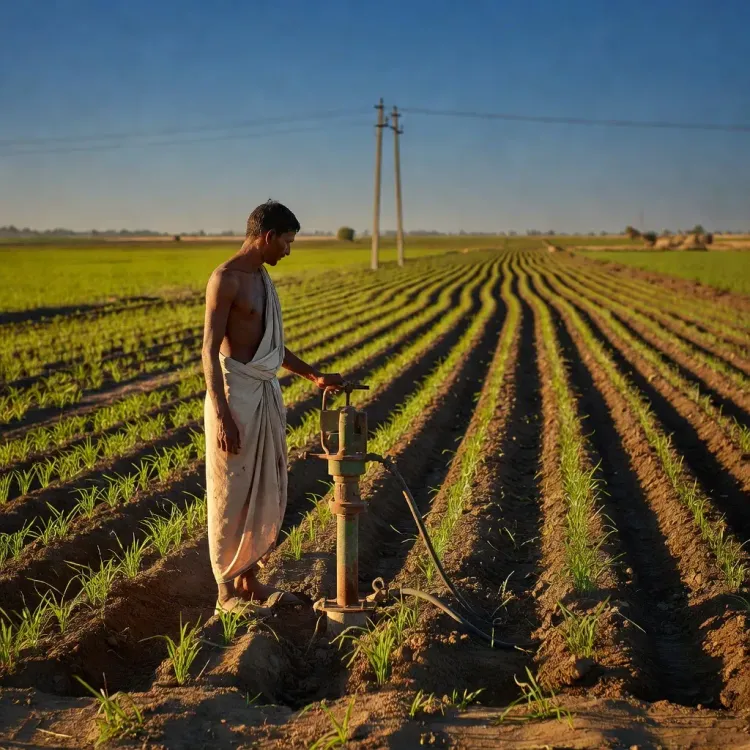
For decades, agricultural feeders across rural Rajasthan — and much of India — were scheduled at odd hours, often between midnight and dawn, to manage grid load. Farmers were forced to run diesel pumps at a premium or trudge to fields in the dark to operate irrigation equipment. Shifting supply to daytime hours removes that burden entirely: pumps run when farmers are awake, when sunlight allows them to monitor water levels, and when crop stress from heat can be addressed in real time. Rajasthan is a state where groundwater irrigation is the backbone of agriculture, and grid power is what drives those pumps. Getting the timing right is not a minor operational tweak — it is a material quality-of-life change for rural households.A policy thread running back more than a decade
The move fits into a long-running national push. Feeder separation programmes — which dedicate specific lines to agricultural consumers, isolating them from domestic and commercial load — have been pursued across Indian states since the 2010s, including under central schemes such as the Deen Dayal Upadhyaya Gram Jyoti Yojana (DDUGJY). Several states have used this architecture to shift farm power to predictable daytime windows. Rajasthan's high solar potential adds another dimension. As the state builds out renewable capacity, integrating solar generation with agricultural feeders creates a natural alignment: peak solar output during the day matches peak farm power demand. The 26-district rollout signals that this alignment is now operational at meaningful scale, though official data on pump usage, coverage within each district, and farmer uptake figures have not yet been published.CM Bhajan Lal Sharma's rural electricity push
Bhajan Lal Sharma, who took office as Chief Minister in December 2023 following the BJP's victory in the Rajasthan assembly elections, has positioned rural infrastructure modernisation as a signature priority. The #आपणो_अग्रणी_राजस्थान campaign framing — 'Our Leading Rajasthan' — is the government's consistent brand for development announcements aimed at the state's rural and agricultural base. The next test is expansion: whether coverage moves beyond the current 26 districts to the full state, and whether published data backs the on-ground claim with measurable outcomes for farmers.Point of View
The optics serve a dual purpose: demonstrating administrative follow-through on a BJP campaign promise and anchoring Rajasthan's identity as a solar-forward state. The feeder-separation approach is not new policy, but scaling it to daytime supply at this breadth — if sustained — would mark a genuine operational upgrade over previous regimes. The harder question is whether published outcome data will follow the announcement, or whether the 26-district figure remains a headline without a verifiable baseline.
NationPress
30 Jul 2026
Frequently Asked Questions
Which 26 districts in Rajasthan are getting daytime electricity for farmers?
The Rajasthan Chief Minister's Office has not publicly named the specific 26 districts in this announcement. Official details on district coverage are expected to be released through state power distribution channels.
What is the benefit of daytime electricity for farmers in Rajasthan?
Daytime power allows farmers to operate irrigation pumps during waking hours, eliminating the need to work fields at night, reducing reliance on expensive diesel pumps, and enabling real-time crop monitoring during irrigation.
What is the DDUGJY scheme and how does it relate to Rajasthan's farm power supply?
The Deen Dayal Upadhyaya Gram Jyoti Yojana (DDUGJY) is a central government scheme that funds feeder separation in rural areas — creating dedicated power lines for agriculture. Rajasthan has used this framework since the 2010s to work toward predictable agricultural supply.
Who is Bhajan Lal Sharma and what is his role in Rajasthan's electricity policy?
Bhajan Lal Sharma is the Chief Minister of Rajasthan from the BJP, sworn in December 2023. His government has positioned rural infrastructure and electricity access as key priorities under the 'Aapno Agrani Rajasthan' development campaign.
Will daytime electricity be extended to all districts of Rajasthan?
The current announcement covers 26 districts. Expansion to remaining districts has not been officially confirmed; the government's next steps on scaling the programme are awaited.