Rajasthan CMO highlights tech as tool for public welfare on Digital India's 11th year
Synopsis
The Chief Minister's Office of Rajasthan marked the 11th anniversary of Digital India on 2 July 2026, reaffirming CM Bhajan Lal Sharma's push to make technology a core tool for citizen welfare delivery, ahead of the National Conference on e-Governance 2026.
Key Takeaways
The Rajasthan CMO posted on 2 July 2026 marking the 11th anniversary of Digital India , reaffirming the state's tech-for-welfare agenda.
Chief Minister Bhajan Lal Sharma (BJP) has positioned administrative and digital reforms as central to his government since taking office in December 2023 .
Rajasthan's e-Mitra single-window portal , launched in 2005 , is among India's older state e-governance platforms and has been integrated with the national Digital India framework.
The state has digitised key welfare delivery channels including land records, ration distribution, and pension payments .
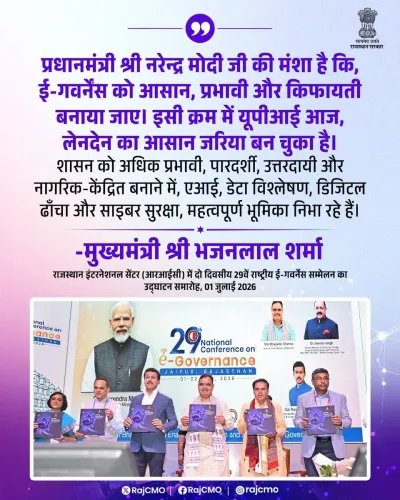
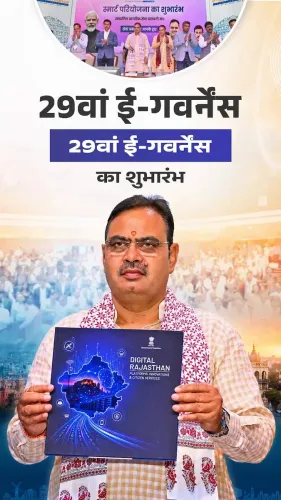
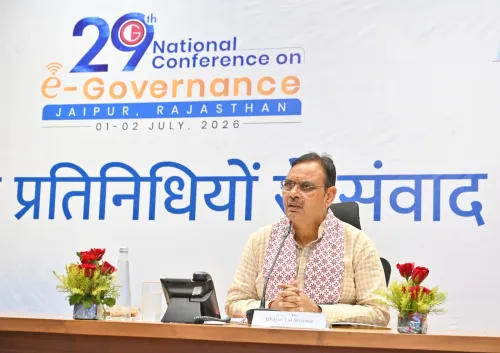
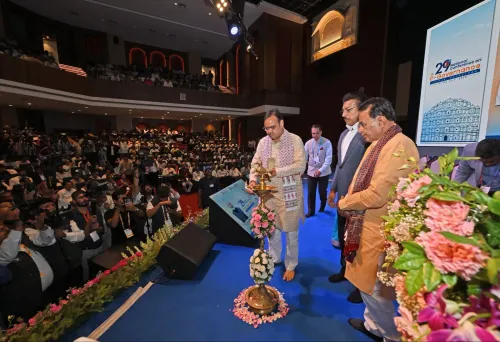
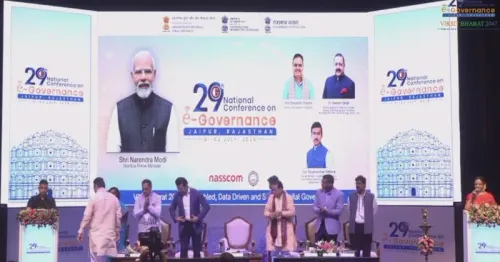
The post was tagged #NCeG2026 , signalling Rajasthan's participation in the National Conference on e-Governance 2026 , where state-level digital governance outcomes are expected to be reviewed.
The Digital India programme was launched by the central government in July 2015 to promote paperless, cashless and faceless governance across India.
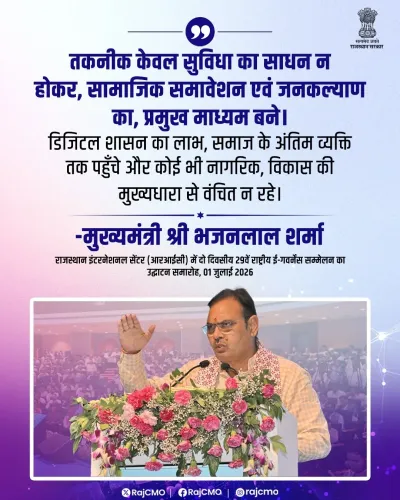
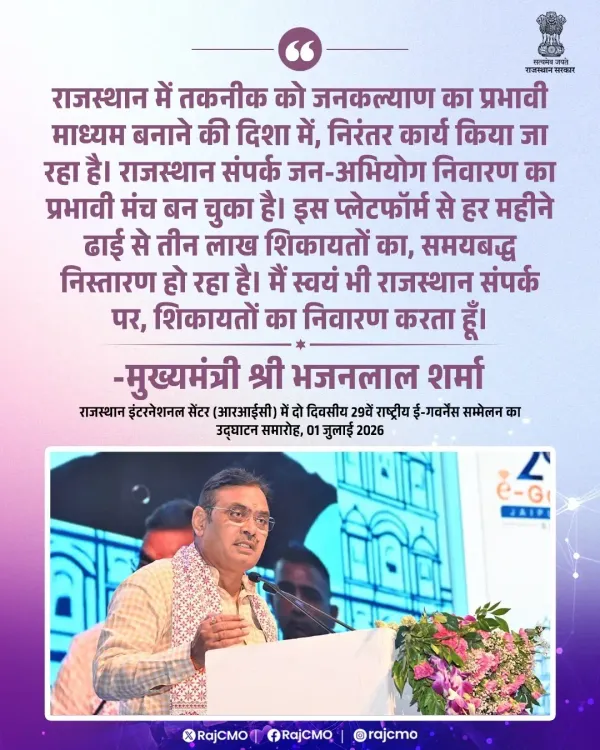
The Chief Minister's Office of Rajasthan on Thursday, 2 July 2026 reaffirmed the state government's commitment to making technology an effective instrument of public welfare, marking the 11th anniversary of Digital India and ahead of the National Conference on e-Governance 2026 (NCeG2026).
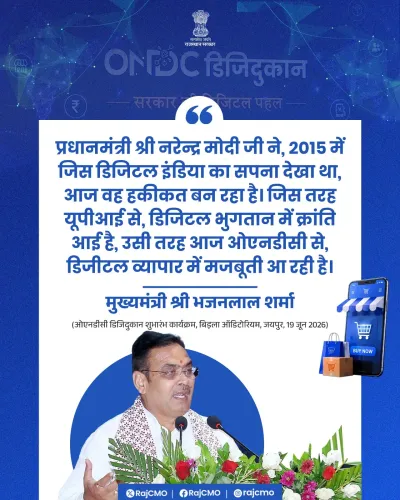
The post, attributed to the office of Chief Minister Bhajan Lal Sharma, stated in Hindi: 'राजस्थान में तकनीक को जनकल्याण का प्रभावी माध्यम बनाने की दिशा में, निरंतर कार्य किया जा रहा है' — meaning 'In Rajasthan, continuous work is being done to make technology an effective medium of public welfare.' The message was shared with the hashtags #11YearsOfDigitalIndia and #NCeG2026, signalling the state's alignment with the national digital governance moment.
Context
The Digital India programme was launched by the central government in July 2015 with the stated aim of transforming India into a digitally empowered society and knowledge economy. Its three core pillars — paperless, cashless, and faceless governance — have since shaped how Indian states design and deliver citizen services. The 11th anniversary of the programme has prompted governments at both the central and state levels to take stock of progress and restate their commitments. The National Conference on e-Governance (NCeG) is an annual forum that brings together central ministries and state governments to review e-governance initiatives, share best practices, and chart priorities for the year ahead. The 2026 edition (NCeG2026) is expected to feature state-level presentations on digital public infrastructure and welfare delivery outcomes.Policy Backdrop
Rajasthan has a relatively long history in e-governance. The state launched the e-Mitra single-window portal in 2005, one of the earlier such platforms in India, which was subsequently integrated with the Digital India framework after 2015. Over the years, the state has progressively digitised land records, ration distribution, and pension payments, expanding the reach of welfare schemes to citizens in remote and rural areas. Under Chief Minister Bhajan Lal Sharma, who took office in December 2023 as part of the Bharatiya Janata Party government in the state, administrative reforms and technology-driven governance have been stated priorities. The CMO's post on the Digital India anniversary reinforces this positioning, linking the state's ongoing digitisation efforts to the broader national programme.Stakeholders and Impact
The primary beneficiaries of Rajasthan's technology-in-governance push are the state's citizens — particularly welfare scheme beneficiaries, including recipients of subsidised rations, pension payments, and land-related services. Digital delivery of these services reduces dependence on physical intermediaries, cuts processing time, and, in principle, limits opportunities for leakage. For Rajasthan's rural population, which constitutes a significant share of the state's over 8 crore residents, the expansion of platforms such as e-Mitra and their integration with central Digital India infrastructure has practical consequences for how quickly and reliably they access entitlements. Civil society groups and opposition parties have in the past raised questions about last-mile digital access, device availability, and digital literacy — factors that determine whether stated policy intent translates into ground-level impact.What's Next
All eyes are on the National Conference on e-Governance 2026, where Rajasthan is expected to present its e-governance record alongside other states. The conference typically results in recognitions and awards for standout digital initiatives, and state governments often use the occasion to announce new technology-driven welfare programmes. How Rajasthan's digitisation achievements are assessed at NCeG2026 will provide a clearer picture of the state's standing in India's evolving e-governance landscape. The CMO's public messaging ahead of the event suggests the state intends to project its record as a model of technology-enabled public service delivery.Point of View
The Sharma government signals it intends to compete for recognition among states at the national e-governance stage. This also fits a broader BJP pattern of using Digital India anniversaries to reinforce the party's technology-and-governance brand at both central and state levels. The real test, however, will be whether Rajasthan's digitisation translates into measurable improvements in last-mile welfare delivery for its rural majority — a question the NCeG2026 presentations may begin to answer.
NationPress
2 Jul 2026
Frequently Asked Questions
What is Digital India and when was it launched?
Digital India is a central government programme launched in July 2015 to promote paperless, cashless and faceless governance and bridge India's digital divide by delivering public services electronically.
Who is the Chief Minister of Rajasthan in 2026?
Bhajan Lal Sharma of the Bharatiya Janata Party has been the Chief Minister of Rajasthan since December 2023 , focusing on administrative reforms and digital governance.
What is the NCeG2026 conference?
The National Conference on e-Governance 2026 (NCeG2026) is an annual forum where central and state governments review e-governance projects, share best practices, and set digital governance priorities for the year ahead.
What is Rajasthan's e-Mitra portal?
e-Mitra is Rajasthan's single-window e-governance portal launched in 2005 , which allows citizens to access government services online. It has been integrated with the national Digital India framework since 2015.
How has Rajasthan used technology for welfare delivery?
Rajasthan has digitised key welfare services including land records, ration distribution, and pension payments , using platforms such as e-Mitra to reduce reliance on physical intermediaries and improve access for citizens in rural areas.