Rajasthan CMO pledges to preserve 660+ Shekhawati havelis
Synopsis
The Rajasthan Chief Minister's Office announced state steps to conserve and promote over 660 painted havelis in the Shekhawati region, aligning with PM Modi's 'Vikas bhi, Virasat bhi' philosophy of balancing development with cultural heritage preservation.
Key Takeaways
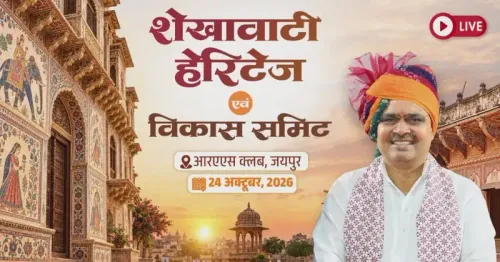
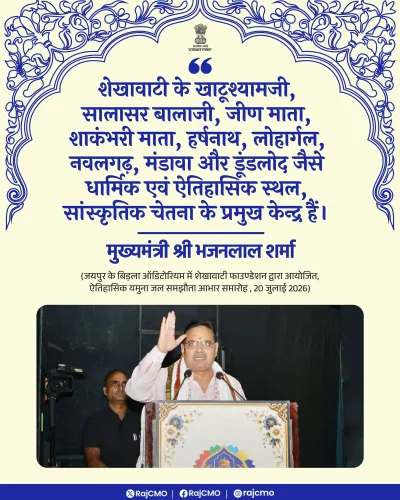
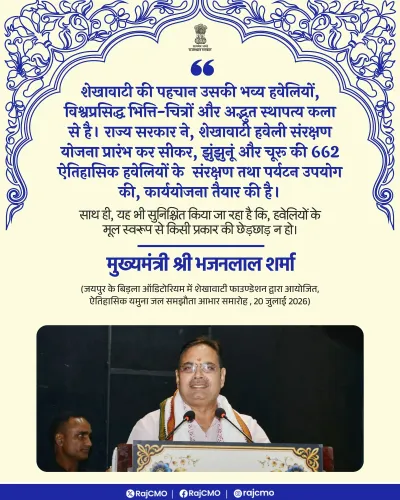
The Rajasthan CMO announced on 20 November 2026 that the state has taken 'important steps' for the conservation and promotion of 660-plus havelis in the Shekhawati region.
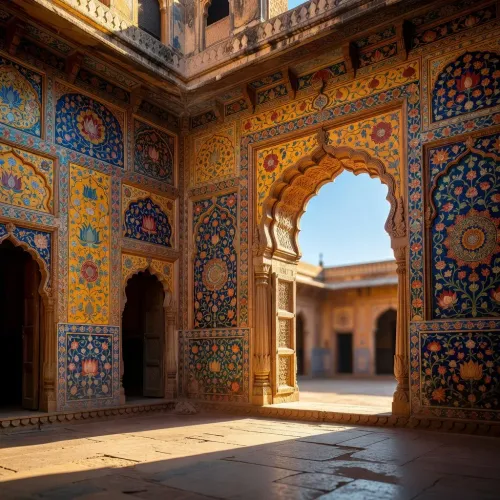
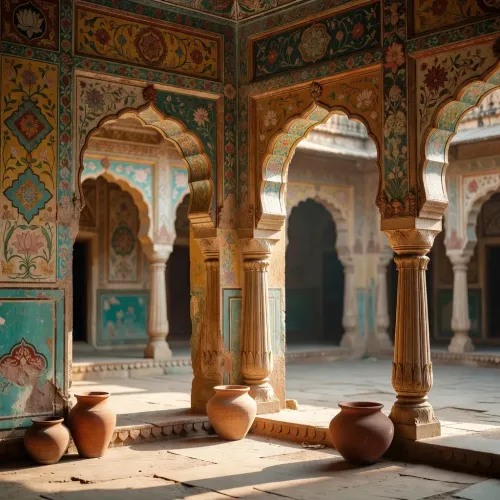
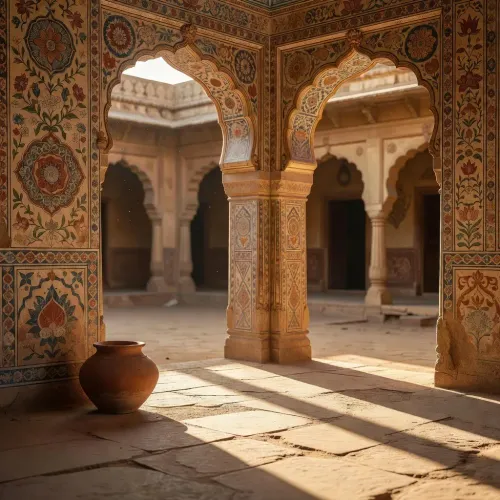
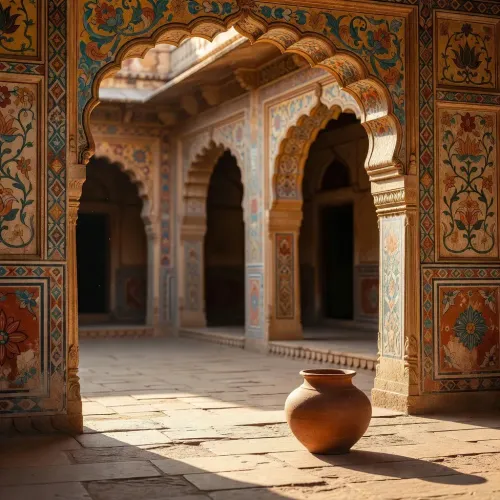
Shekhawati in northern Rajasthan is globally recognised for its 18th–19th century fresco-covered merchant havelis, often called India's open-air art gallery.
The initiative is framed around PM Narendra Modi 's slogan 'Vikas bhi, Virasat bhi' — development alongside heritage.
The Centre's HRIDAY scheme (2015) has previously channelled funds for heritage city development in Rajasthan, providing a policy foundation.
CM Bhajan Lal Sharma , in office since December 2023 , is positioning the move within a broader state-branding campaign under #आपणो_अग्रणी_राजस्थान .
Specific funding, project lists, and central-state partnership details are yet to be publicly disclosed.
The painted havelis of Shekhawati — centuries-old mansions whose walls tell stories in vivid fresco — are getting renewed state attention. The Chief Minister's Office of Rajasthan announced on Friday, 20 November 2026 that the state government has taken 'important steps' toward the conservation and promotion of more than 660 havelis in the Shekhawati region, framing the move as an expression of Prime Minister Narendra Modi's guiding philosophy of 'Vikas bhi, Virasat bhi' — development as well as heritage.
Shekhawati's frescoed havelis and what makes them irreplaceable
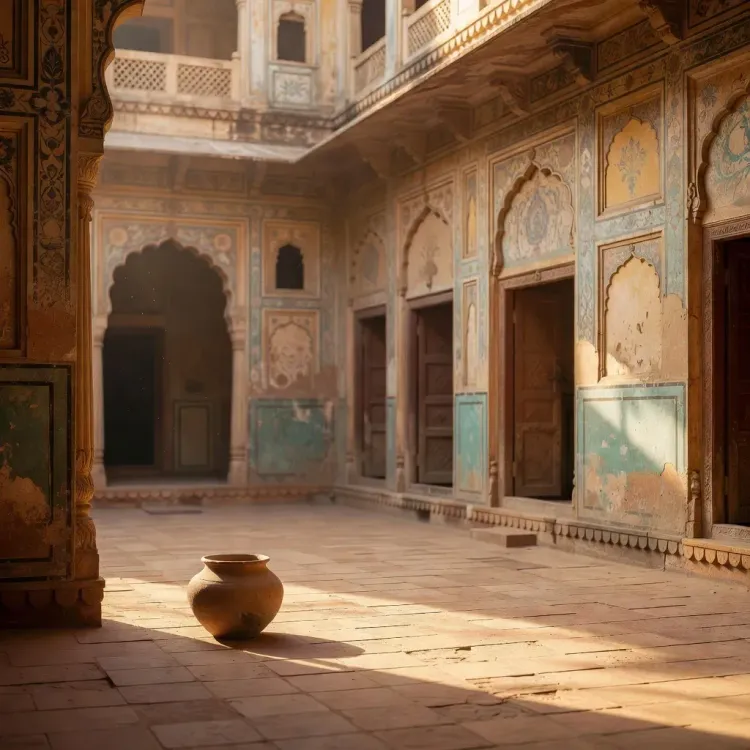
Shekhawati, a semi-arid tract spanning parts of Sikar, Jhunjhunu, and Churu districts in northern Rajasthan, earned the nickname 'the open-air art gallery of India' for its dense cluster of merchant havelis built during the 18th and 19th centuries. Wealthy Marwari traders commissioned master craftsmen to cover every surface — walls, ceilings, gateways — with intricate frescoes depicting mythology, local life, and even early encounters with colonial modernity. The result is an architectural inheritance with few parallels anywhere in the world.
Yet many of these structures have suffered decades of neglect: absentee ownership, monsoon damage, and the slow erosion that comes when younger generations move to cities. The state's commitment to 660-plus havelis signals a recognition that the window for meaningful intervention is narrowing.
Modi's 'Vikas bhi, Virasat bhi' and how Rajasthan fits in
The CMO's post explicitly anchors the initiative to Prime Minister Modi's dual mandate of development and heritage, a framework the Centre has operationalised through schemes such as the HRIDAY (Heritage City Development and Augmentation Yojana) programme, launched in 2015, which directed funds toward heritage city infrastructure in states including Rajasthan. Chief Minister Bhajan Lal Sharma, who has led the BJP government in Jaipur since December 2023, is positioning this Shekhawati push as the state's visible contribution to that national cultural-conservation arc.
The alignment is politically deliberate: Rajasthan's tourism economy depends heavily on heritage assets, and demonstrating stewardship of a relatively under-visited but globally admired corridor like Shekhawati could unlock both domestic and international footfall beyond the well-worn Jaipur–Jodhpur–Udaipur triangle.
What the government has actually committed — and what remains to be detailed
The CMO's announcement describes 'important steps' without enumerating specific projects, funding allocations, or central-state partnership structures. The hashtag #आपणो_अग्रणी_राजस्थान (Aapno Agrani Rajasthan — 'Our Leading Rajasthan') places this within a broader state branding campaign. Watchers of Rajasthan's heritage sector will be looking toward the next state budget and tourism policy documents for specifics: which havelis qualify, who owns them, what restoration standards apply, and whether private owners receive incentives to participate.
Shekhawati's local communities and the growing heritage-tourism sector — from boutique hotel operators to fresco-restoration artisans — stand to benefit most if the commitment translates into on-ground action.
Rajasthan has long known what it has in Shekhawati. The question the state must now answer is whether announcements become scaffolding, paintbrushes, and restored plaster — before any more of those extraordinary walls crumble into silence.
Point of View
Not just sentiment. For CM Bhajan Lal Sharma, still consolidating his political identity in Jaipur, associating with PM Modi's 'Vikas bhi, Virasat bhi' brand offers both ideological coherence and a tourism-economy justification. The real test, however, is execution — Rajasthan has a history of ambitious heritage announcements that stall at the funding or land-ownership stage. If the state follows through with concrete allocations in the next budget, Shekhawati could become a showcase for India's emerging 'cultural infrastructure' model; if not, the post risks being remembered as rhetoric dressed in fresco.
NationPress
20 Nov 2026
Frequently Asked Questions
What are the Shekhawati havelis and why are they famous?
Shekhawati havelis are ornate merchant mansions built in the 18th and 19th centuries in northern Rajasthan's Sikar, Jhunjhunu, and Churu districts. They are famous for their extraordinarily detailed frescoes covering walls, ceilings, and gateways, earning the region the title of India's open-air art gallery.
What has the Rajasthan government announced for Shekhawati havelis?
The Chief Minister's Office of Rajasthan announced on 20 November 2026 that the state government has taken 'important steps' for the conservation and promotion of more than 660 havelis in the Shekhawati region, in line with PM Modi's 'Vikas bhi, Virasat bhi' vision.
What does 'Vikas bhi, Virasat bhi' mean?
'Vikas bhi, Virasat bhi' is a Hindi phrase meaning 'Development as well as Heritage.' It is a guiding slogan associated with Prime Minister Narendra Modi's approach to integrating cultural heritage preservation with economic development.
What is the HRIDAY scheme and how does it relate to Rajasthan's heritage?
HRIDAY — Heritage City Development and Augmentation Yojana — was launched by the Central government in 2015 to fund infrastructure and conservation improvements in heritage cities across India, including cities in Rajasthan, providing a policy and financial foundation for state-level heritage initiatives.
Who is the Chief Minister of Rajasthan and when did he take office?
Bhajan Lal Sharma is the Chief Minister of Rajasthan. He assumed office in December 2023 as a BJP leader following the party's victory in the Rajasthan Assembly elections.